Diary Entry
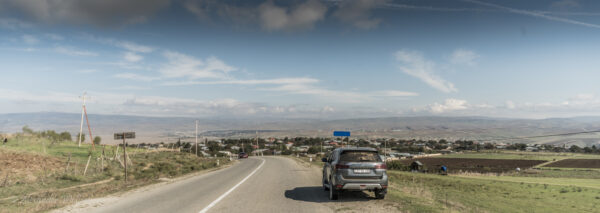
I’ve been traveling through Azerbaijan for several days now. The capital, Baku, showed me the beautiful side of a modern metropolis as well as an impressive ancient heart in the old city. But Absheron also revealed the darker side. I feel relieved when I set off with my friends by car through Azerbaijan’s countryside and can spend the night in a tent under the stars.
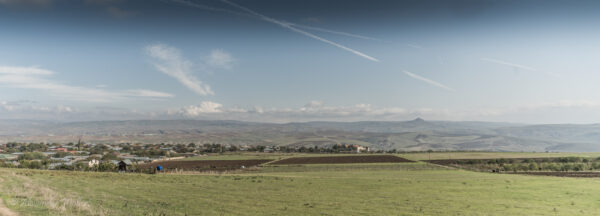
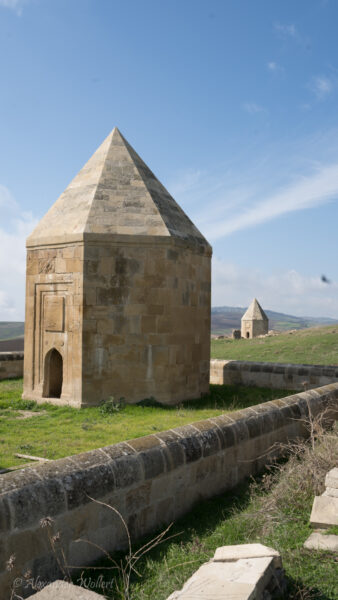
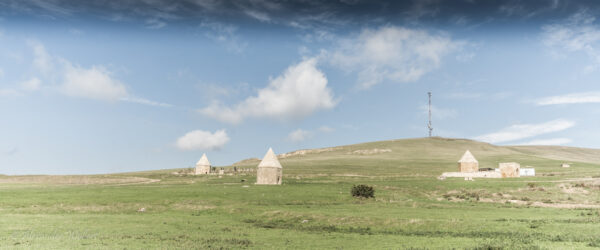
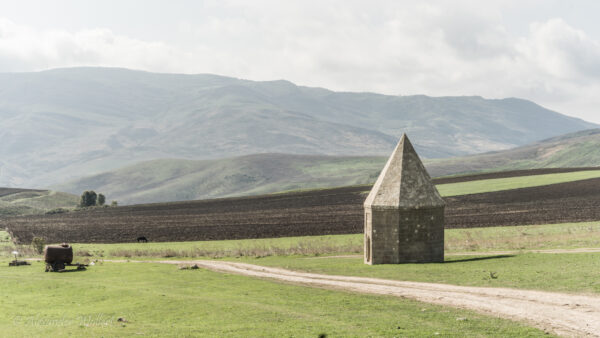
We pass through more villages and see farmland all around us. The route on the map suddenly leads us off a dirt track and across the fields, but the farmers don’t seem to mind. I’ve spotted a place on the map where we can see small towers that served as mausoleums. It’s called Kələxana abidələri: the tombs of Kelekhana.
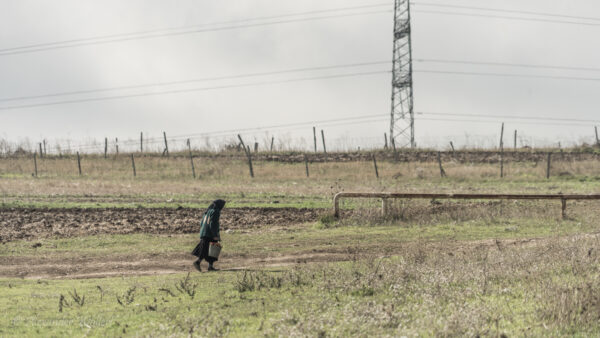
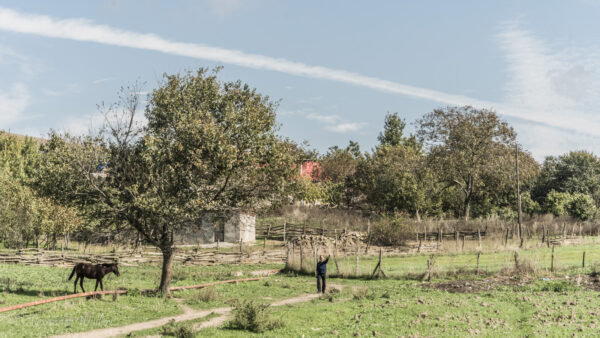
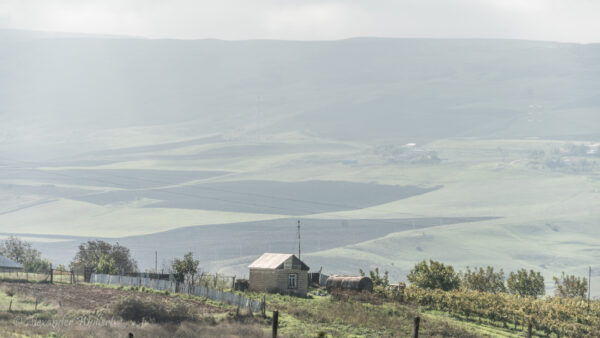
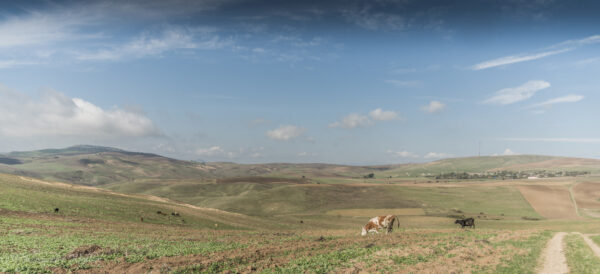
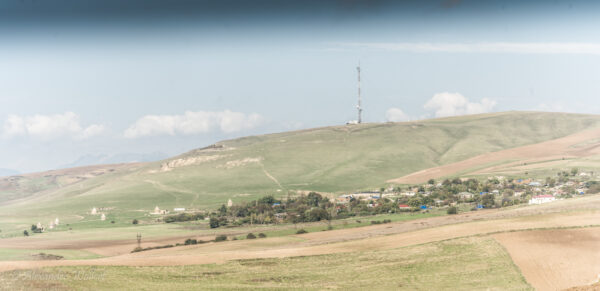
Apparently, dirt tracks across fields are also considered official transport routes.
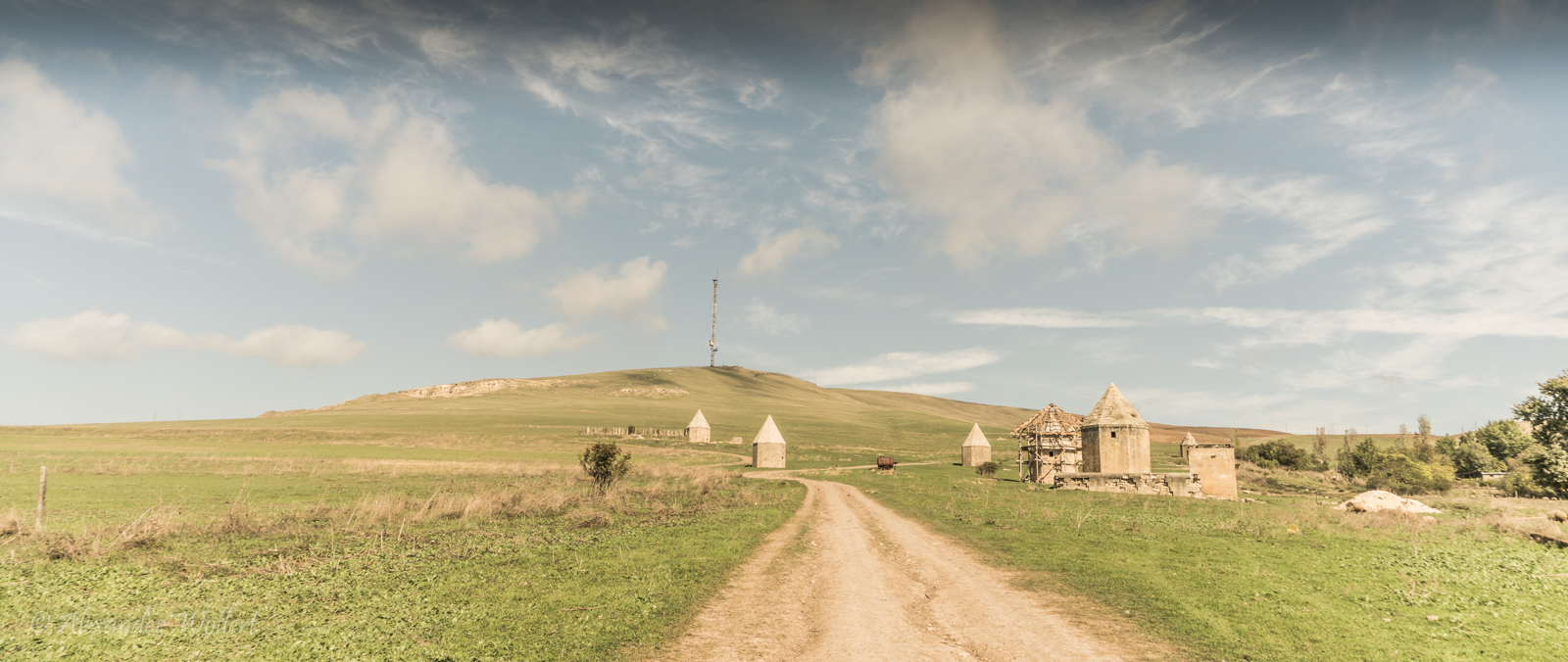
The Tombs of Kələxana
The significance of Kələxana extends beyond its architectural beauty. It offers insights into the religious practices, social structures, and artistic traditions of Azerbaijan in the 17th and 18th centuries. The meticulous design of the mausoleums and their decorations reflects the respect shown to the deceased and the desire to preserve their memory.
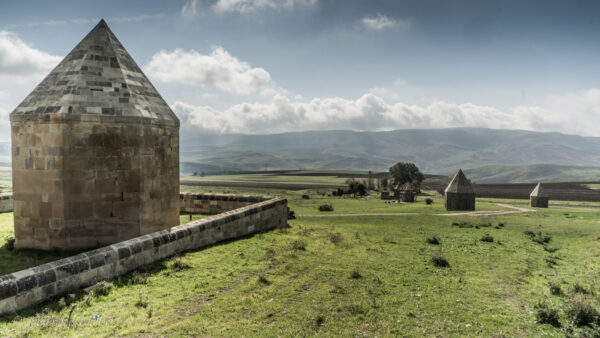
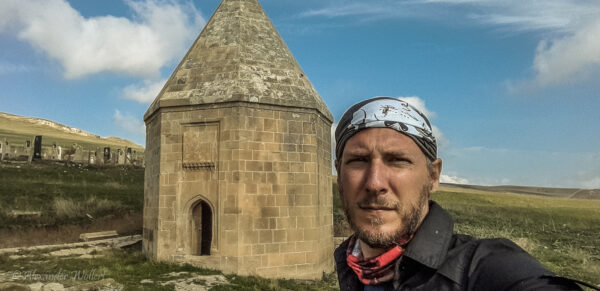
The Kalexana Mausoleum consists of several mausoleums, whose domes are typical of Islamic architecture of the period. The brick domes, often decorated with geometric patterns, testify to the craftsmanship and architectural style of the era. It is believed that the complex served as a burial site for local dignitaries, religious leaders, or other important figures.
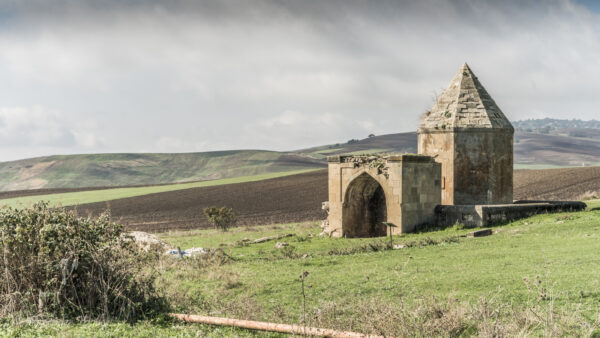
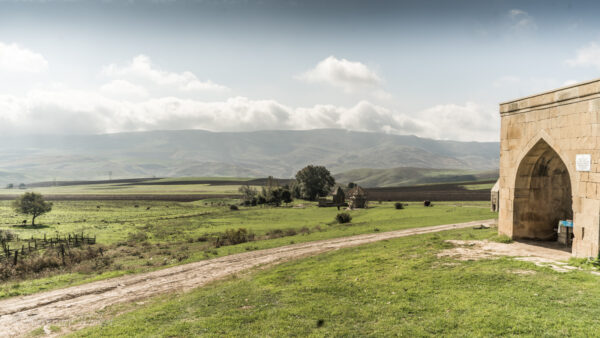
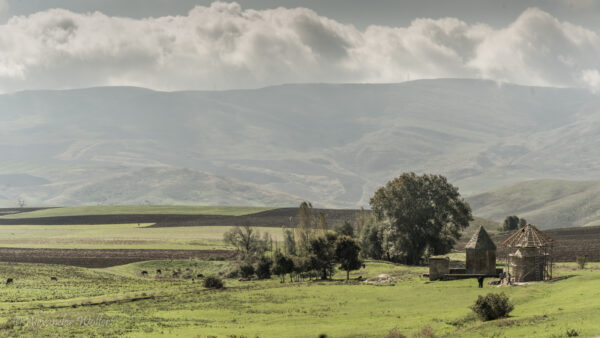
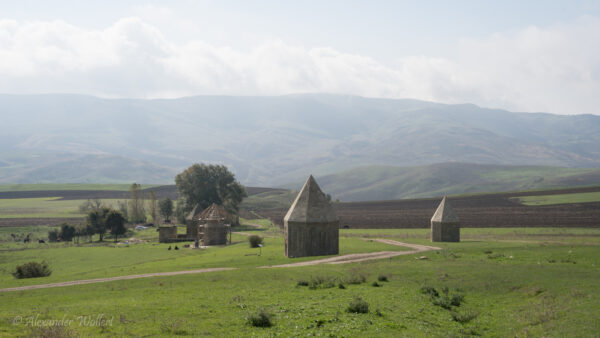
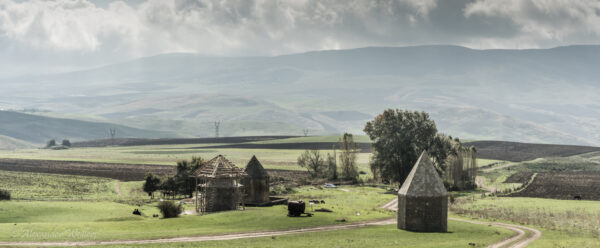
We walk, fascinated, from one small house to the next. A few men are currently building another one. It’s wonderful to see this site being restored.
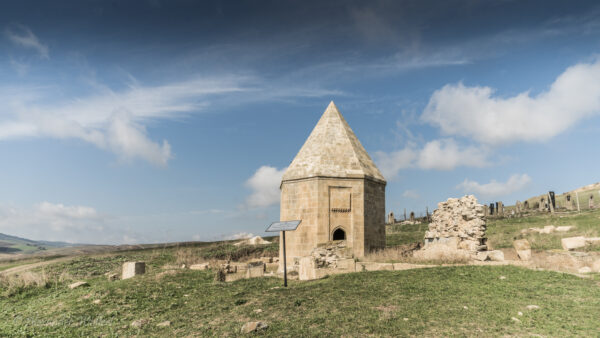
It will be a challenge. Some of these tombs have completely collapsed.
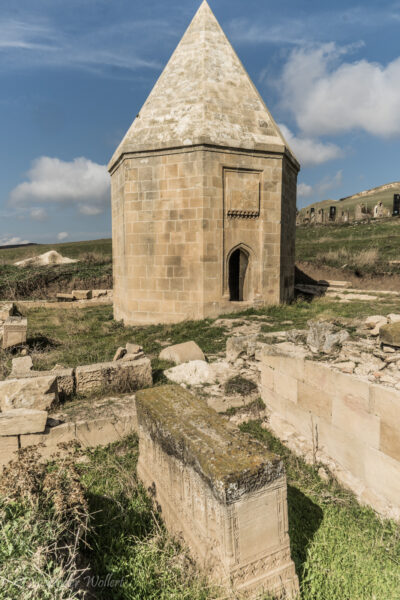
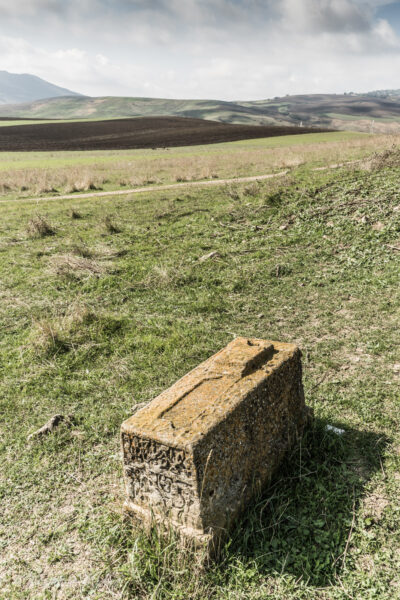
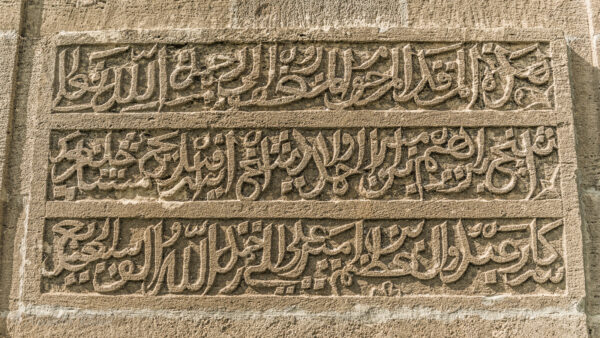
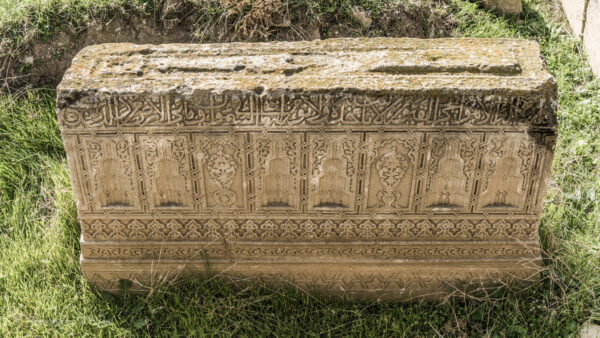
Scattered stone sarcophagi still stand between the houses. The inscriptions on them are Arabic.
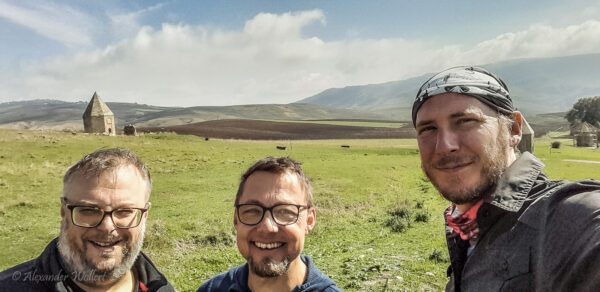
The landscape here is truly beautiful. This small necropolis can be seen from afar on the gentle green hills.
We continue our journey through Azerbaijan. Beyond Kalexana, the world of asphalt roads begins again.
We see the city of Şamaxı, castle ruins, and another impressive necropolis: the mausoleum of Diri Baba.