
Diary Entry
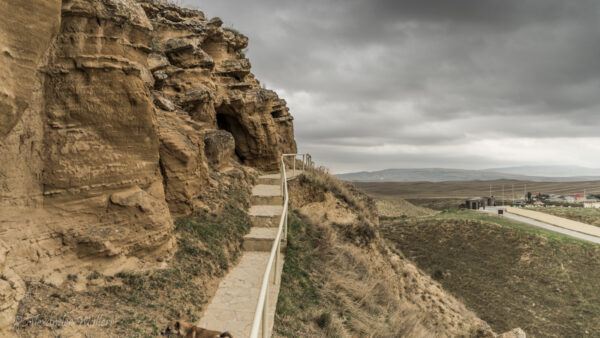
From Shamekhi, the ancient capital of the Shirvanshahs, we drive to a place east of the city called Diri Baba. There, we find an old dervish monastery, fantastically built into a small mountain. We then continue along the M4 highway to Qobustan to find the mausoleum.
I have to look a few times: we just came from Qobustan. But no! This is a city with exactly that name. But there are no mud volcanoes or cave paintings here.
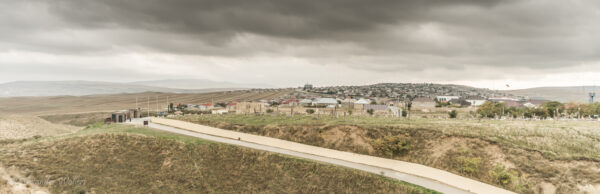
A modern structure surrounds the old building, but there’s nobody else here. Equipped with hard hats, we can also look at a few caves and niches in the sandstone, but they’re not very spectacular.
In general, there is more merchandise in the nearby souvenir shop than in the old building.
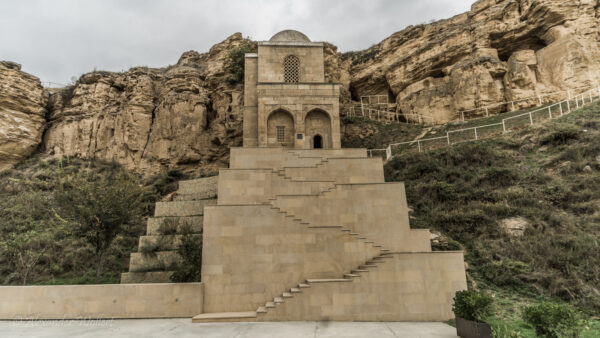
The story of the Mausoleum of Diri Baba
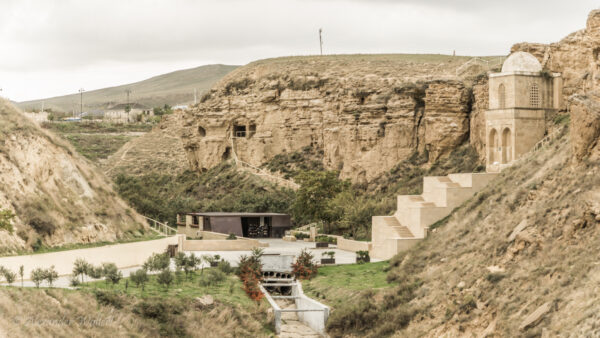
The Mausoleum of Diri Baba is one of Azerbaijan’s most mysterious historical sites. Impressively nestled into a steep sandstone cliff near the city of Shamakhi, it appears to float between heaven and earth. The structure was built in 1402 during the reign of the Shirvanshahs, an era in which architecture, mysticism, and religious scholarship were closely intertwined.
The mausoleum is dedicated to an ascetic dervish named Diri Baba, whose name roughly translates to “the living father.” According to legend, he did not decompose after his death, which gave the place a special spiritual significance.
Over the centuries, the mausoleum became a place of pilgrimage for believers seeking healing, protection, and blessings.
Architecturally, the structure combines simple elegance with symbolic depth. The lower part is hewn directly into the rock, while the upper part is made of finely worked stone – a deliberate fusion of nature and human creation. Today, the mausoleum of Diri Baba stands as a silent testament to the mystical traditions of medieval Azerbaijan and, with its secluded location, still exerts a special, almost timeless fascination.
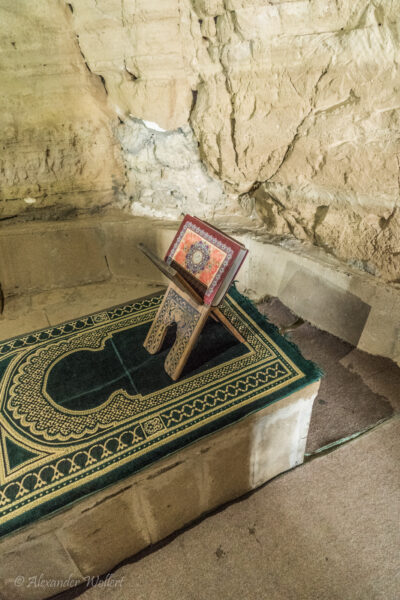
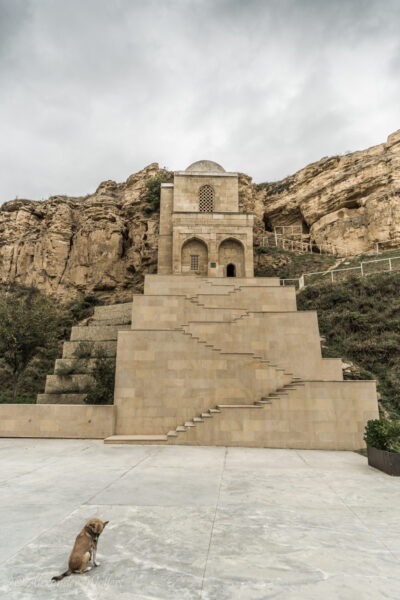
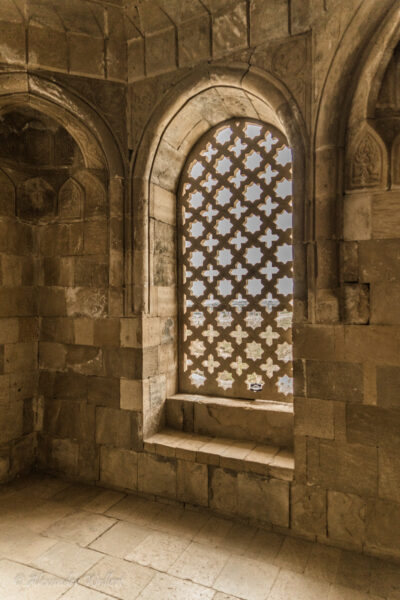
Everything is spotlessly clean, as if hundreds of tourists were expected here – but we are alone.
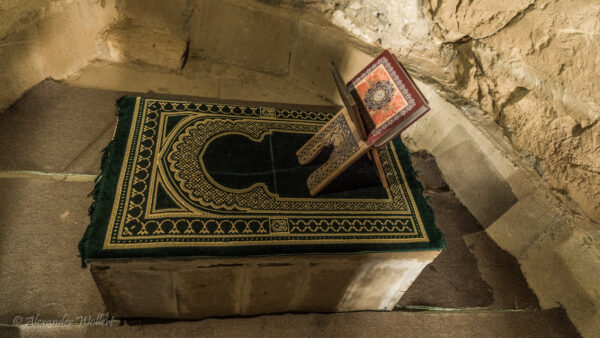
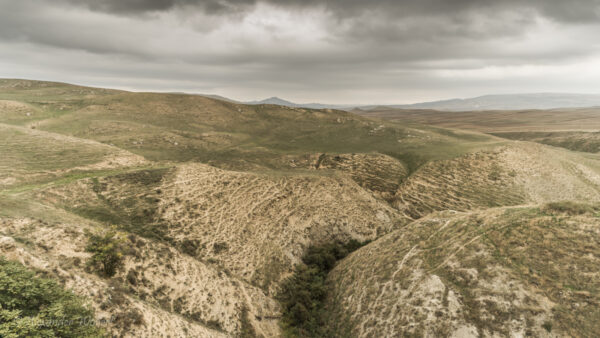
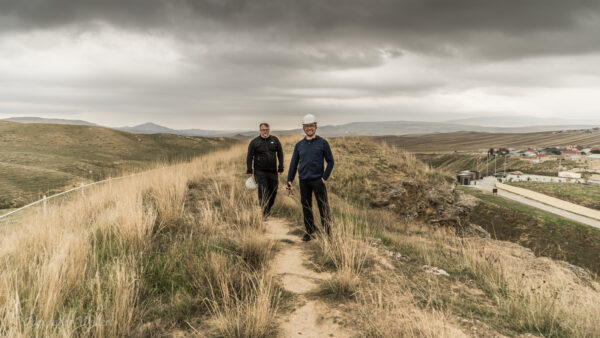
The mausoleum is very beautiful from the outside, but there isn’t much to see inside. Because the building is very close to the small town and has also been heavily developed for tourism, it lacks the mystical atmosphere one might expect in such a place.
The road continues towards Baku. We don’t want to go there; we want to go west to Sheki. But first, we’ll take a detour over the mountains to the small, picturesque village of Lahıc .


