Diary Entry
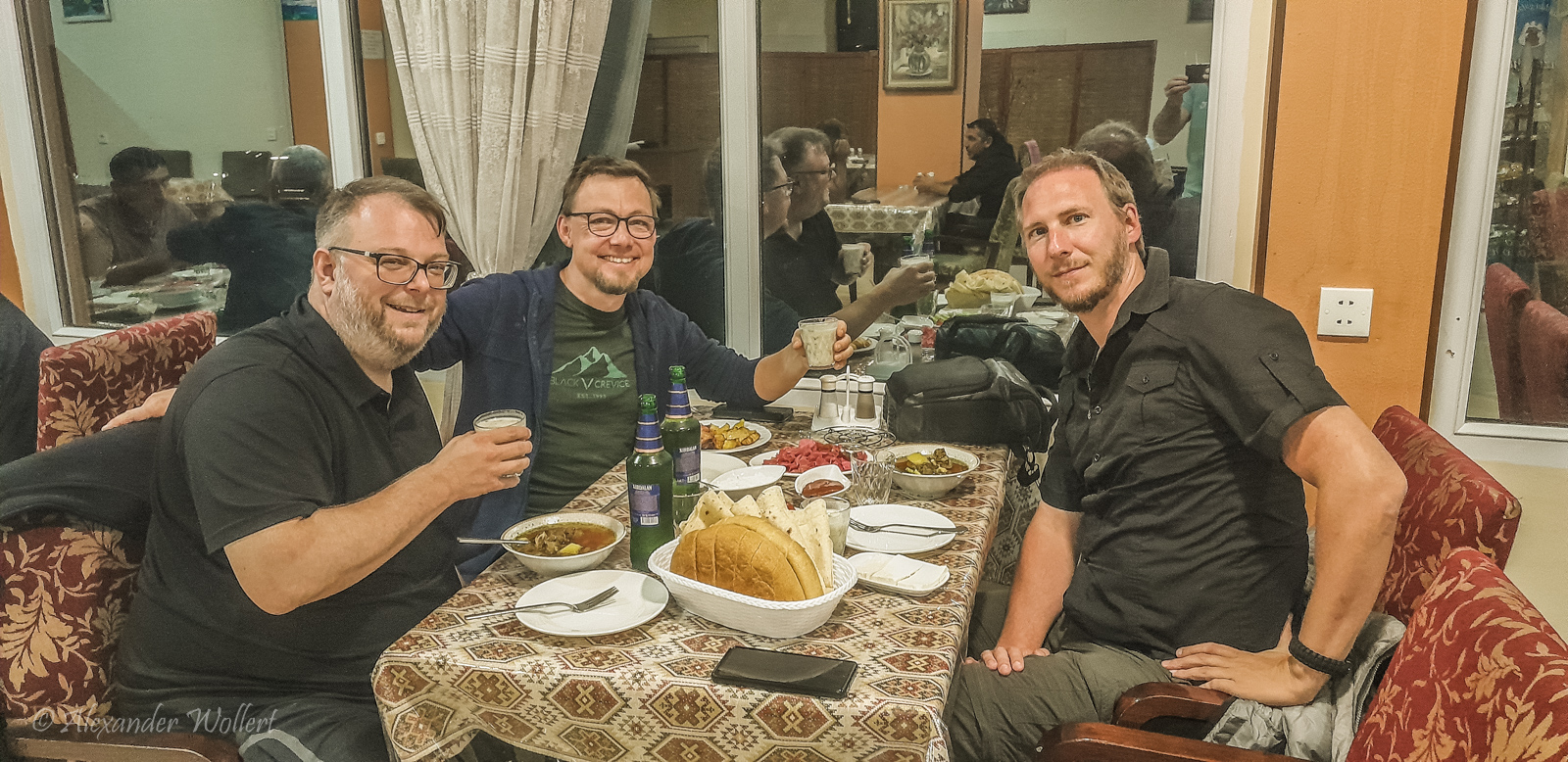
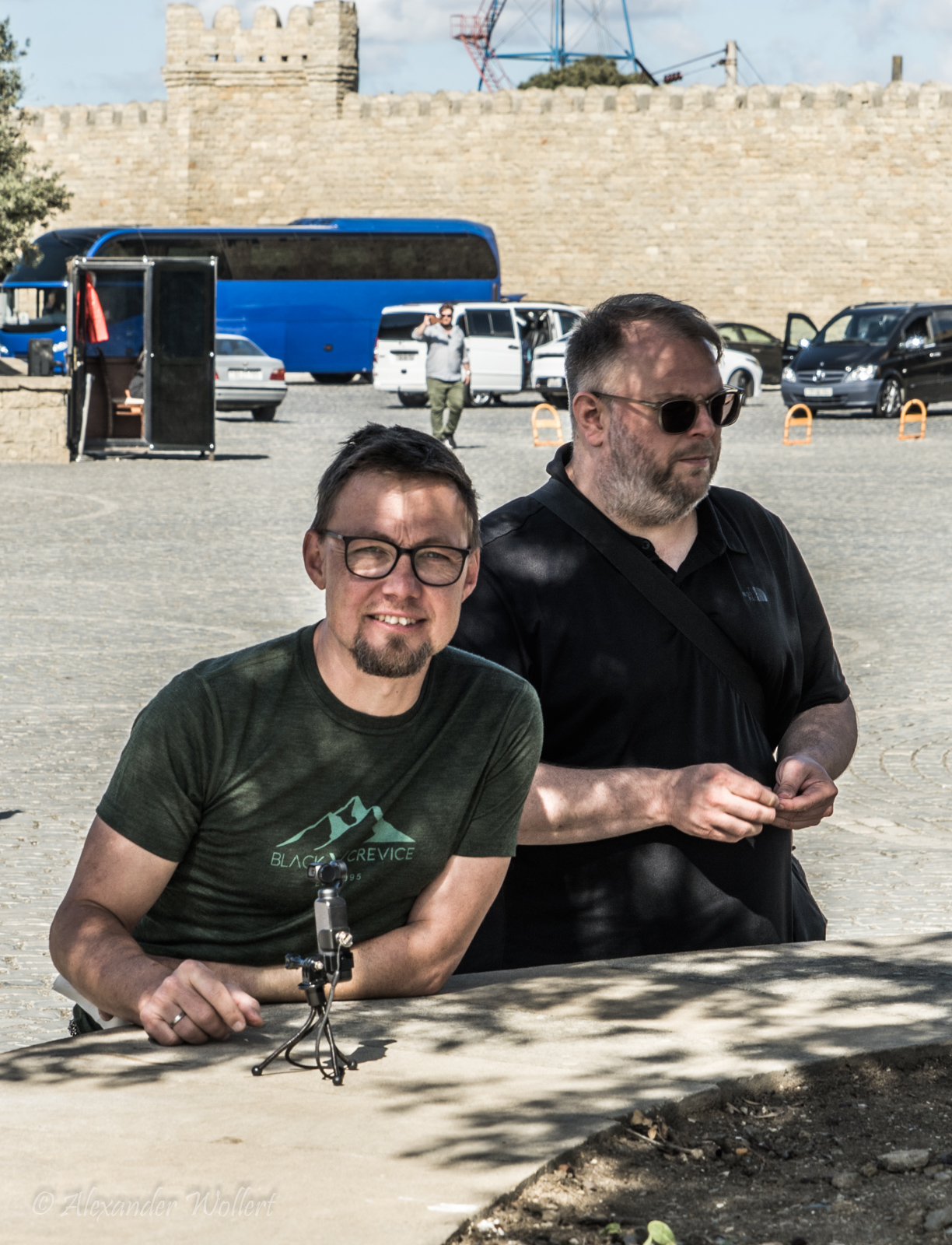
My time in Baku has come to an end. I experienced the charm of the old town and the spirit of the modern metropolis, and above all, the warmth of the locals, thanks to Elvi and Yusif. With my friends Uwe and Chris, who joined me a few days later, I had a wonderful time in Azerbaijan’s capital. As with many previous trips, we plan to explore the country together on our own four wheels.
We left the hotel very early in the morning to pick up our rental car at the agreed address and time. Of course, that didn’t happen, and we weren’t surprised. Finally, the driver showed up and surprised us with an even bigger SUV than we had ordered.
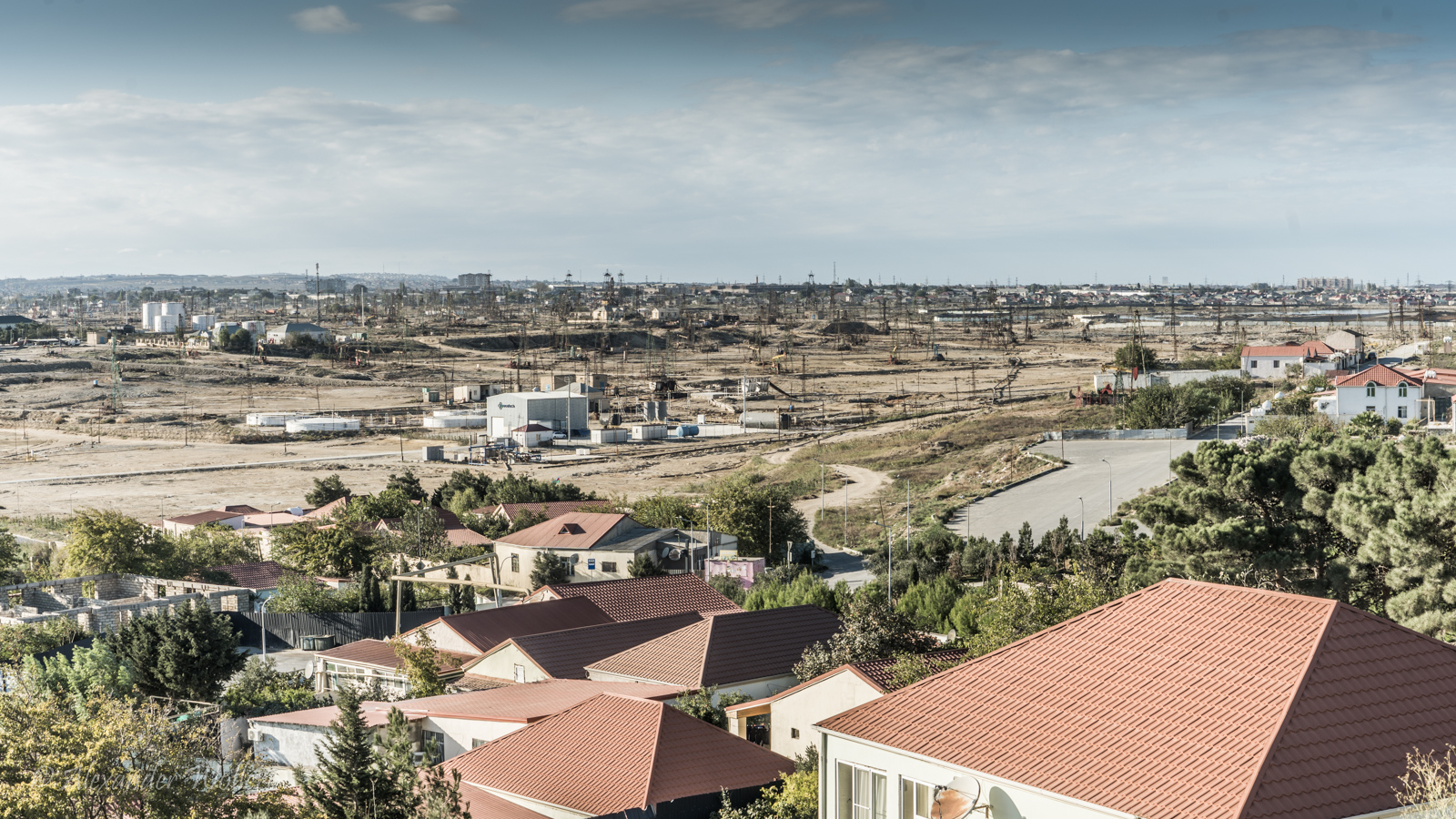
The peninsula is densely populated and an environmental disaster.
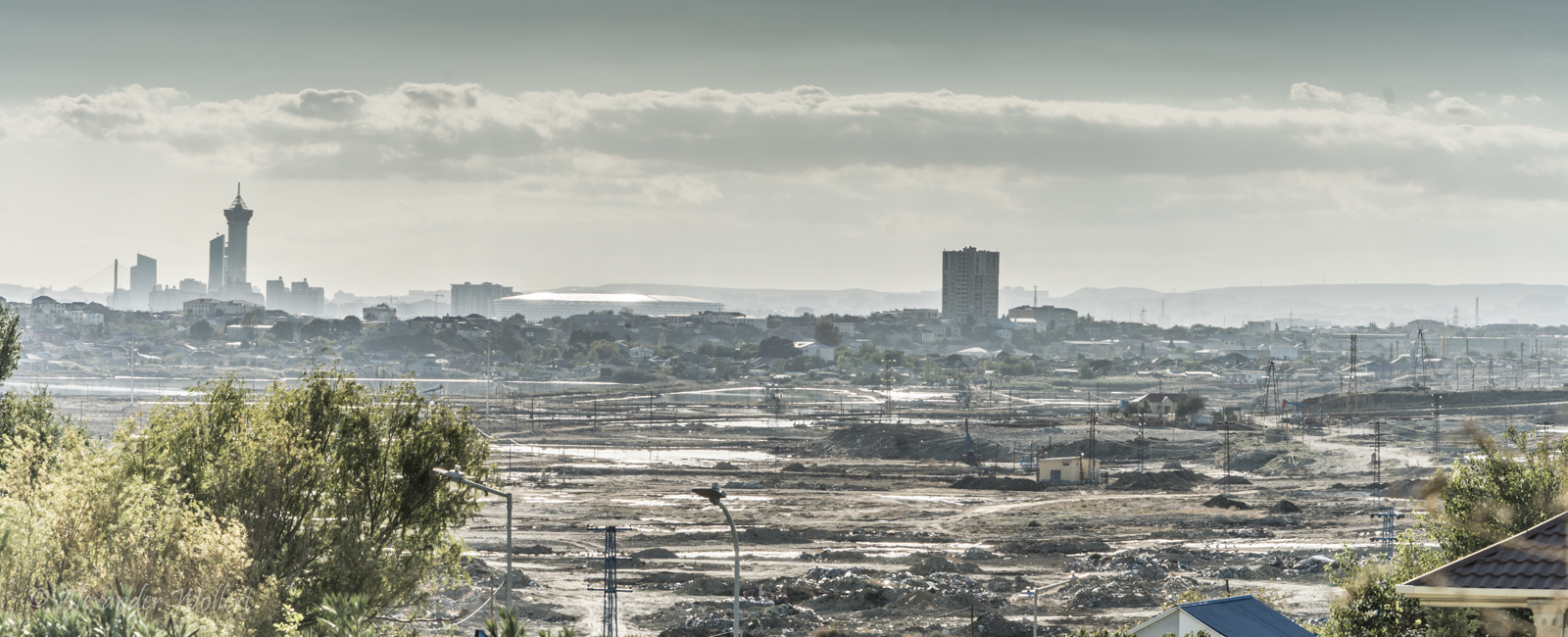
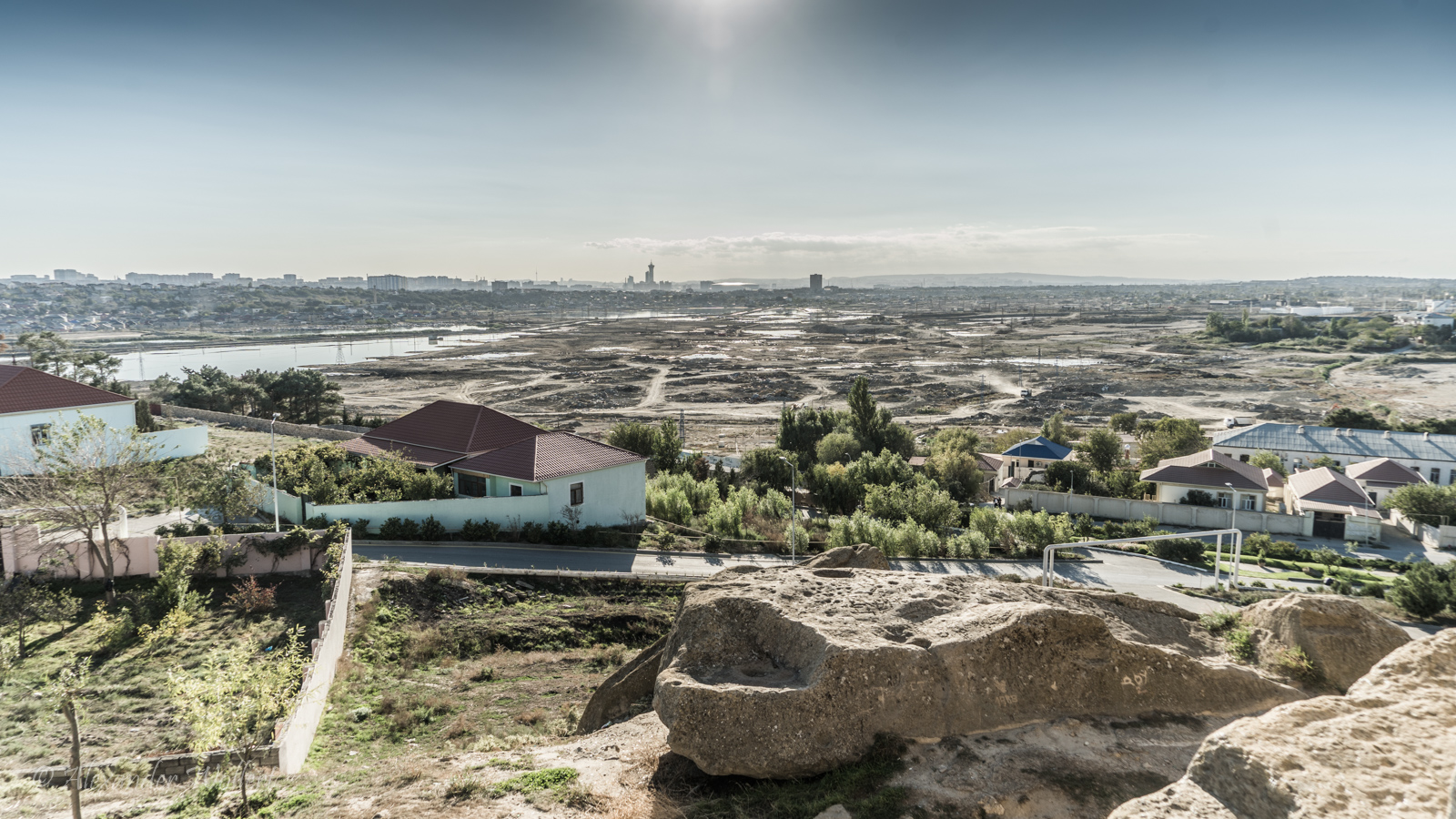
We leave the city behind and drive east towards the Absheron Peninsula, where Azerbaijan maintains a large portion of its oil and gas production. Since it’s a peninsula, we’re essentially driving into a dead end. We plan to drive across Absheron during the day and will need to pass through Baku in the evening to head south towards Qobustan.
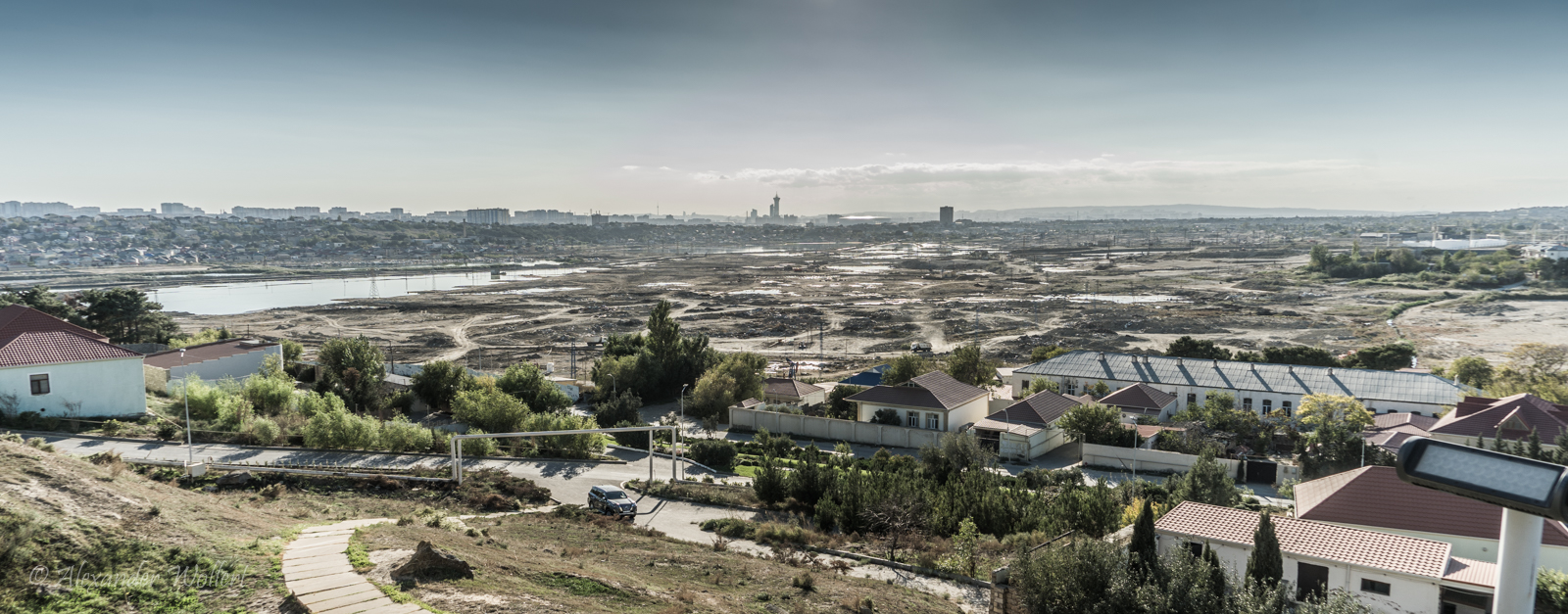
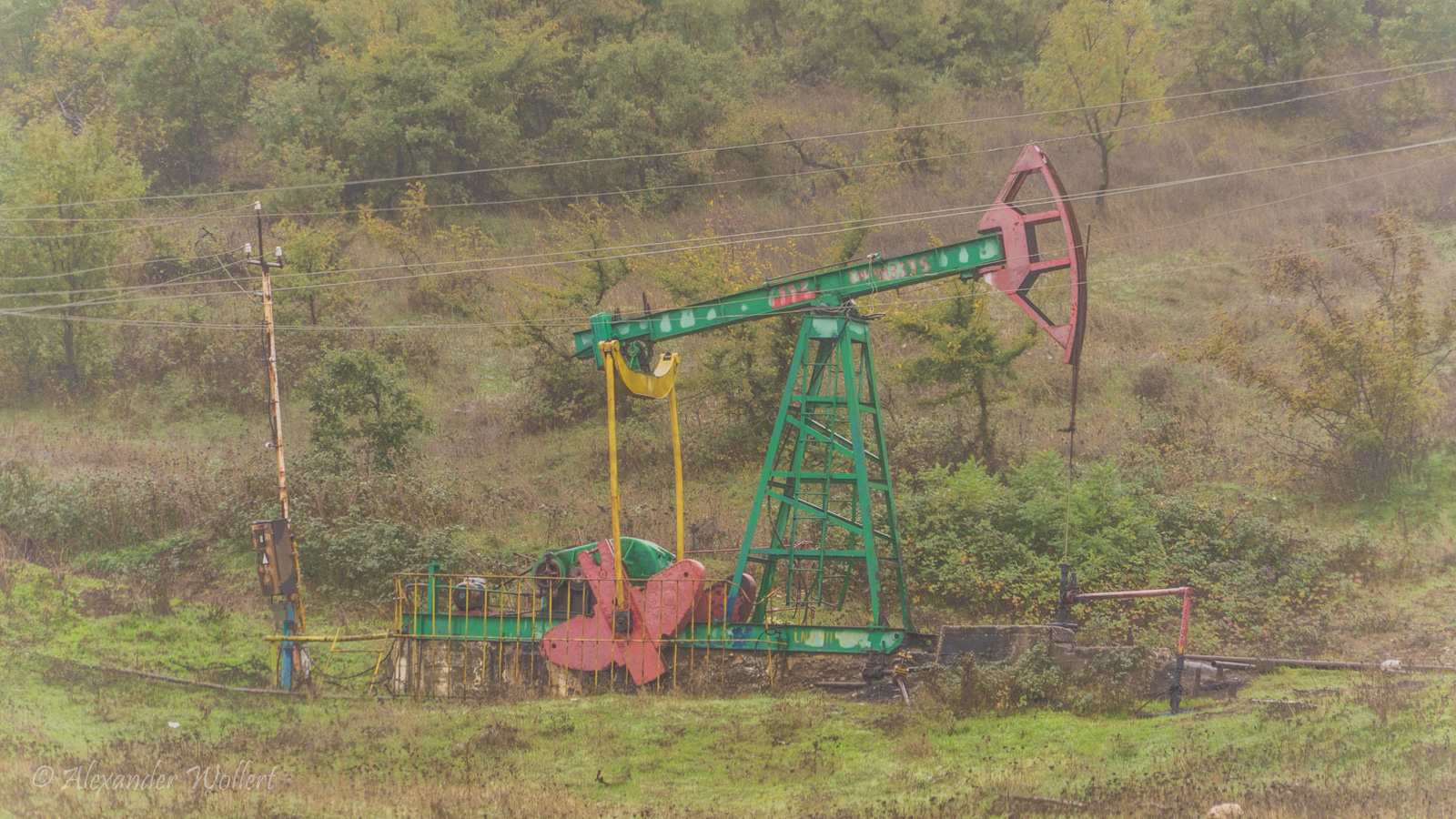
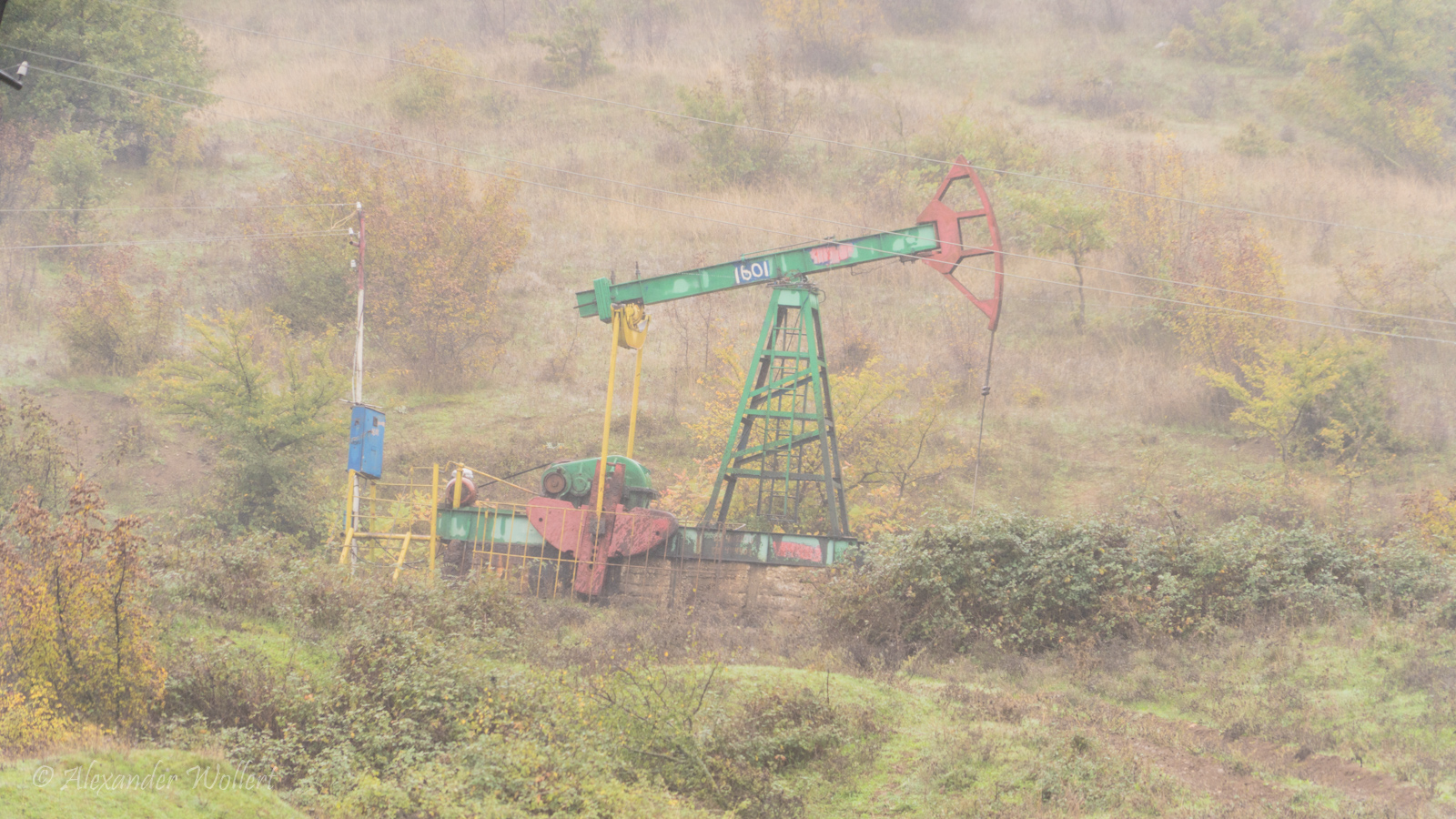
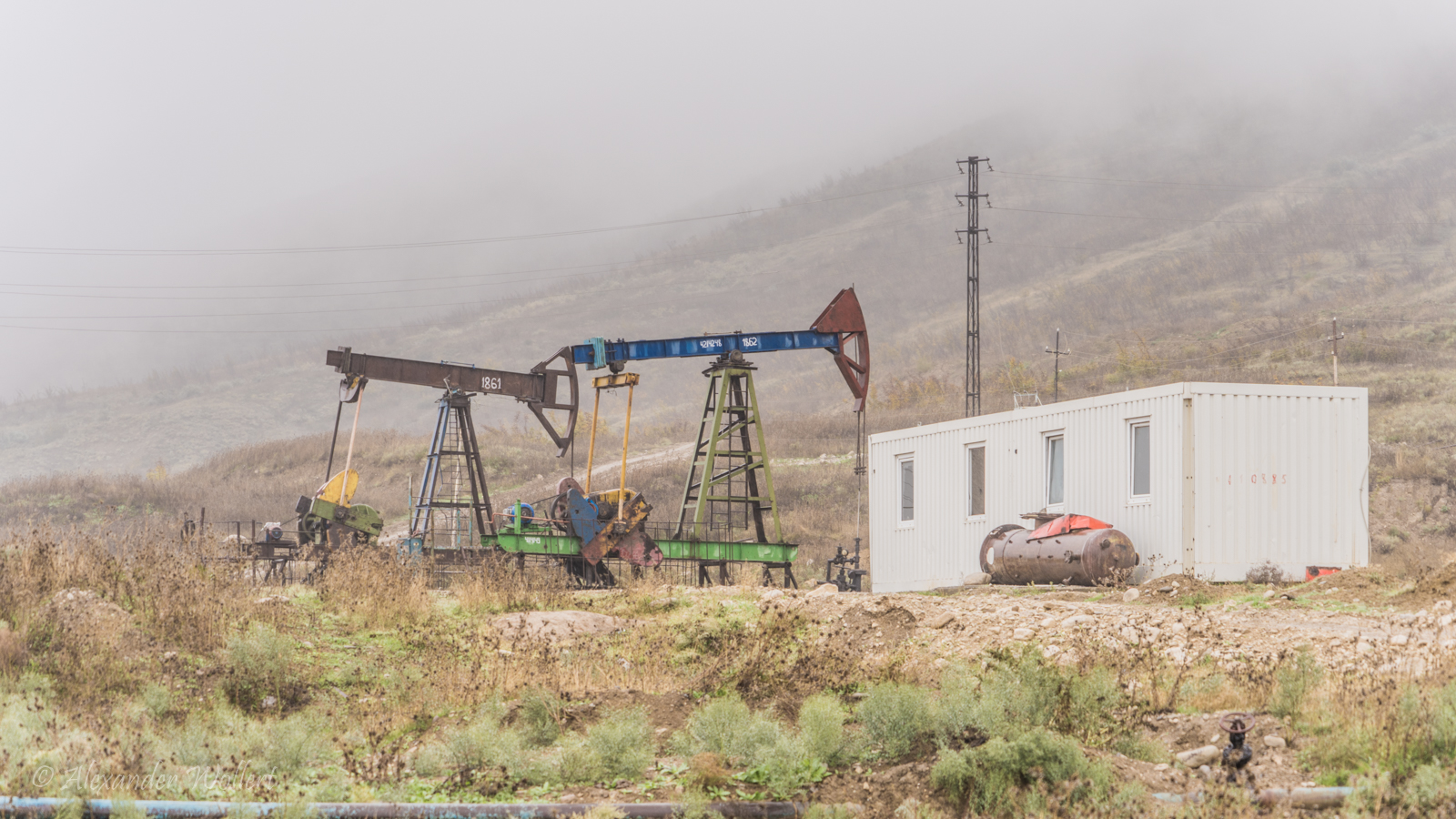
The island is densely populated and an environmental disaster. Thousands of small oil derricks raise and lower their heads with a sublime regularity that is disturbingly relaxing.
They make it clear that they’ll still be pumping water here even when there are no people left.
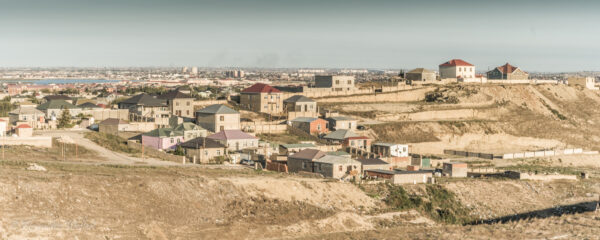
Puddles and pools of oil sludge interrupt the oil fields and the pristine new housing developments. Scattered among them are a few historical remnants of what existed here before the oil boom.
I have rarely gotten such a realistic picture of what a post-apocalypse should be like!
The small oil derricks, with their monotonous activity, make it clear that they will still be pumping here even when there are no more people.
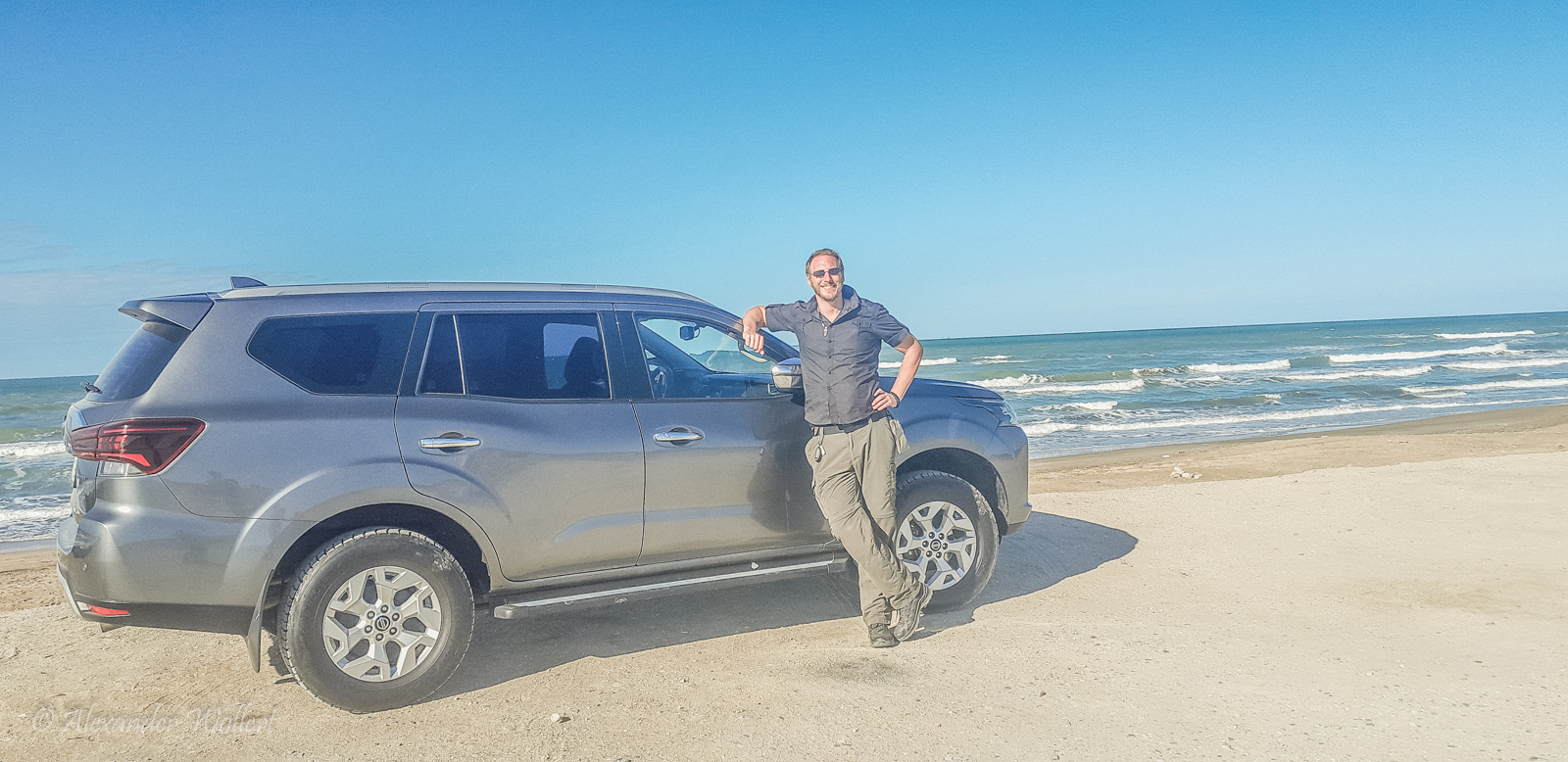
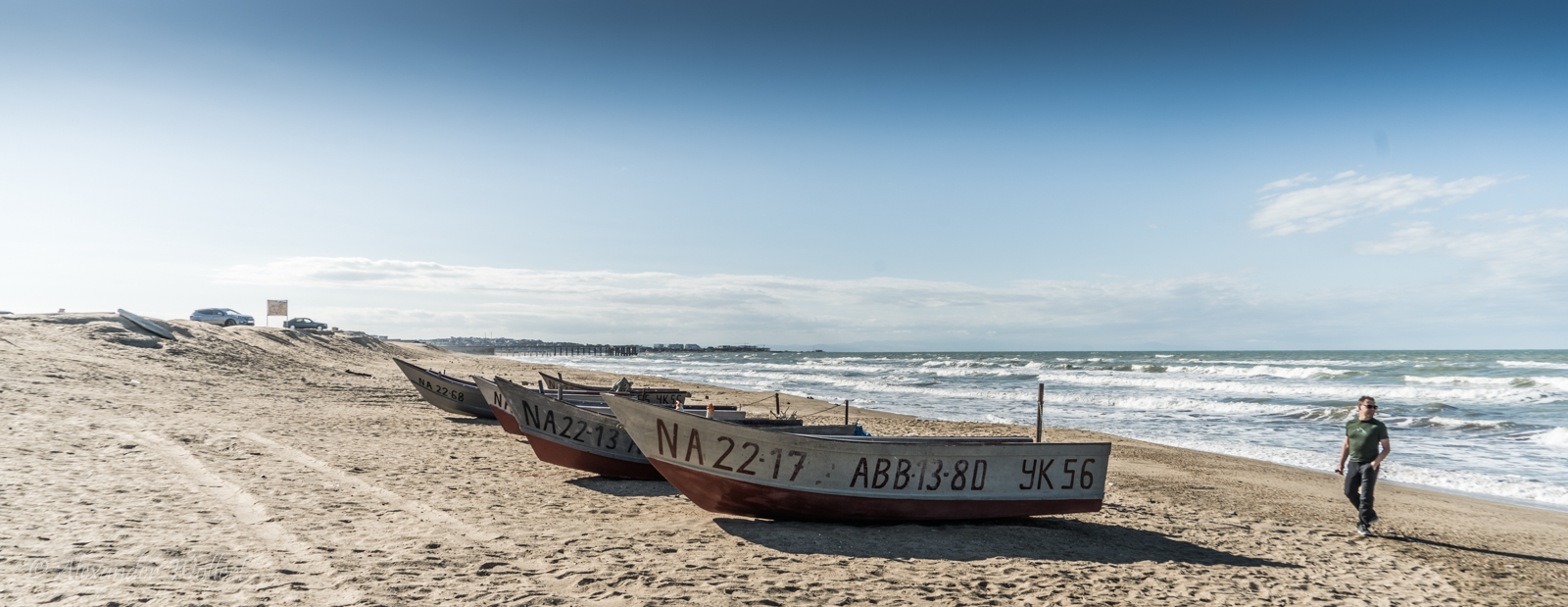
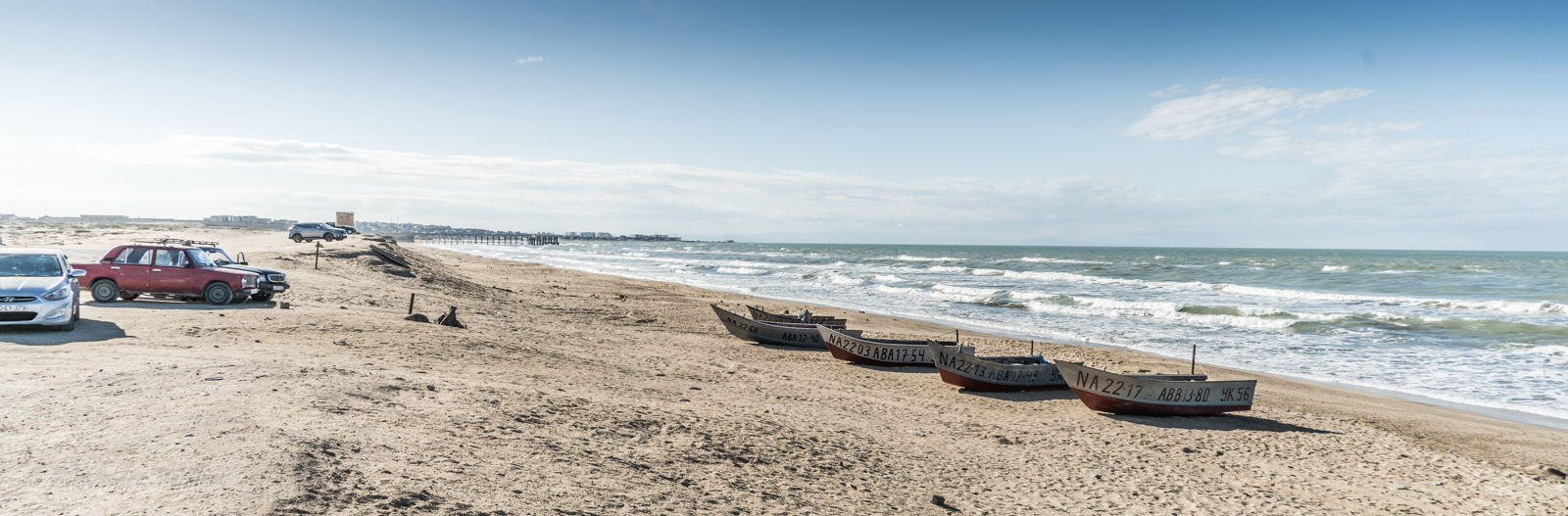
Since we’re already driving along the Caspian Sea, we stop at the beach. There are actually fishermen here. We, on the other hand, don’t even dare to touch the water. We avoid eating any fish for the entire trip.
Boats are lined up idyllically along the beach. A few fishermen pass by and eye us suspiciously. Their lives are no picnic, especially in waters like these.
Amidst all the industry, a few historical documents can still be found showing what existed here before the oil boom:
Fortresses and fire temples
There’s a lot of traffic on the peninsula. I suspect that property prices here are very low, and the dream of a modern detached house with a garden is very affordable and easily achievable here, in close proximity to the capital and one’s workplace.
We drive along the busy highways and pass the airport.
Two police officers eyed our car skeptically at a supermarket. As we were about to get in, they approached us. However, the moment we turned towards them, they both stopped abruptly, turned around, and disappeared. Did it have something to do with them identifying us as foreigners?
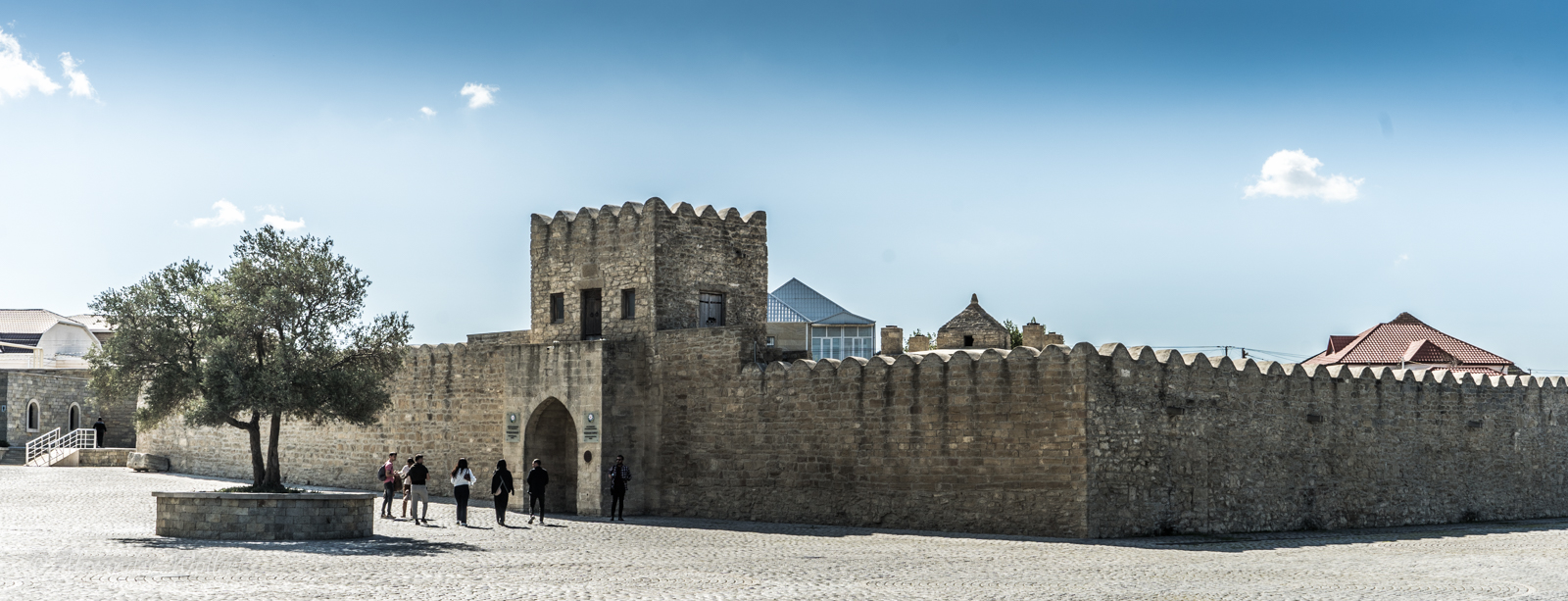
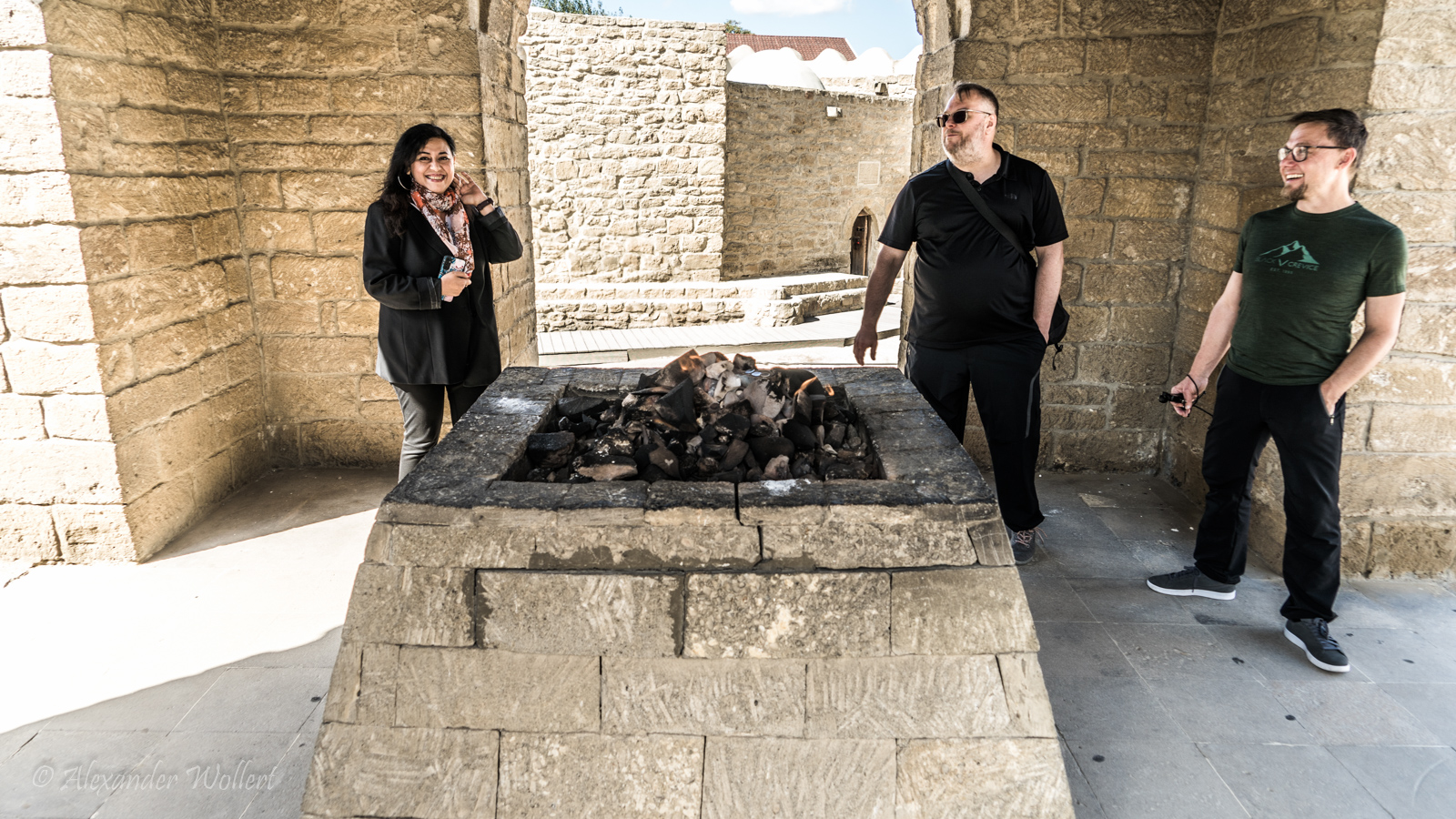
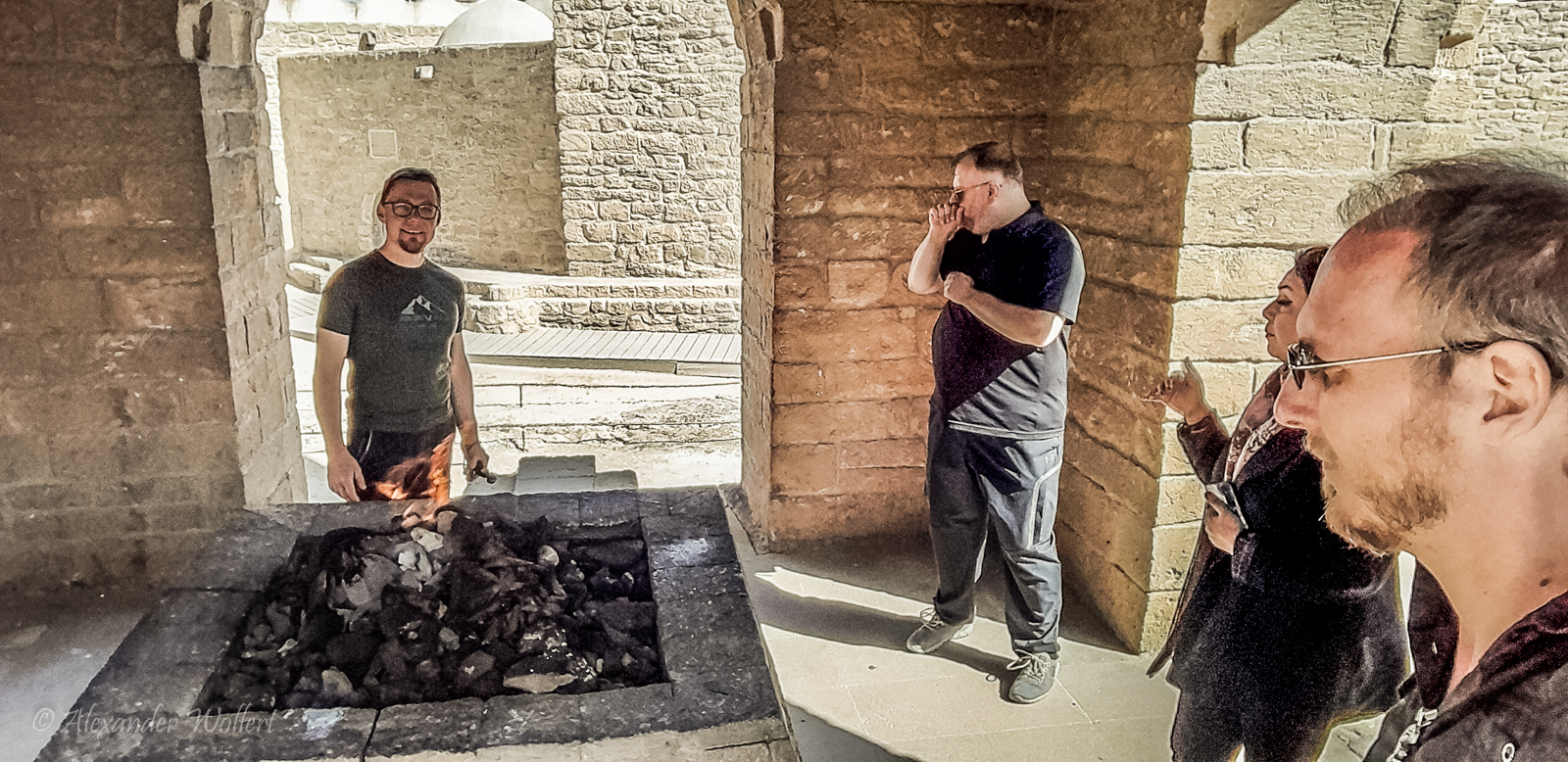
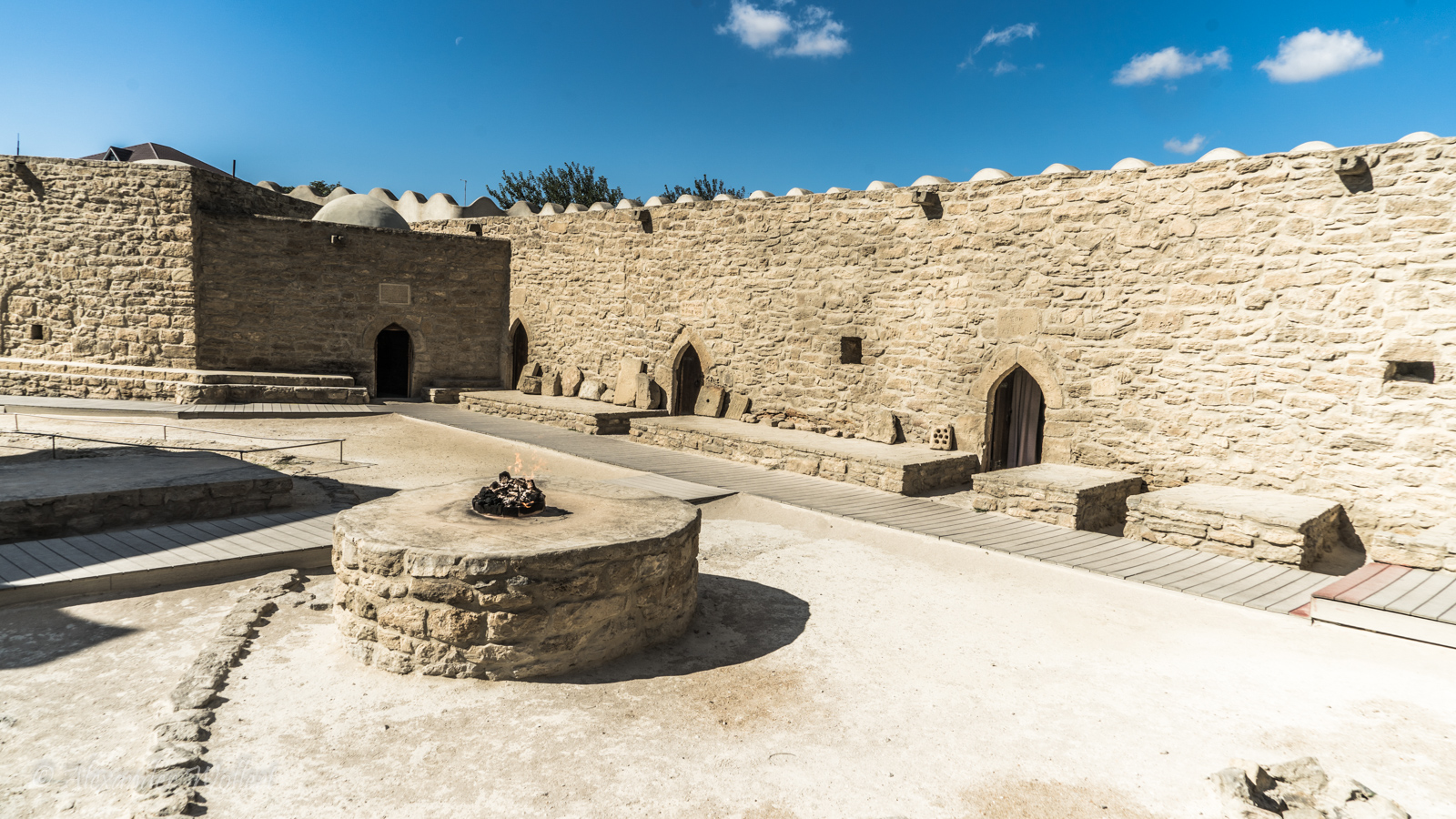
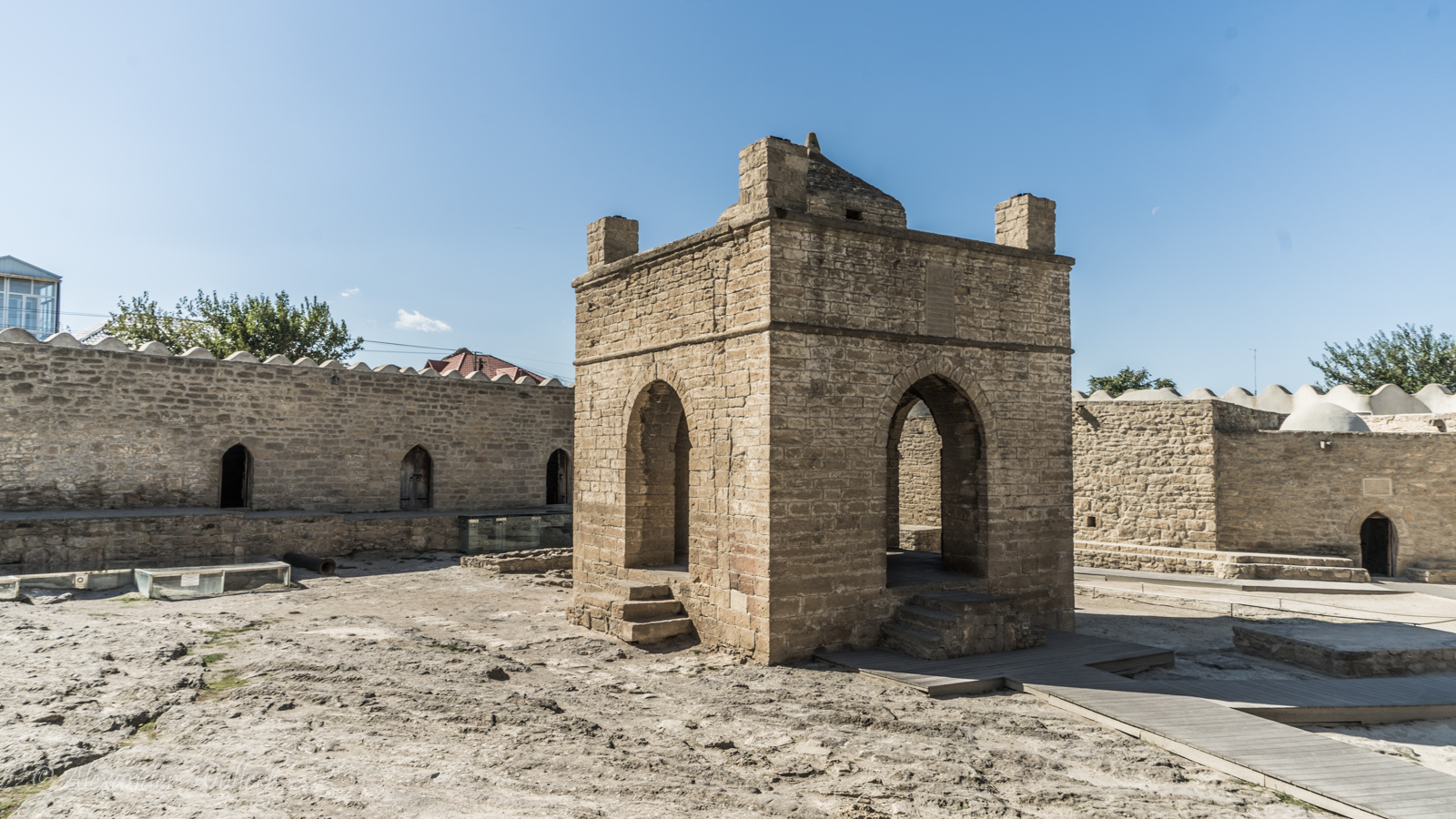
The fire temple of Ateshgah is ancient and was already used by the followers of Zoroaster. But Hindus even came from present-day India to worship the place where the fire burns eternally.
The sacred site was razed by the Soviets because promising gas deposits were found directly beneath it. With the help of sponsors from India, the site was rebuilt.
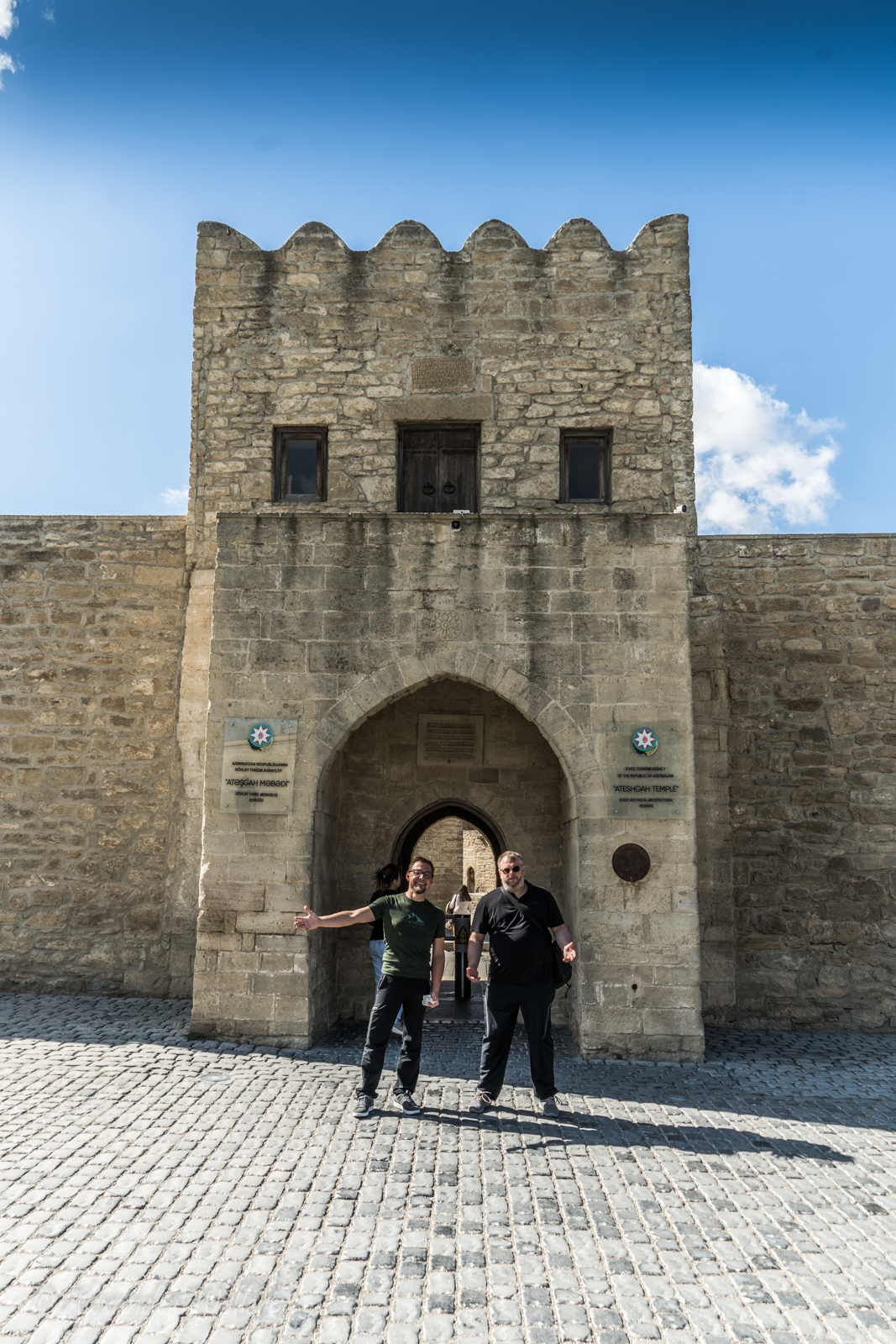
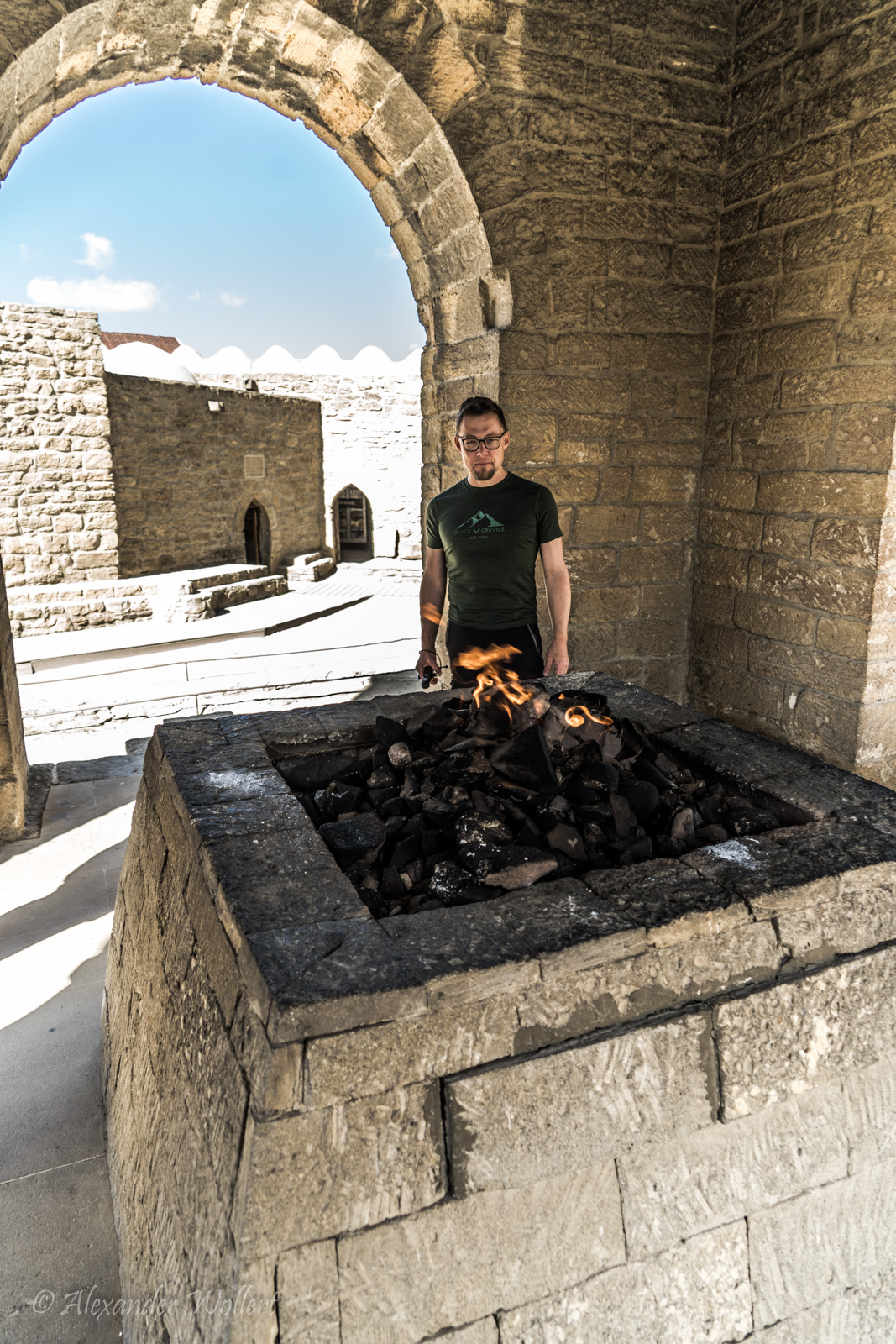
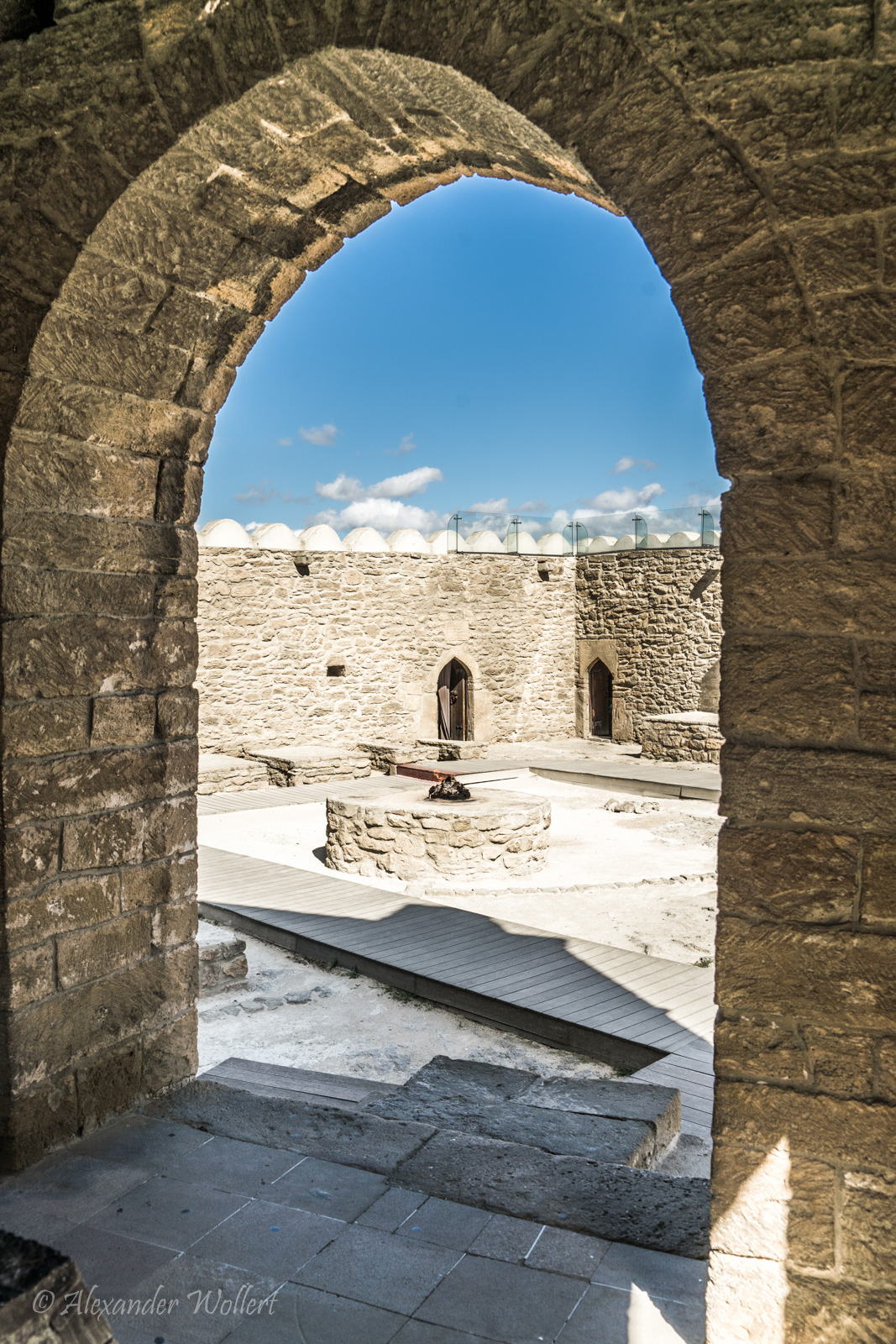
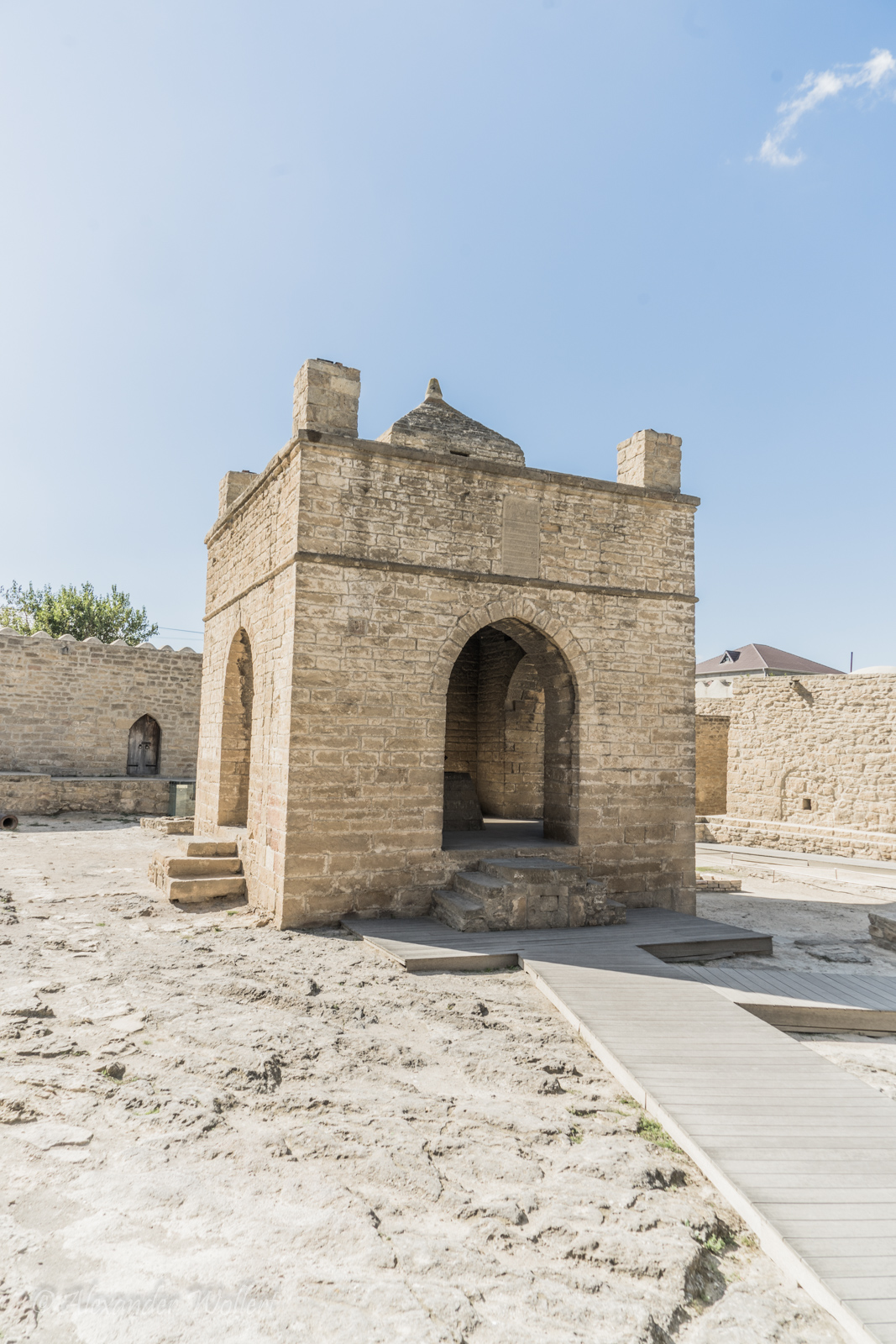
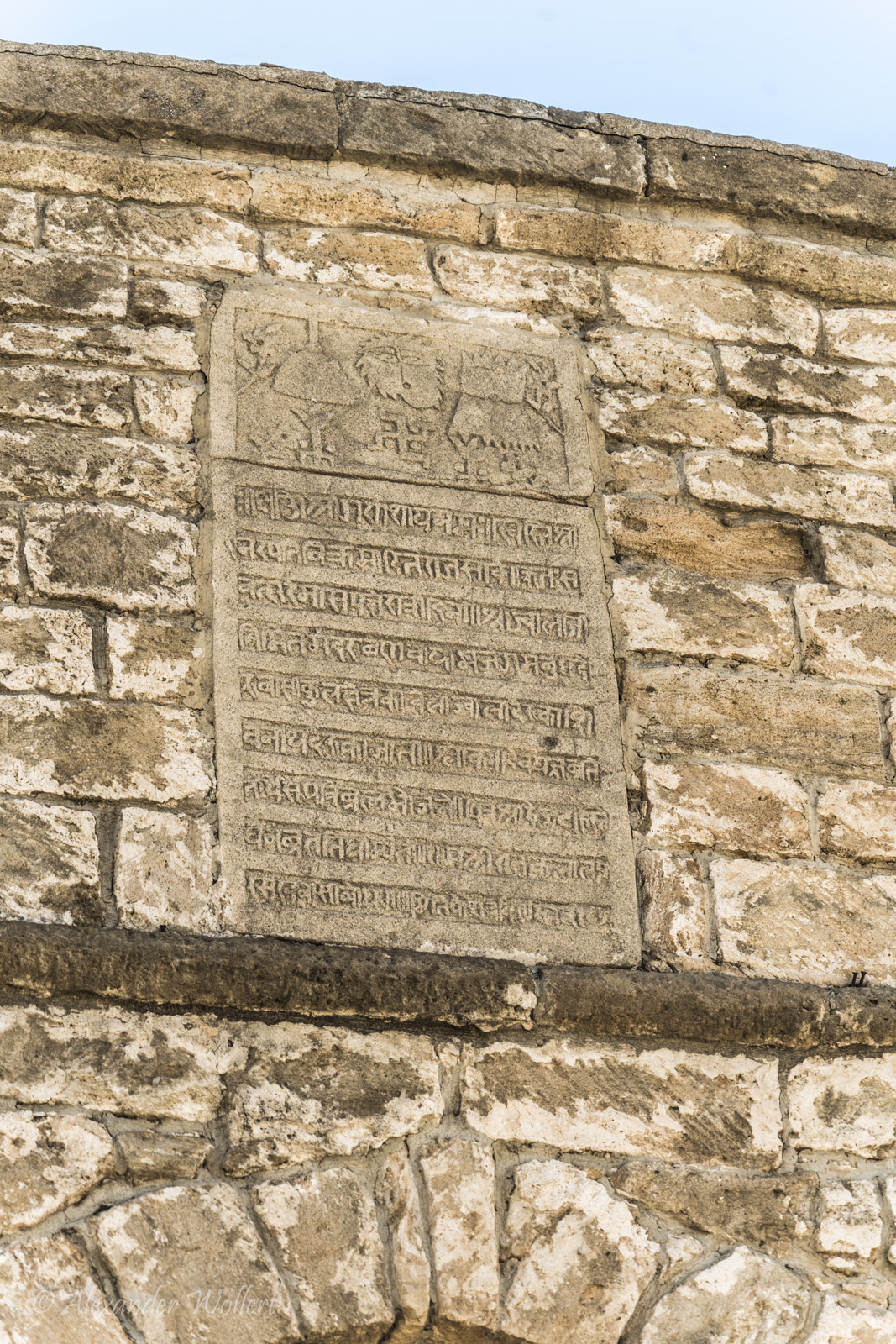
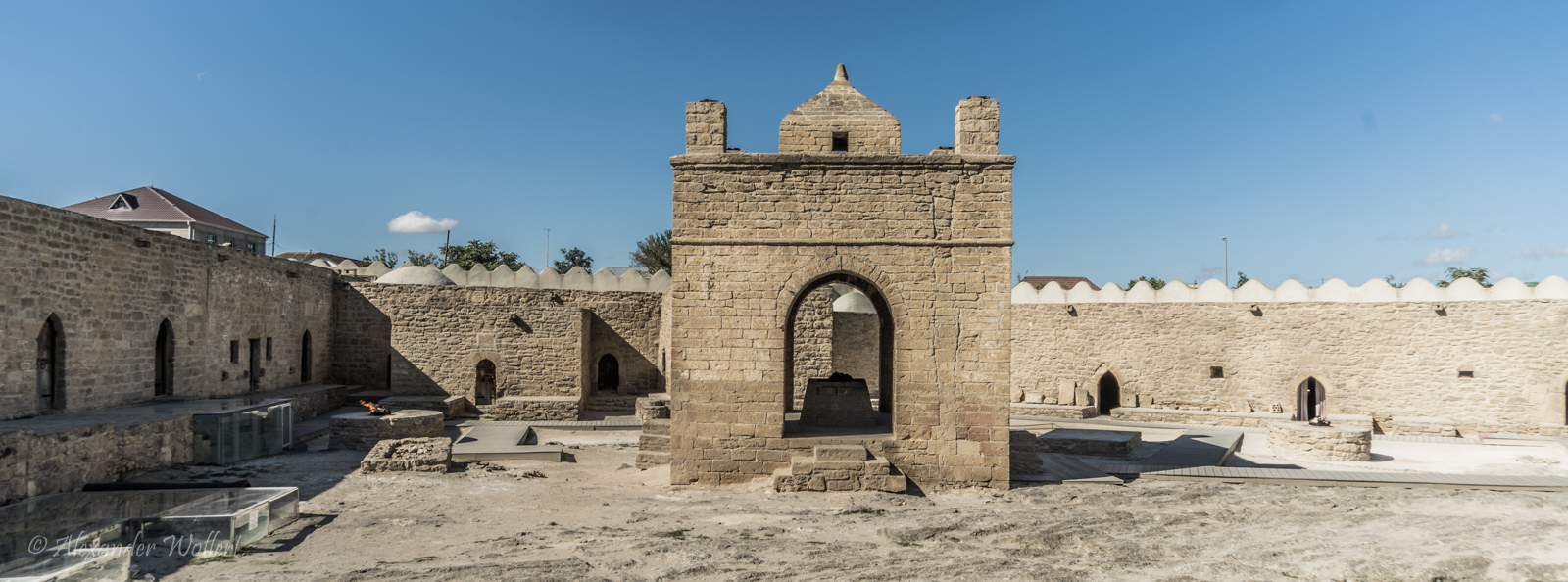
Incredible: Even hundreds of years ago, pilgrims came from distant India to see this place.
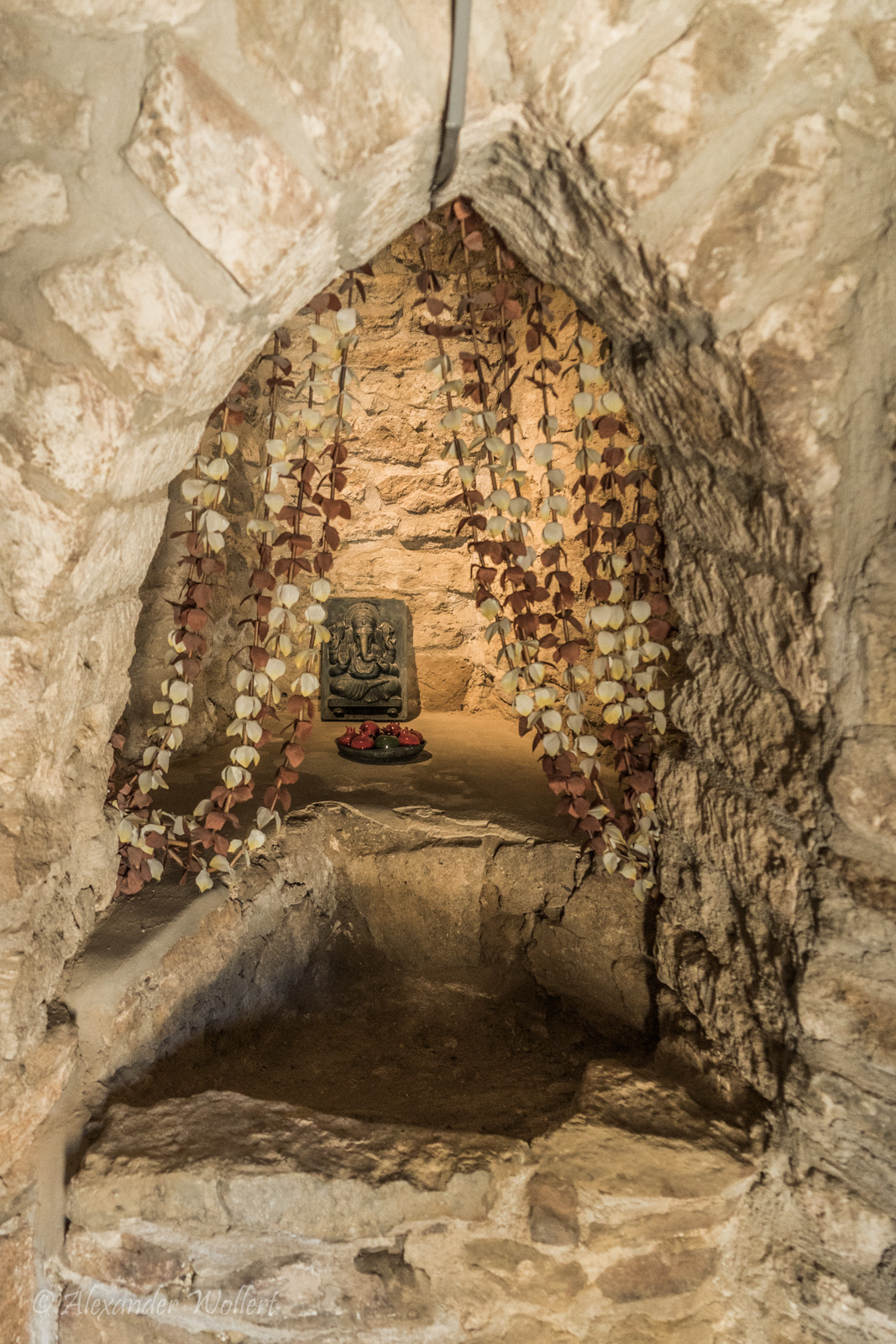
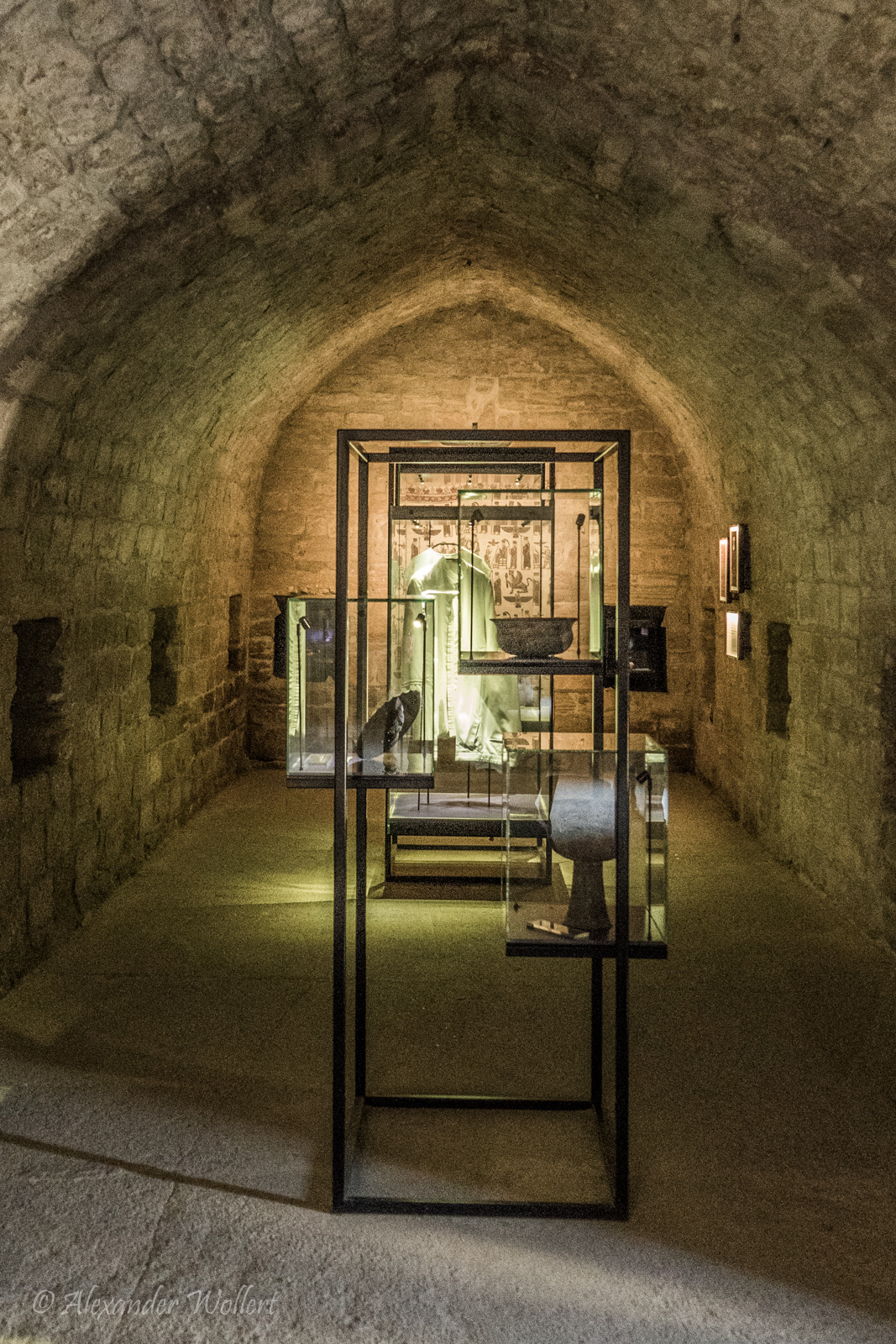
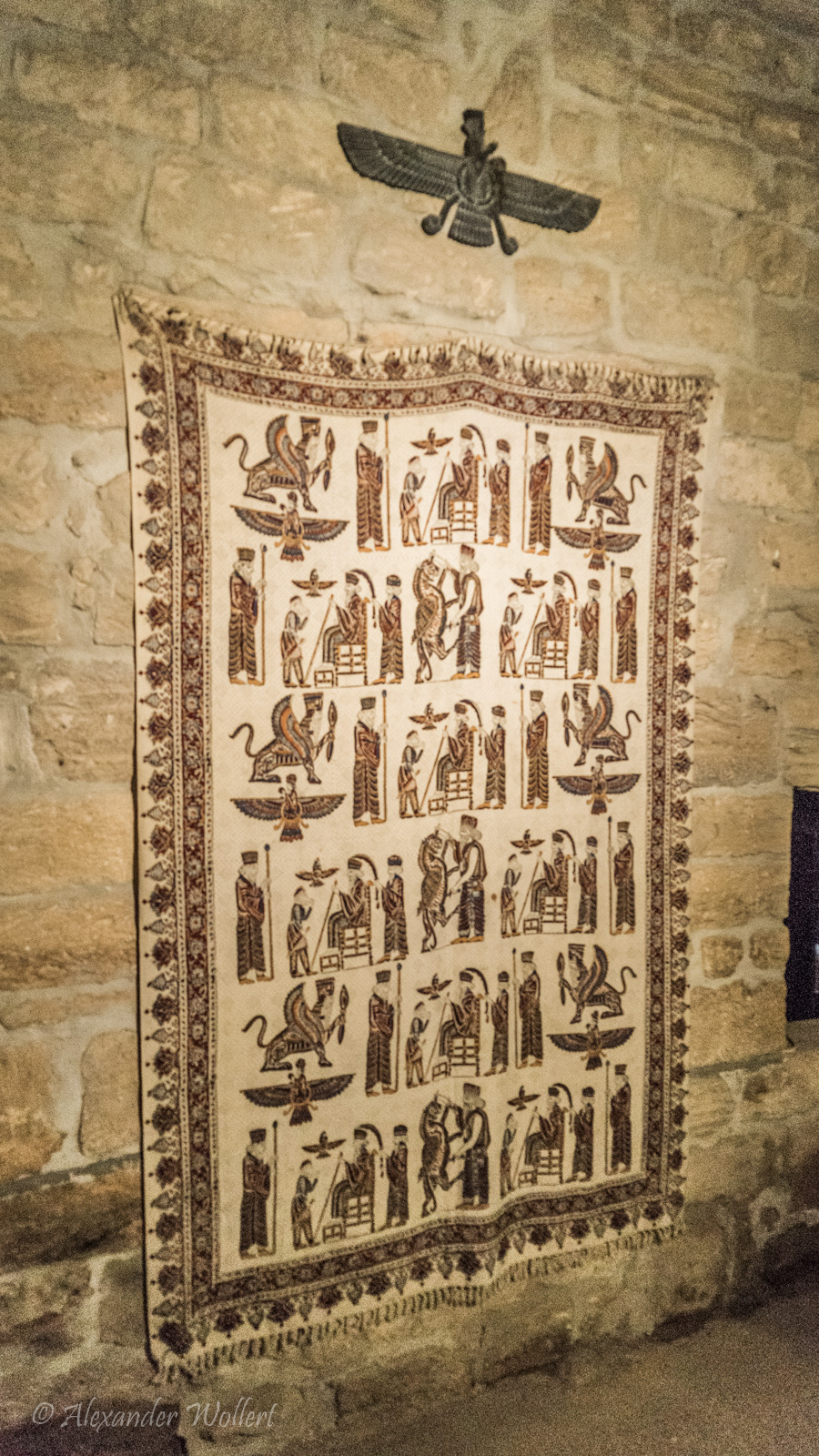
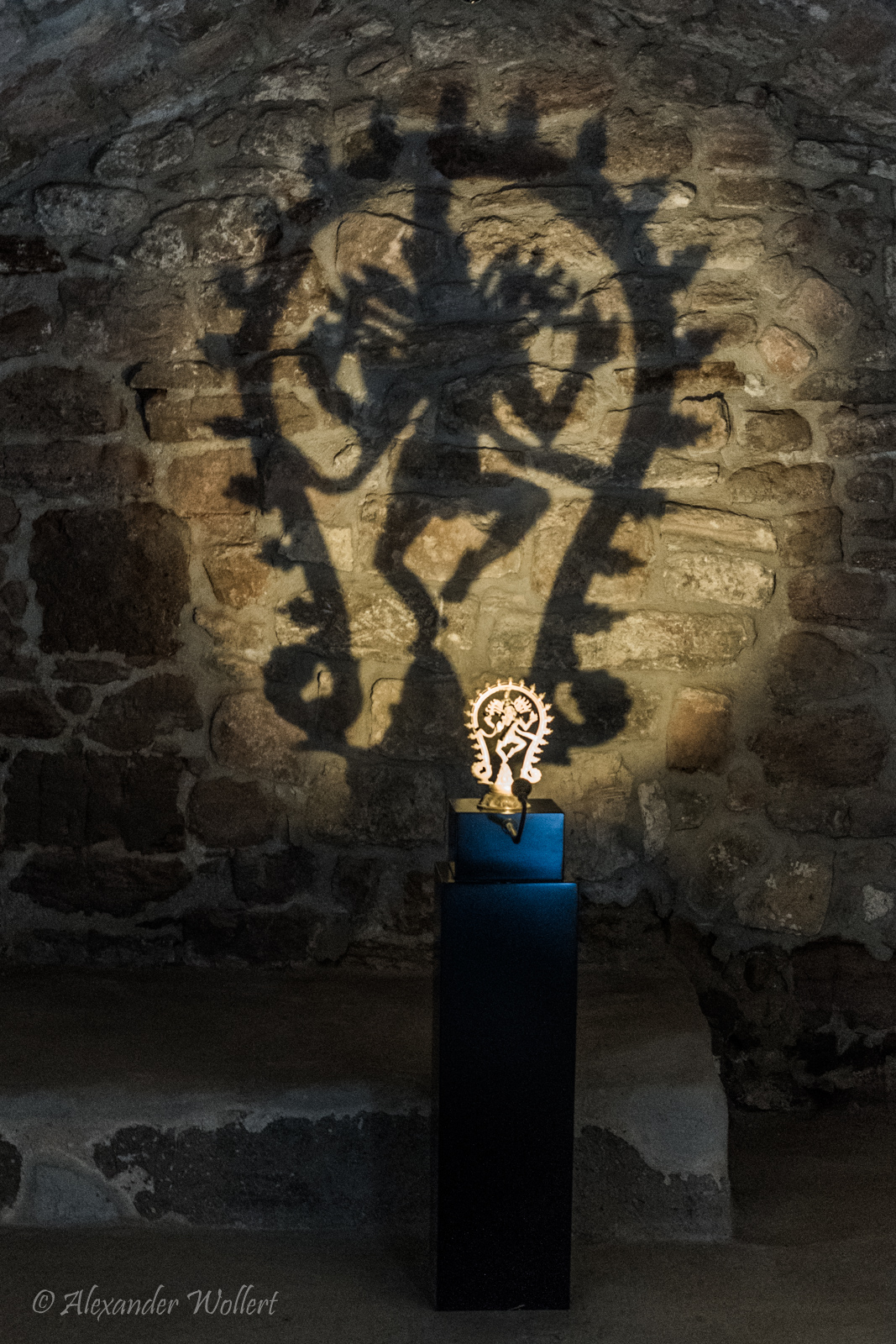
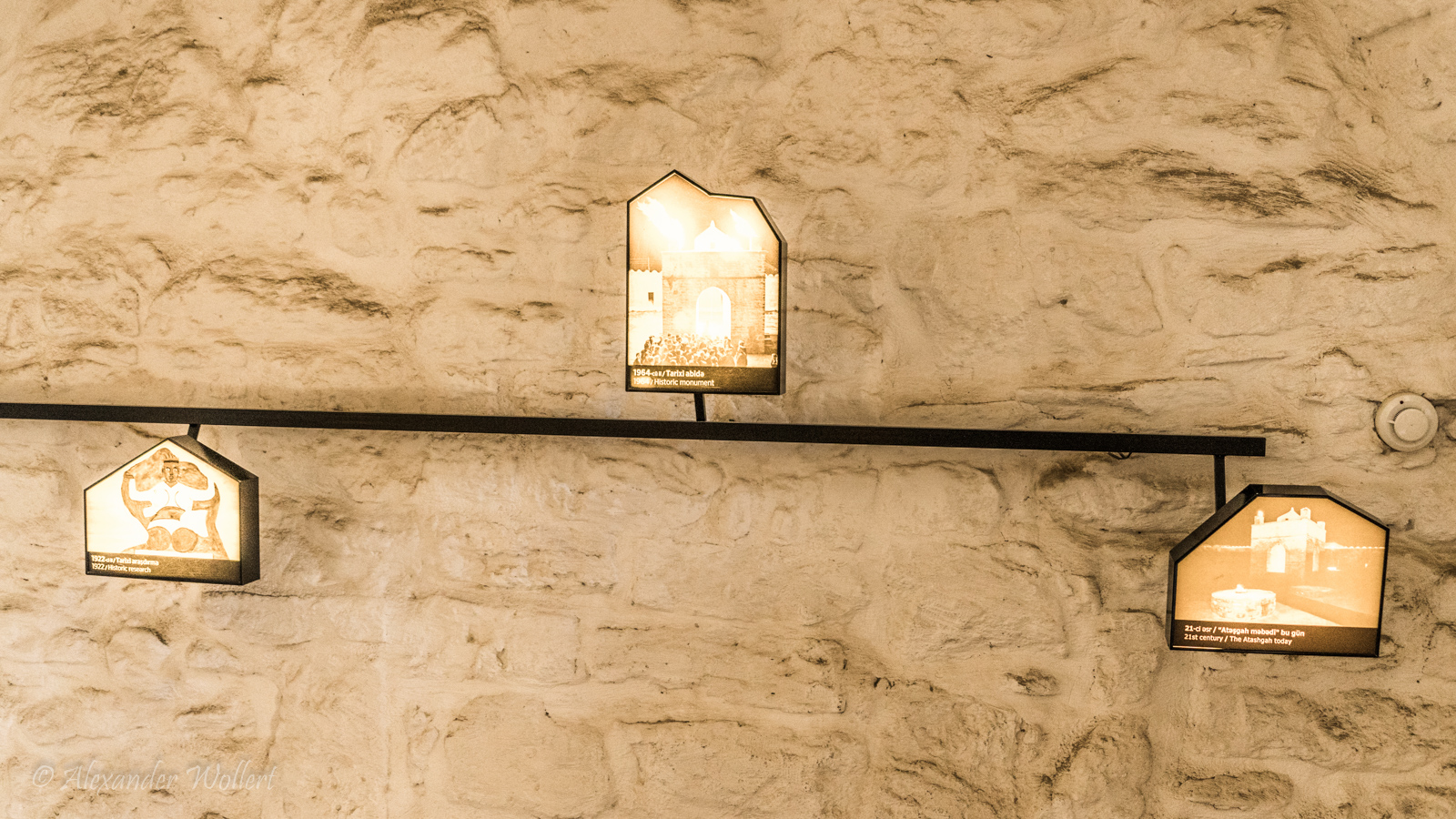
The Fire Temple of Ateshgah
Even in antiquity, this place was considered sacred, because flammable gases emanated from the ground, spontaneously igniting and creating a natural “eternal fire” for centuries. This phenomenon made the site an important center of fire worship – especially in Zoroastrianism, which venerates fire as a symbol of purity and divine light.
The temple acquired its present form in the 17th and 18th centuries, when Hindu and Sikh traders and pilgrims from India built a pentagonal temple complex here. Inscriptions in Sanskrit and Gurmukhi still bear witness to their religious practices and the significance of fire as a sacred element.
The central altar, once fed by natural gas, formed the heart of the complex.
With the onset of the oil boom in the 19th century, the natural gas flames dried up, and the temple gradually lost its spiritual function. It was not until 1975 that it was restored and reopened as a museum. Today, the Ateshgah is an important cultural monument, a reminder of the region’s millennia-old fire tradition, ancient trade routes, and the religious diversity that has shaped Azerbaijan.
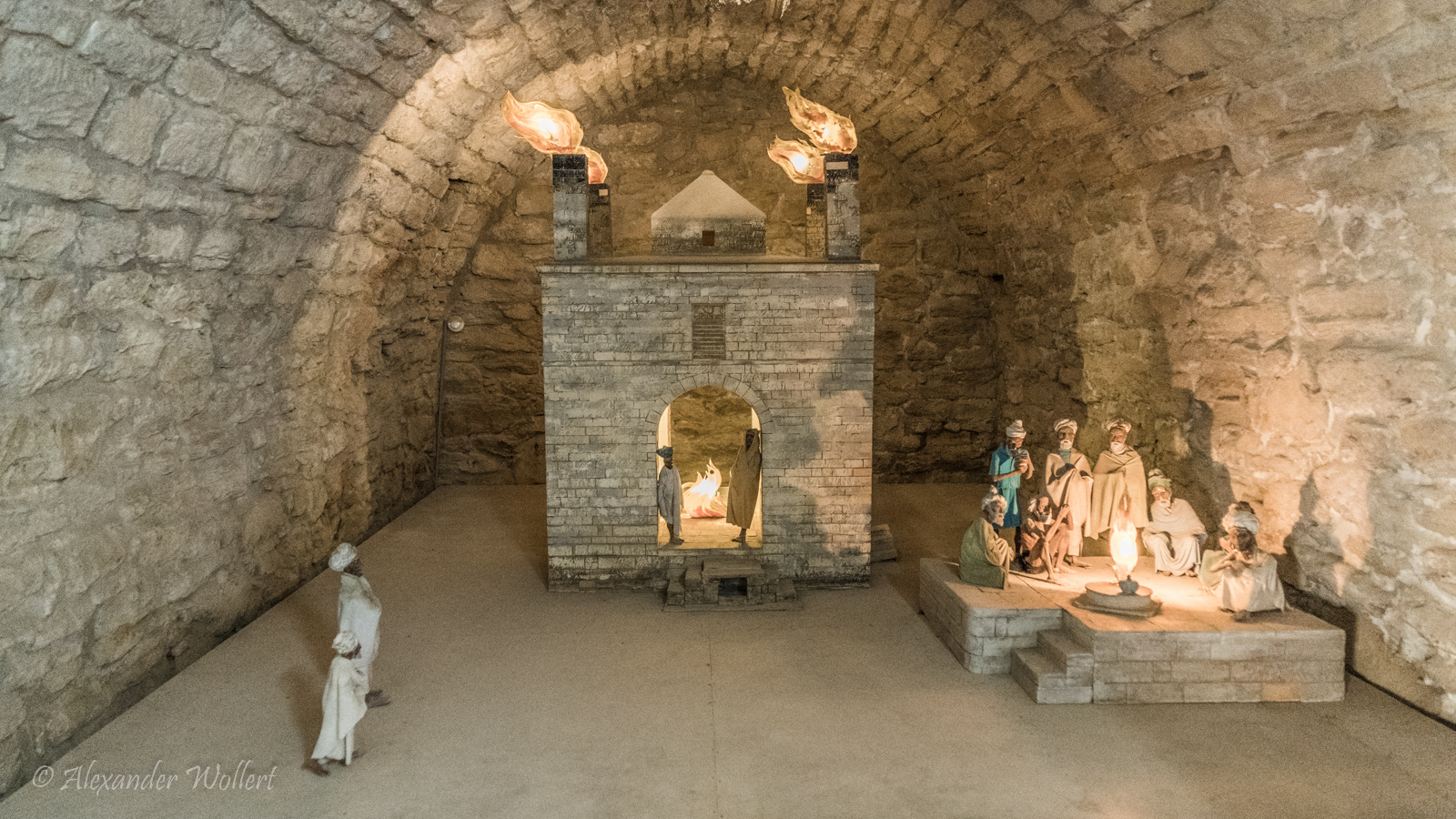
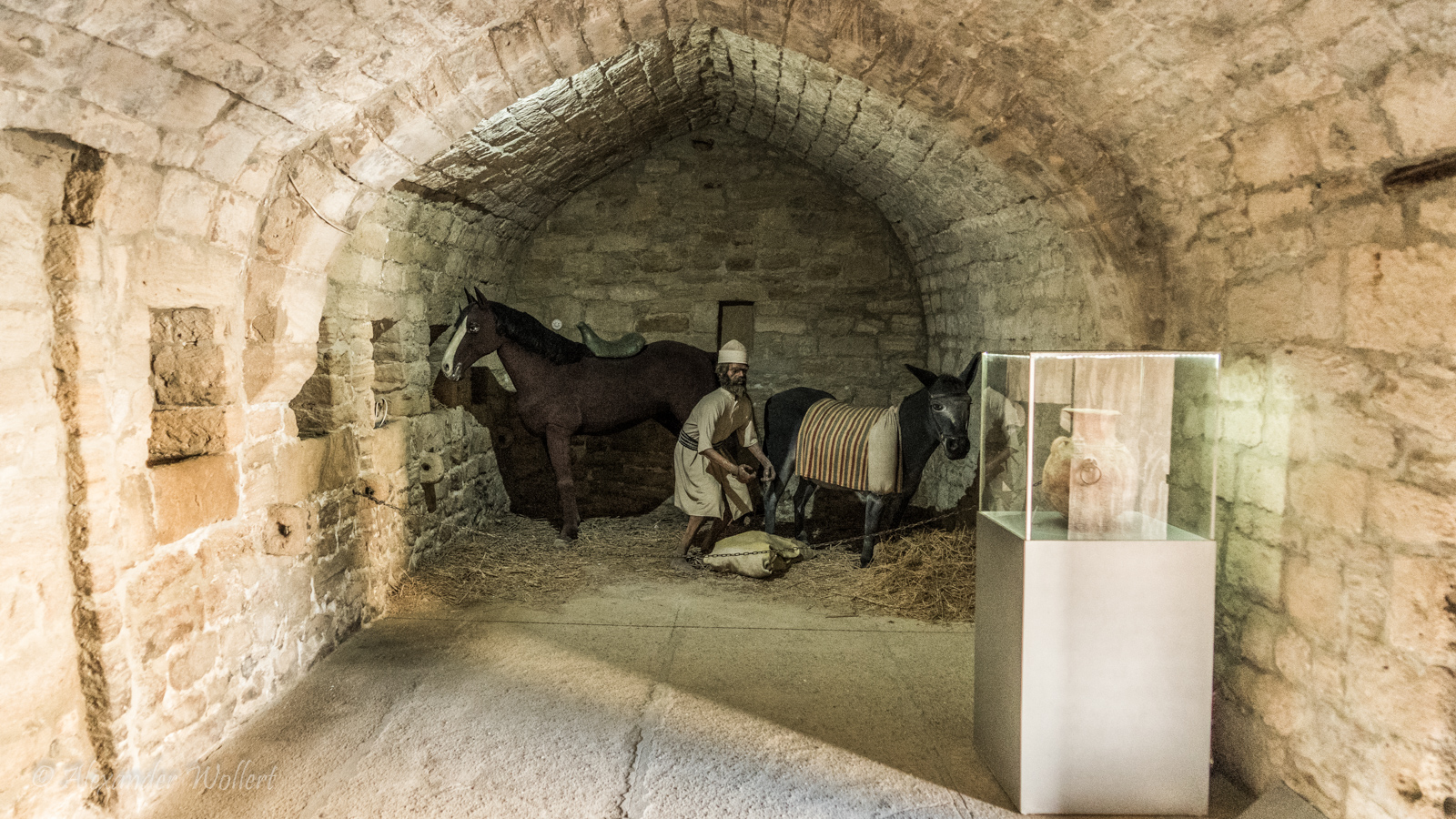
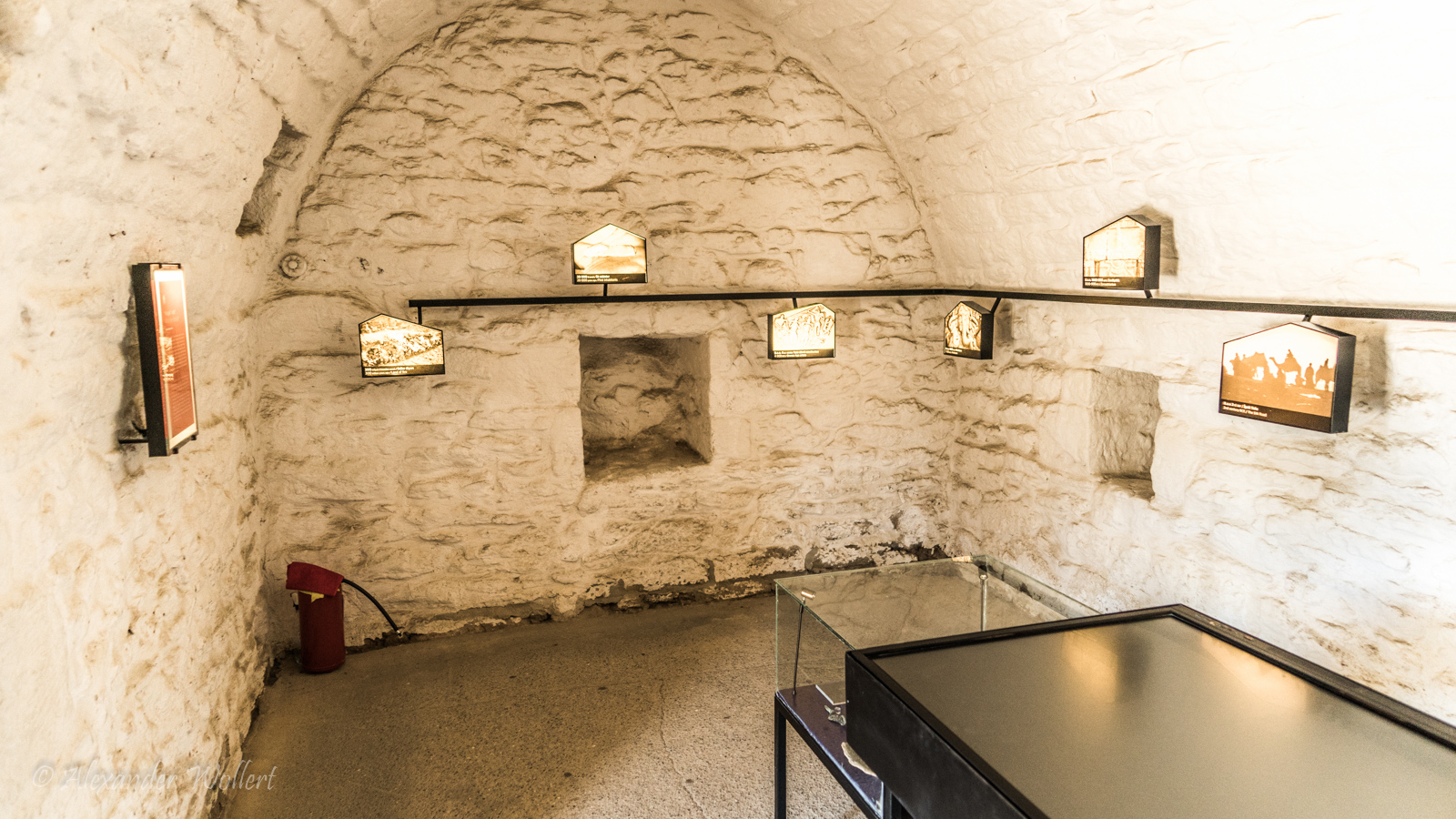
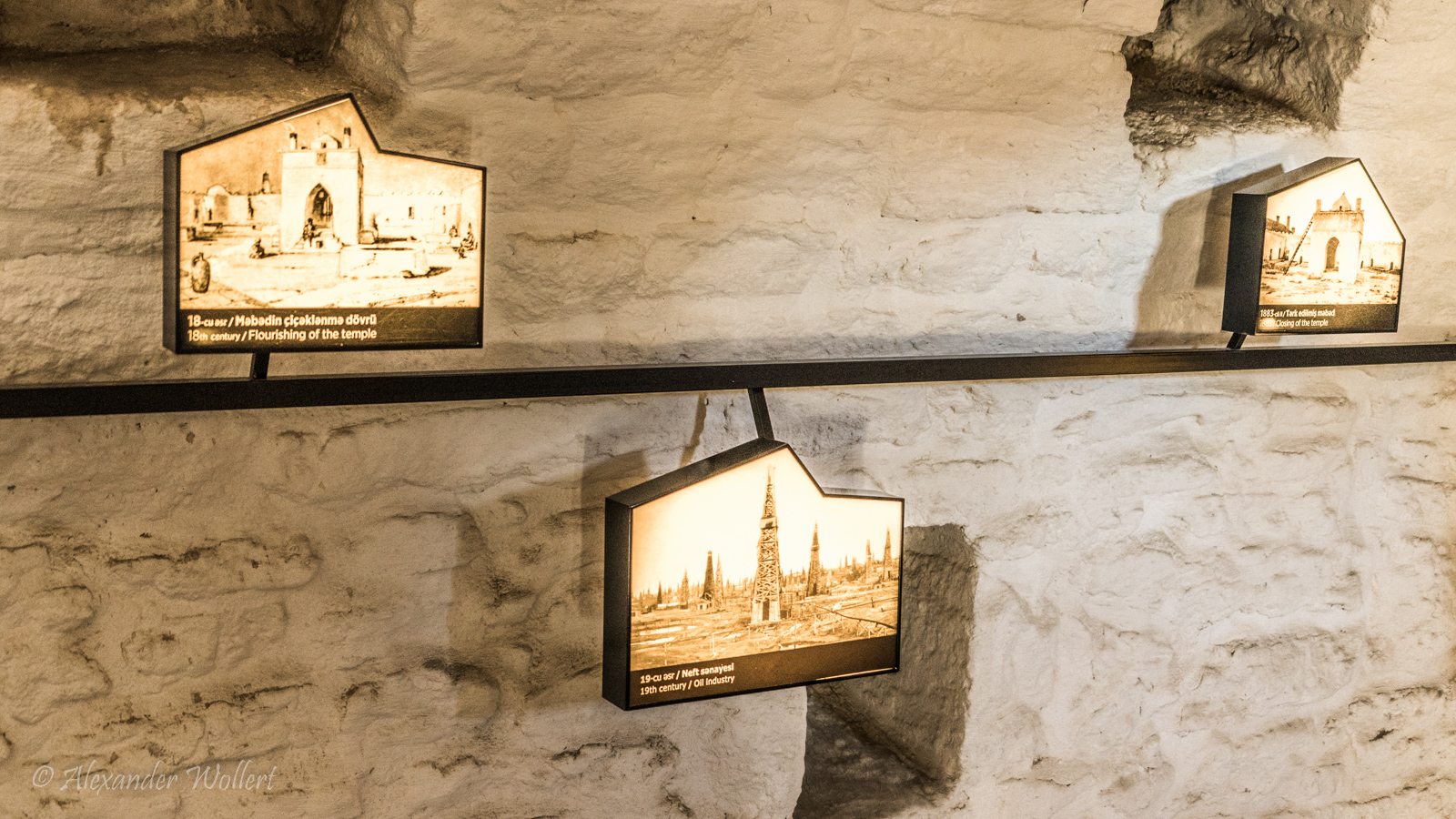
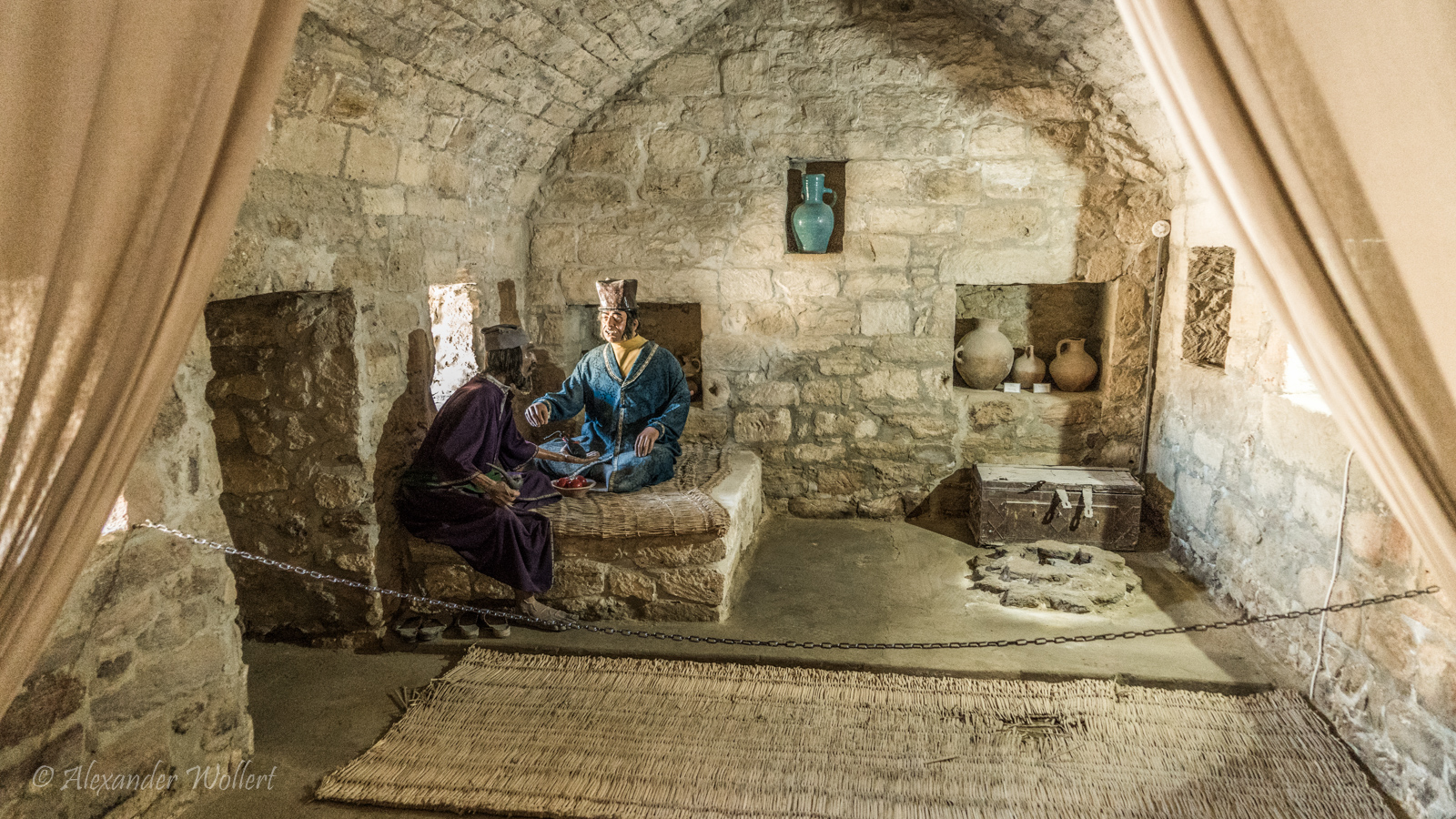
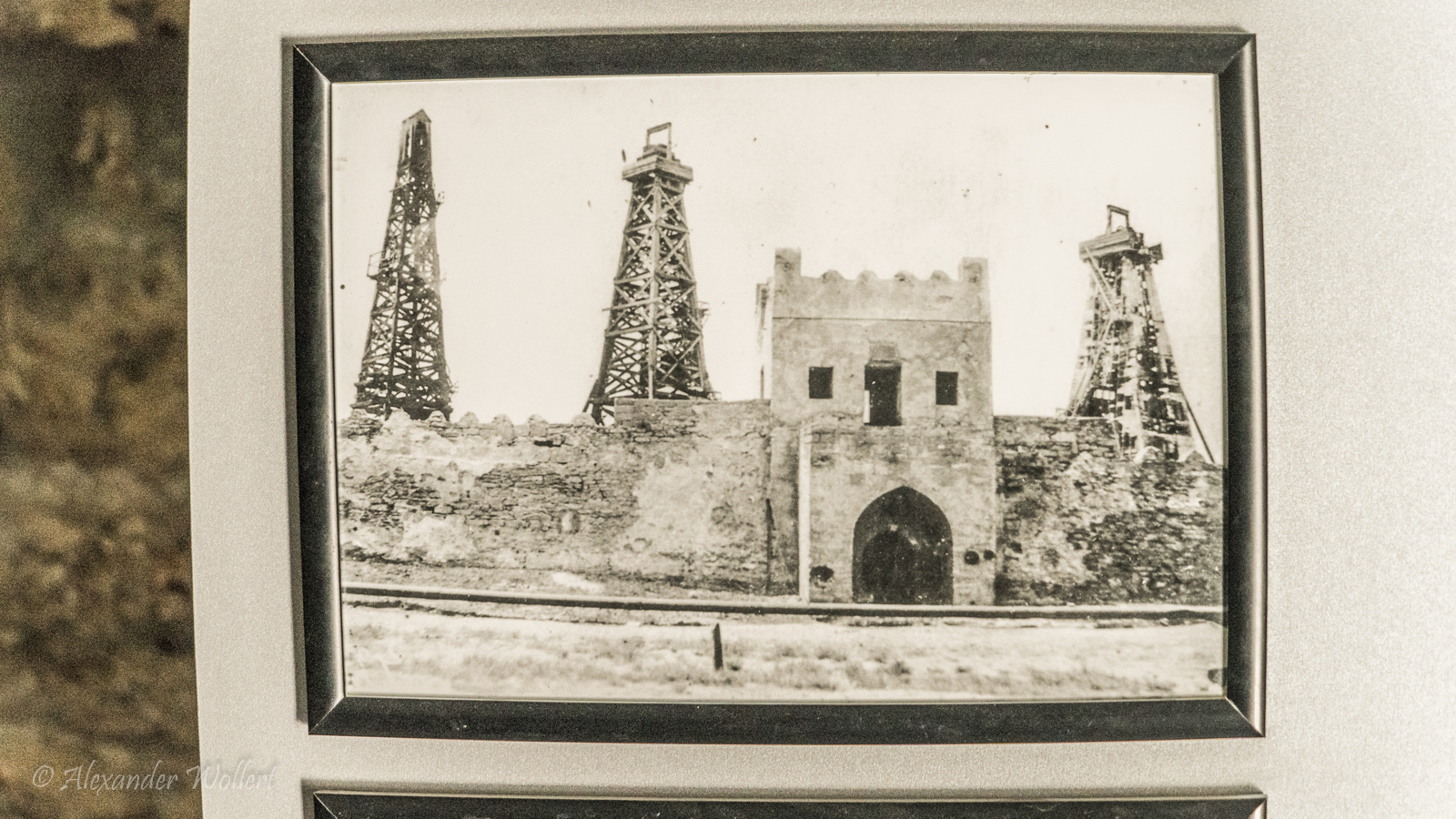
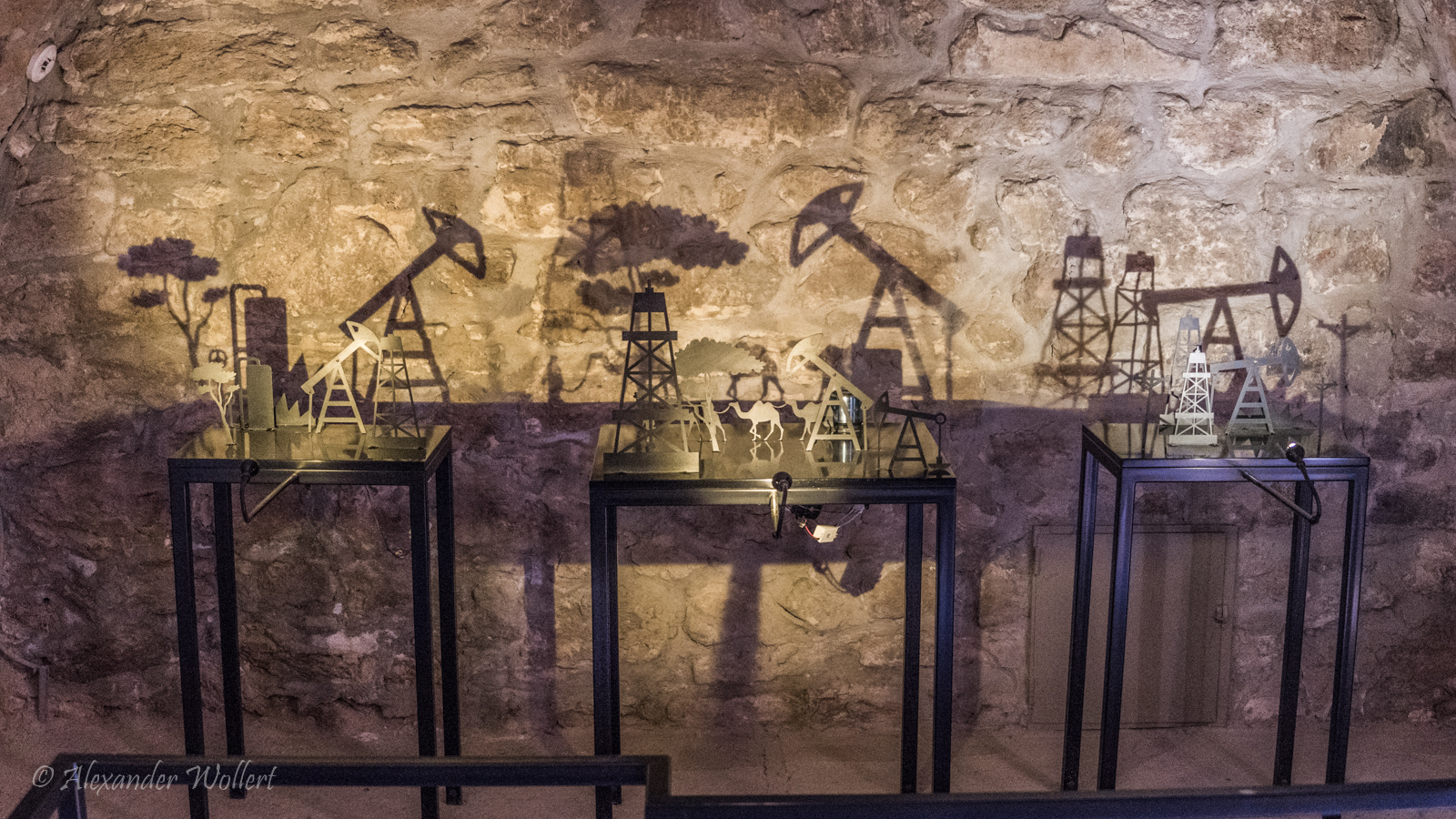
Oil derricks in the temple: It seems like the greatest possible sacrilege, the desecration of a culturally and religiously highly significant place – out of greed!
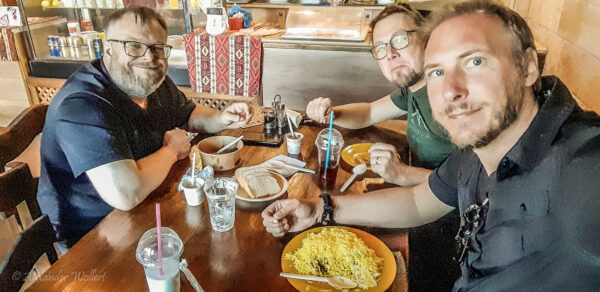
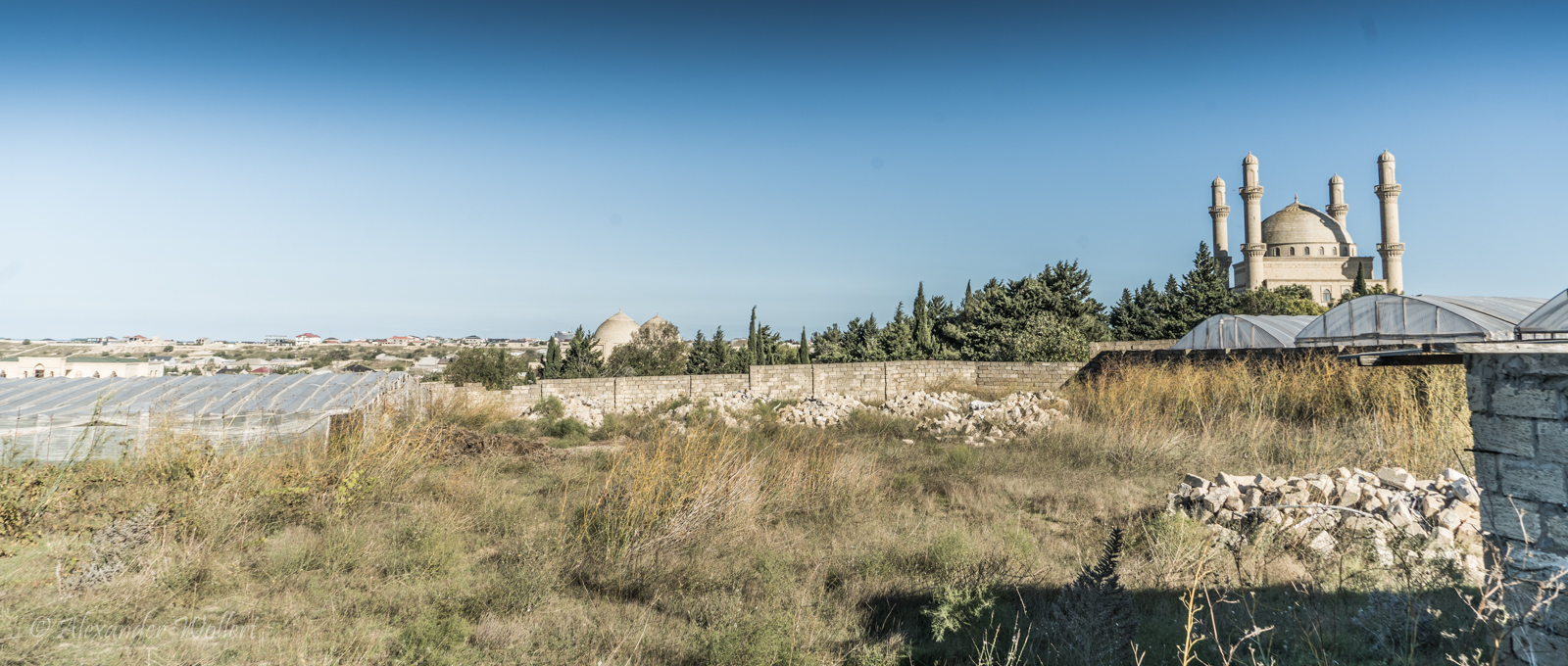
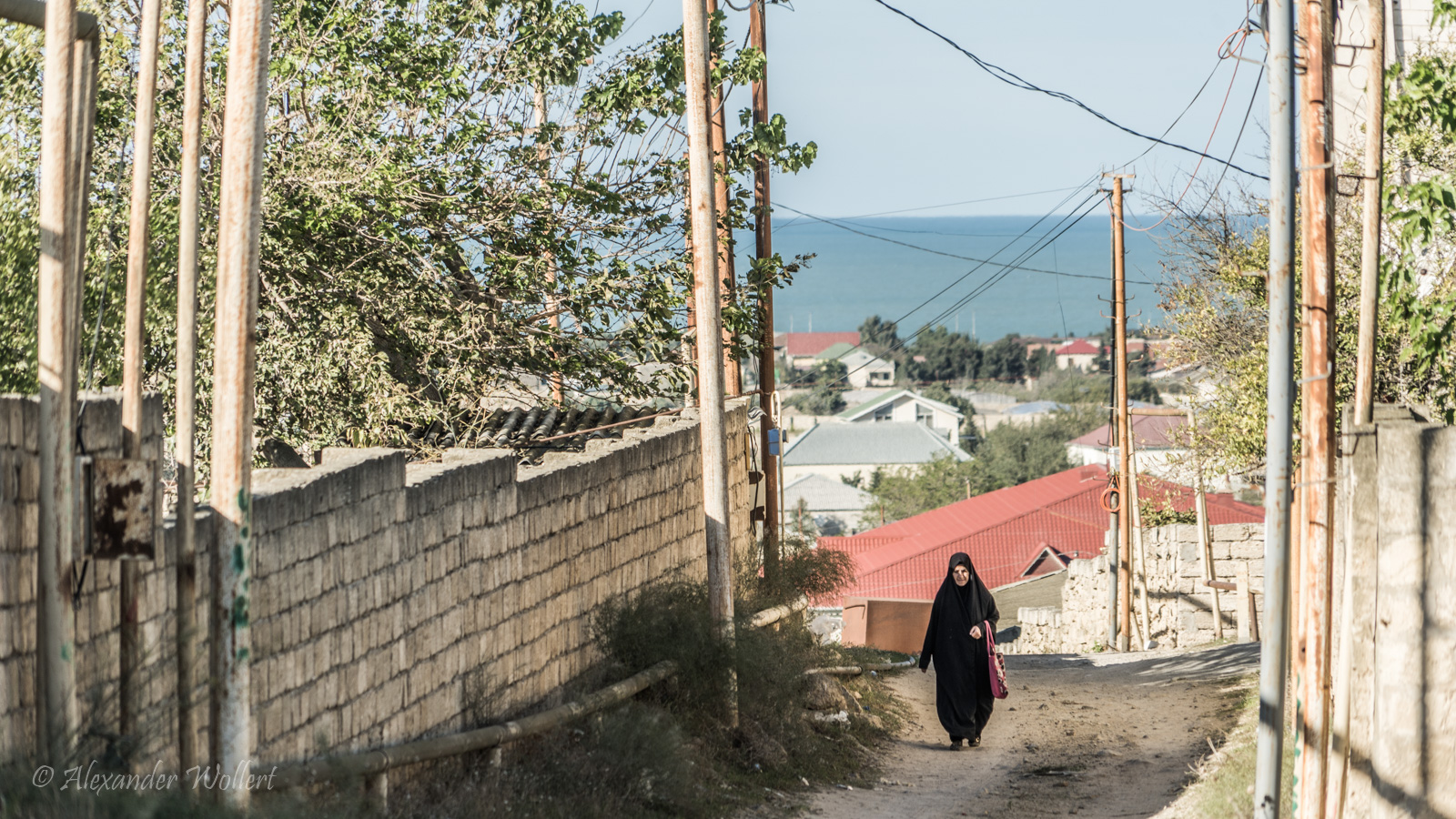
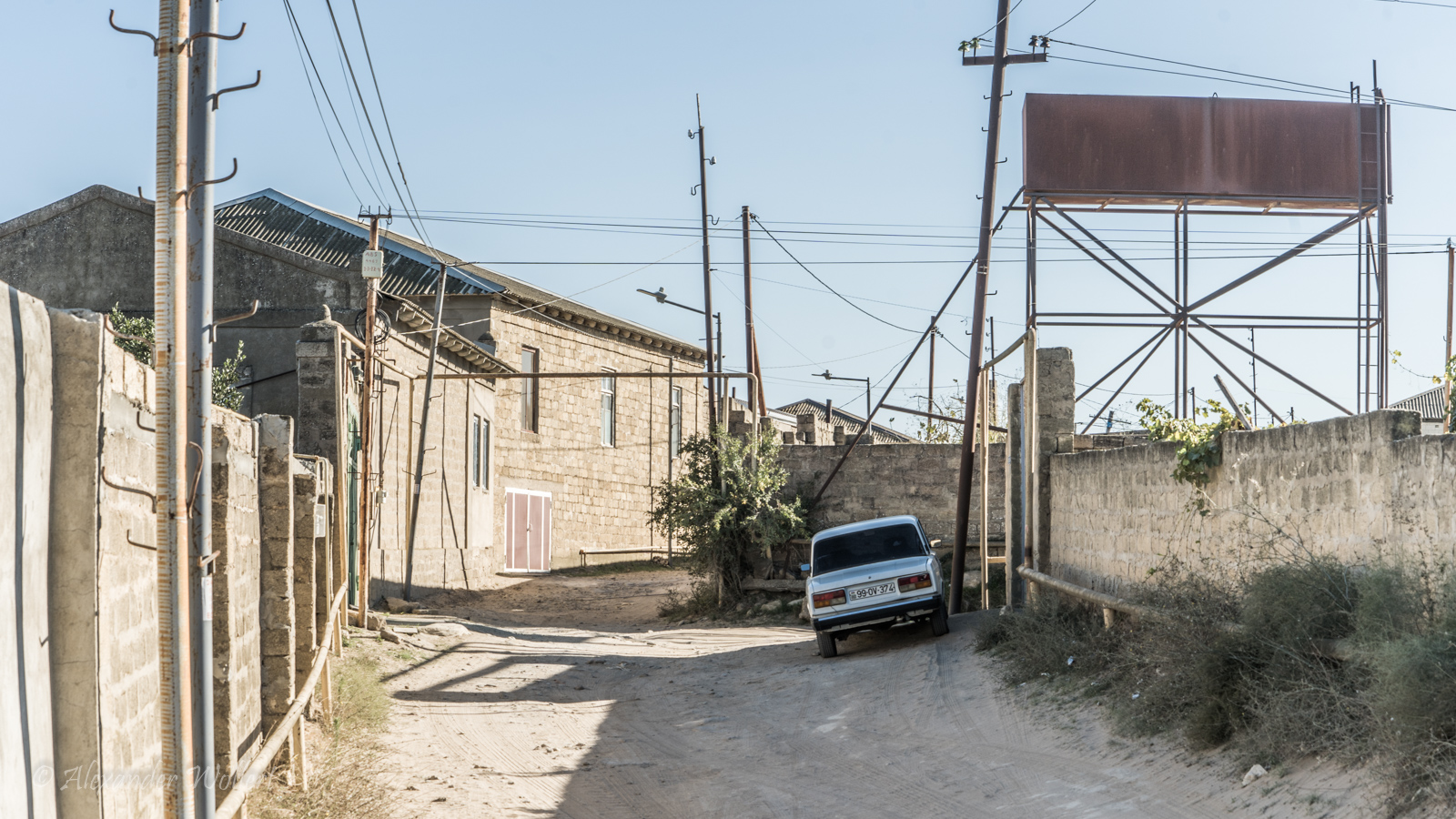
After a quick lunch, we drive through the countryside, past the oil derricks, to visit the Nadaran Fort. But first, we have to find it. We wander through narrow streets, some of them far too small for our large car. Google Maps isn’t having any trouble with us. The fort is supposed to be somewhere around here, but all we see are houses and pipelines crisscrossing over them and streets.
Surely a fortress can’t be so easy to miss! But it can. We spot the old structure and are disappointed.
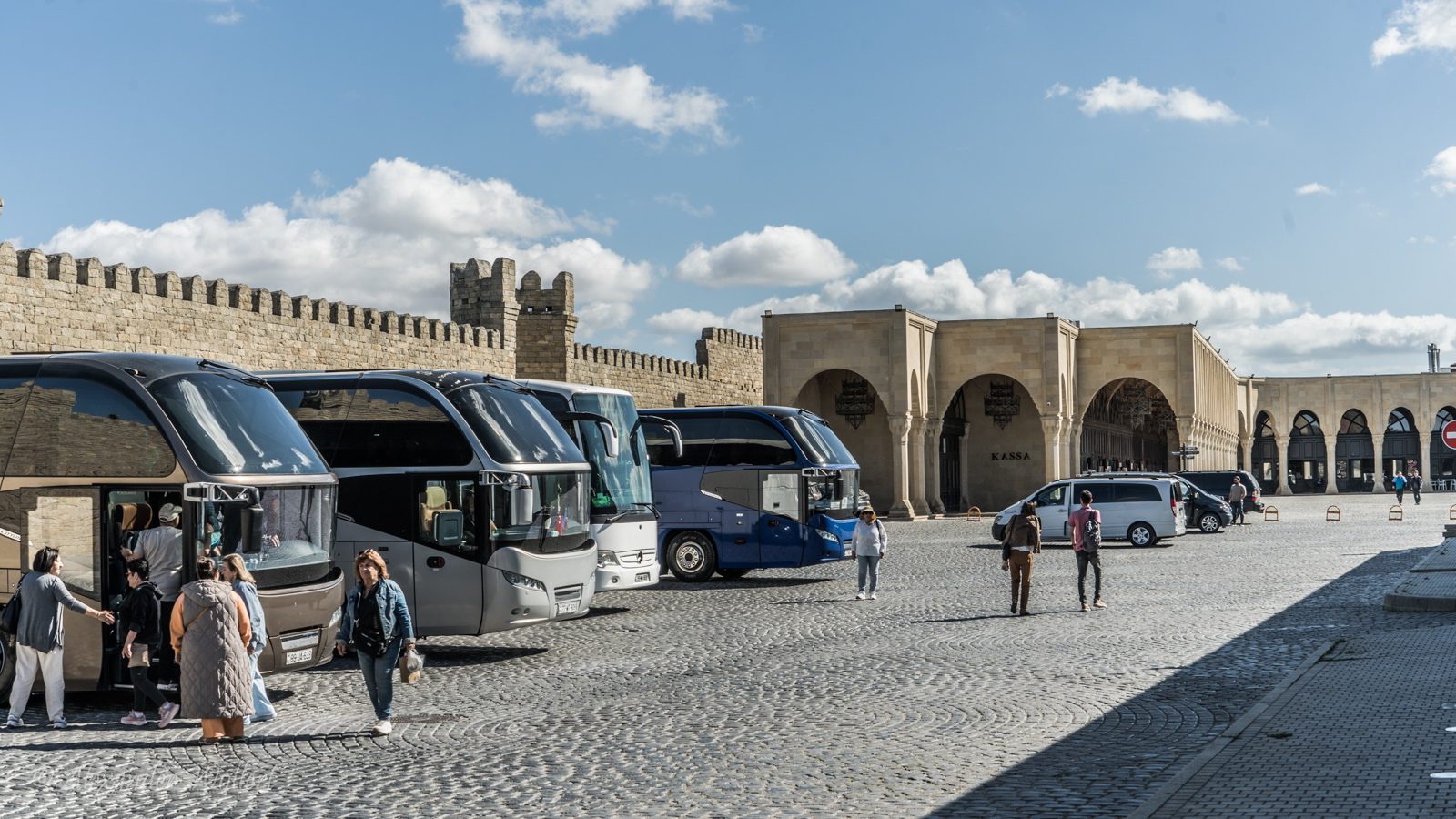
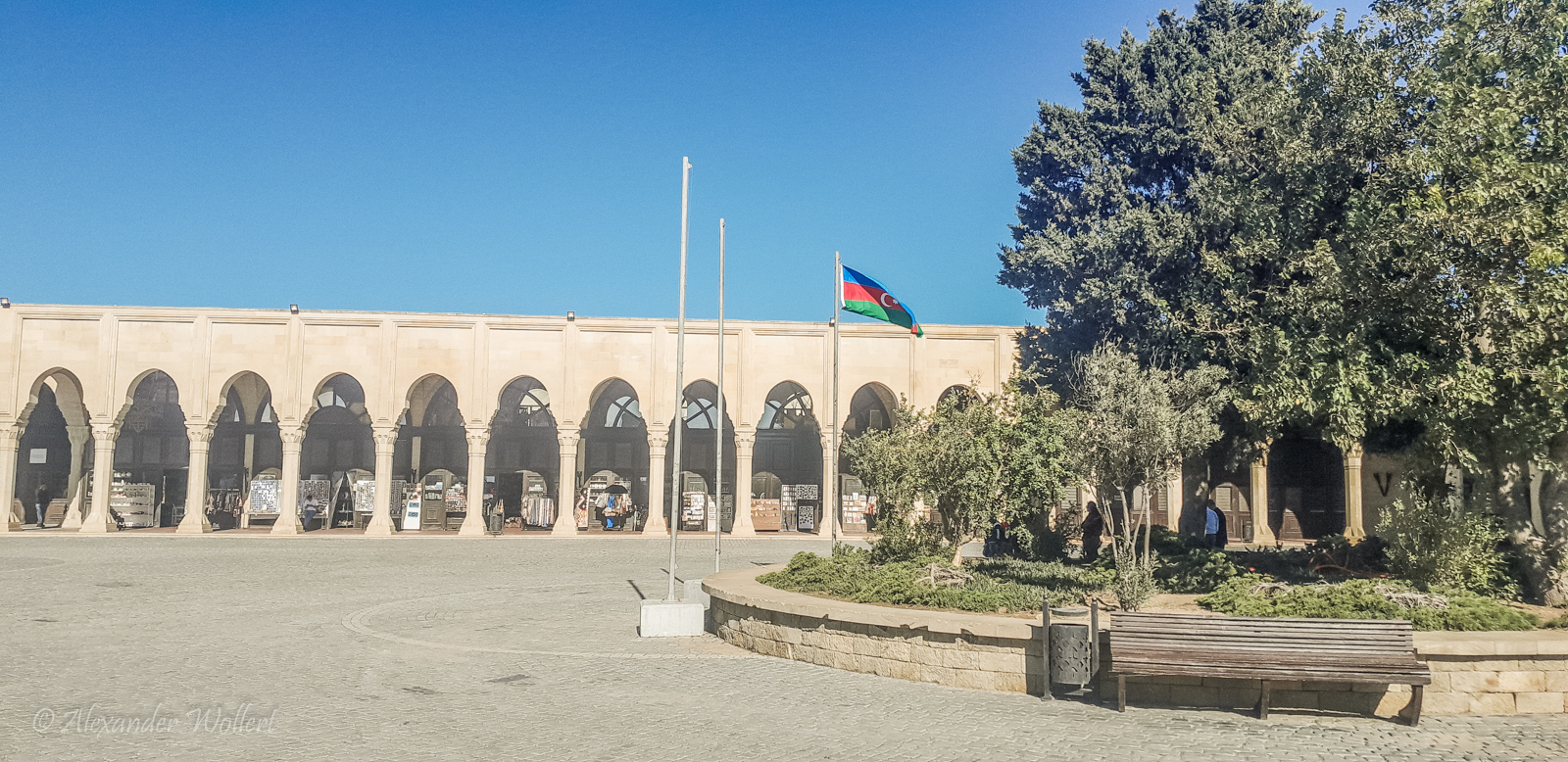
Three fortresses were built in the early Middle Ages to protect Baku from the Mongols. This particular fortress, however, is not very impressive, as it is now simply situated among other houses and appears to serve only as a garbage dump.
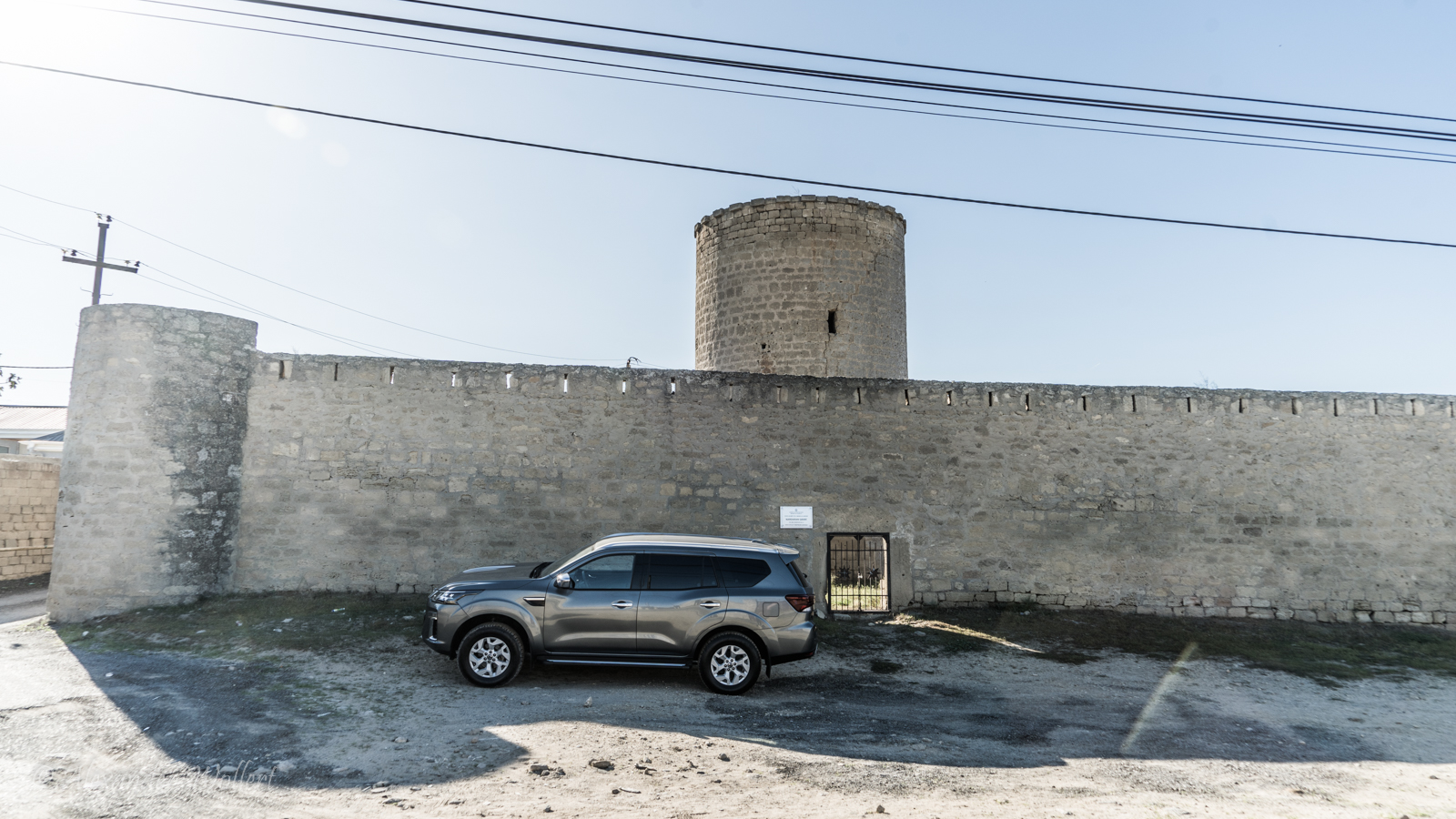
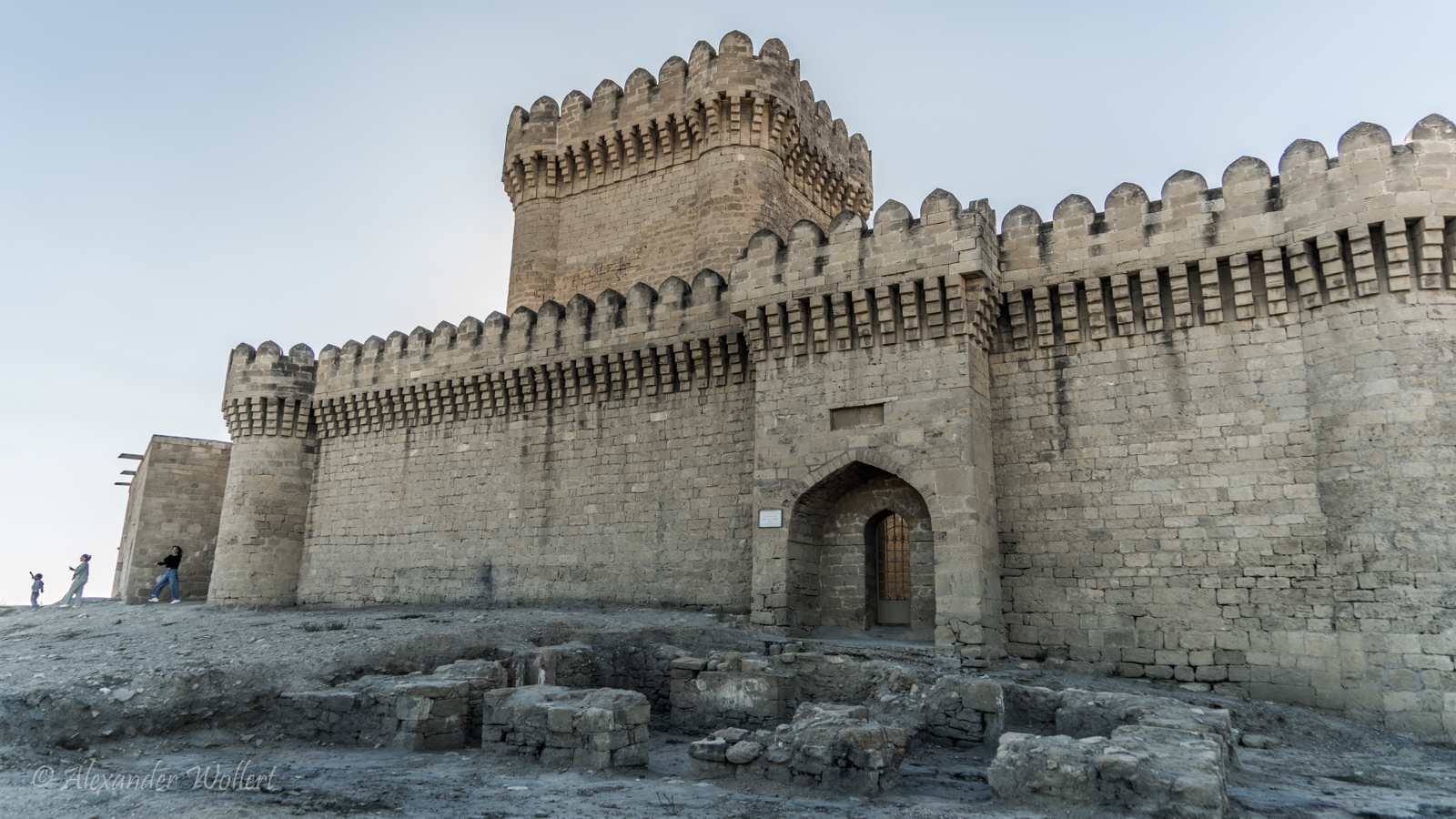
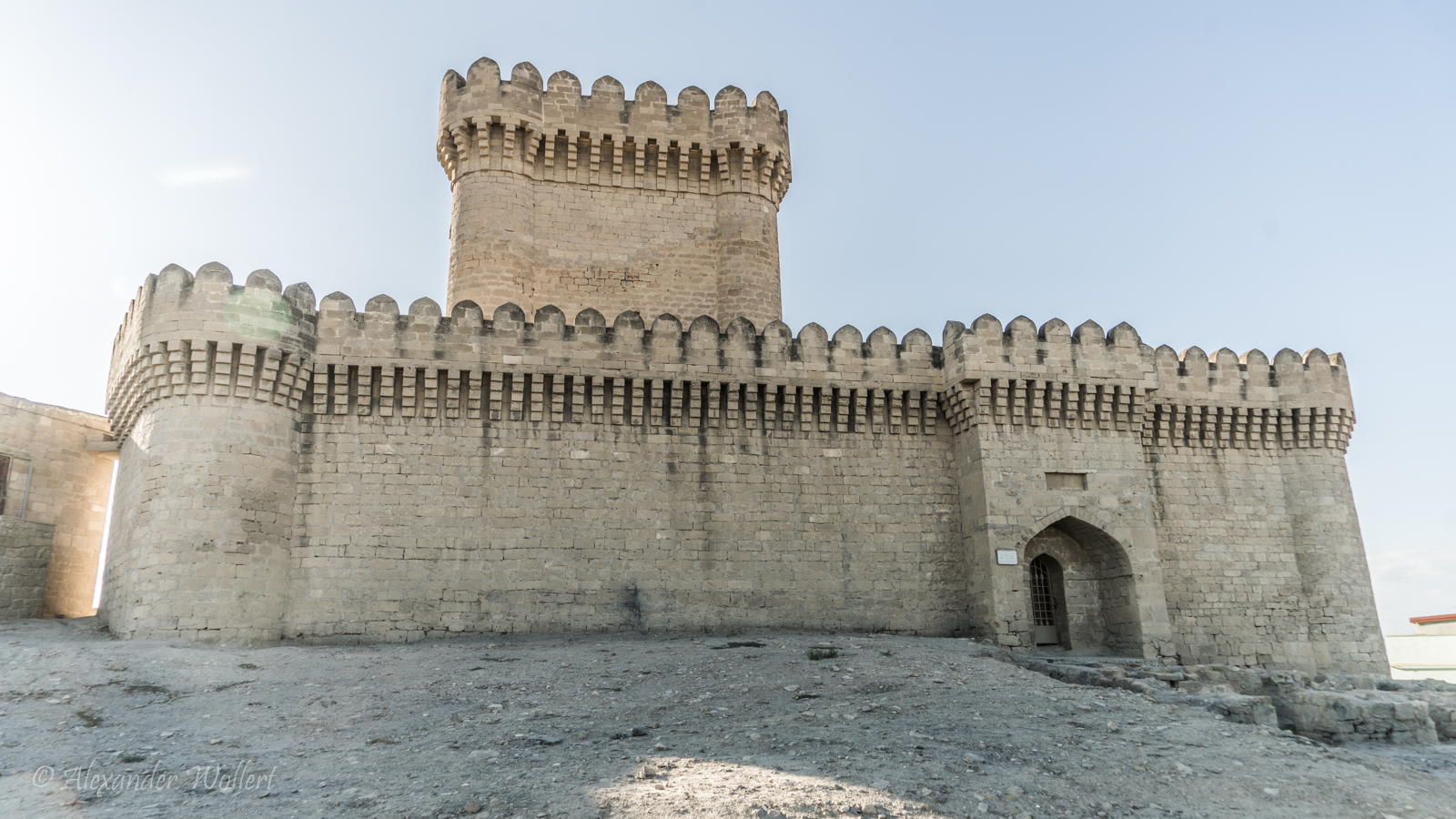
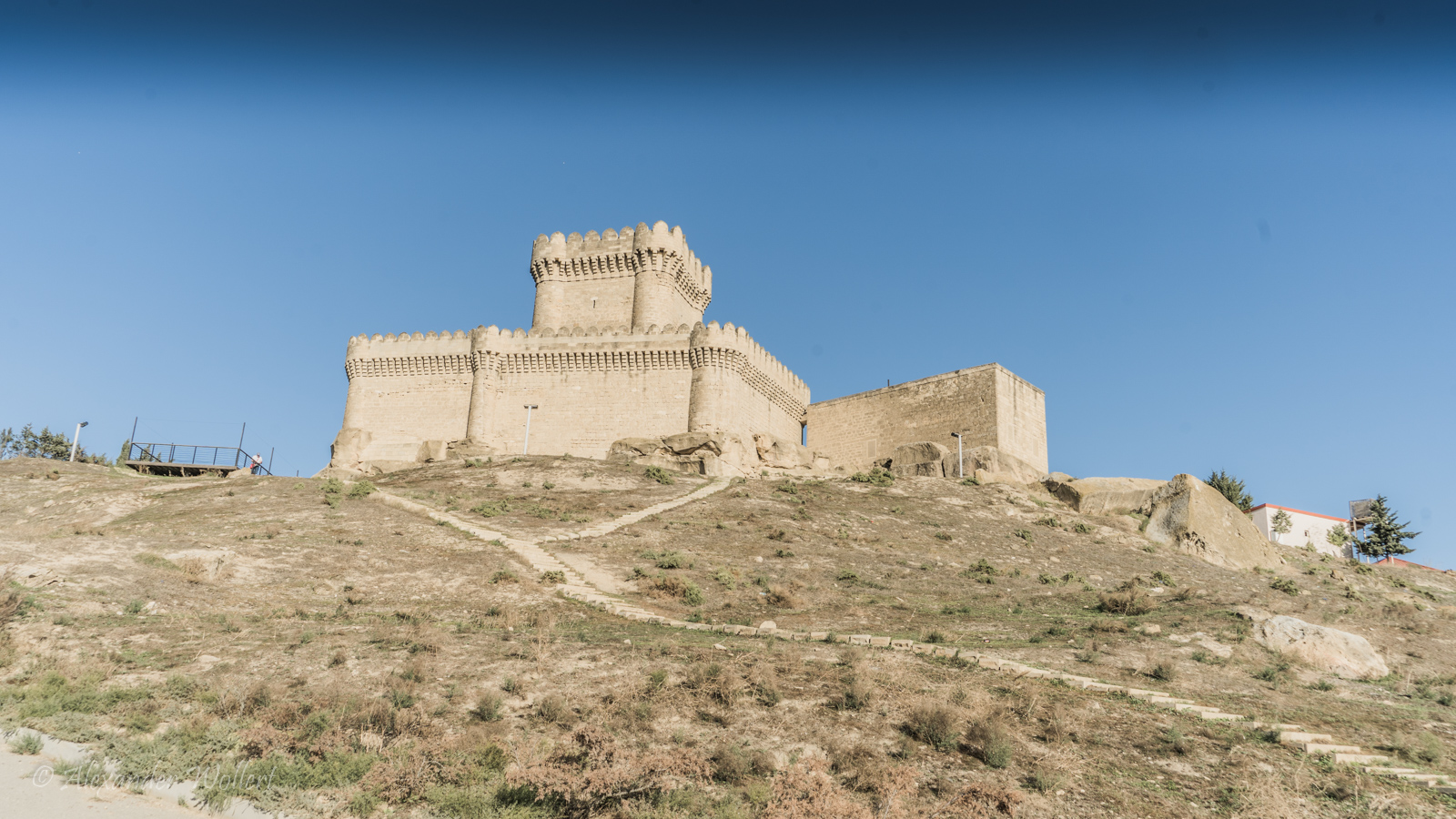
Since Chris and Uwe’s disappointment is written all over their faces, I look for another fortress on the map. There were supposed to be three of them. I discover Romana, which is still quite a distance away. Never mind, we’ll give it a try.
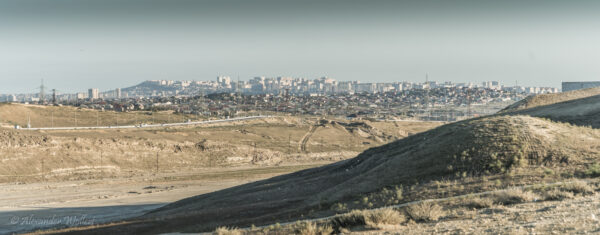
The Romana fortress looks to be in better condition. It’s situated at a height from which we can have a good view over a large area of the surreal landscape of Abşeron.
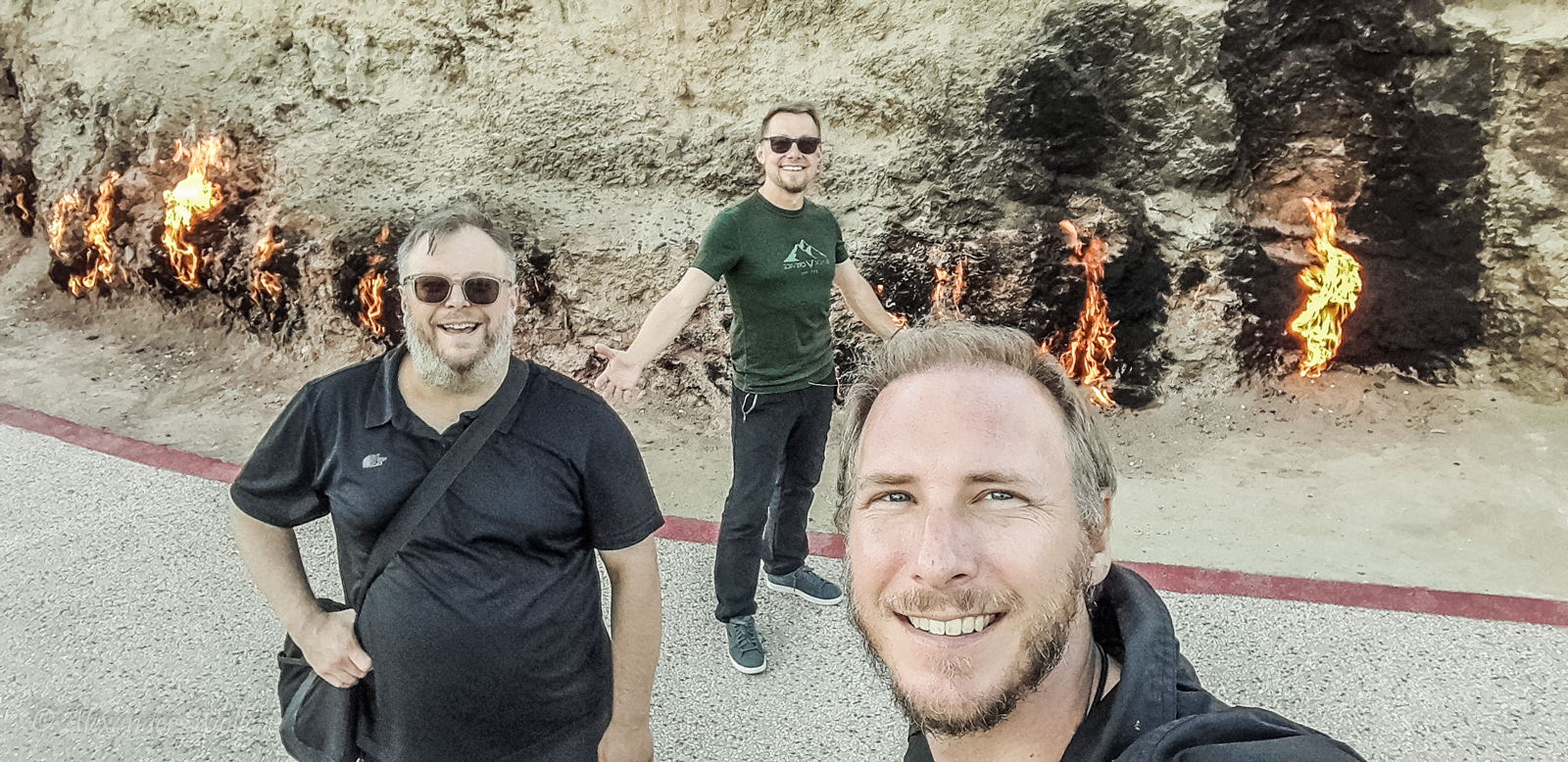
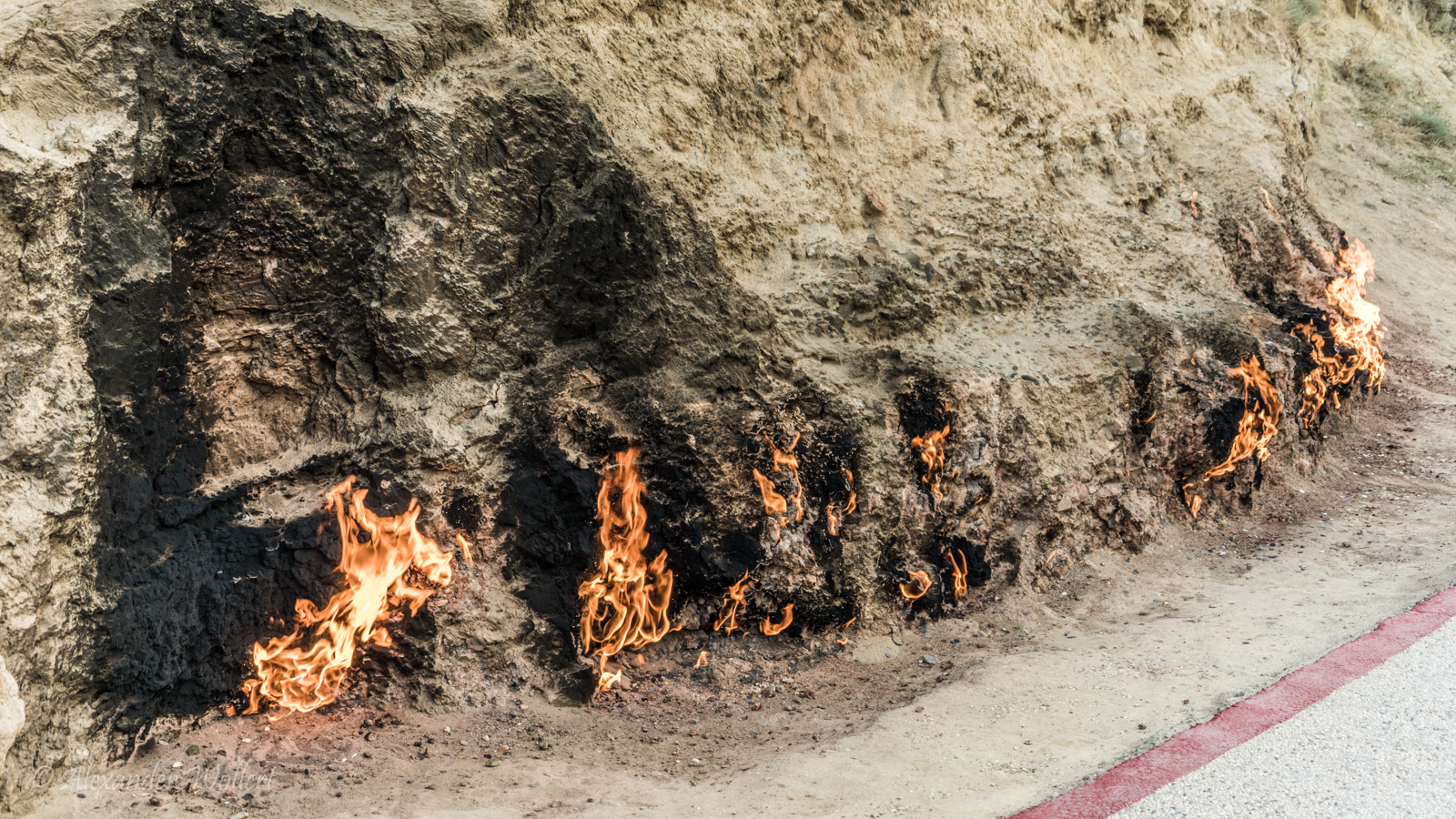
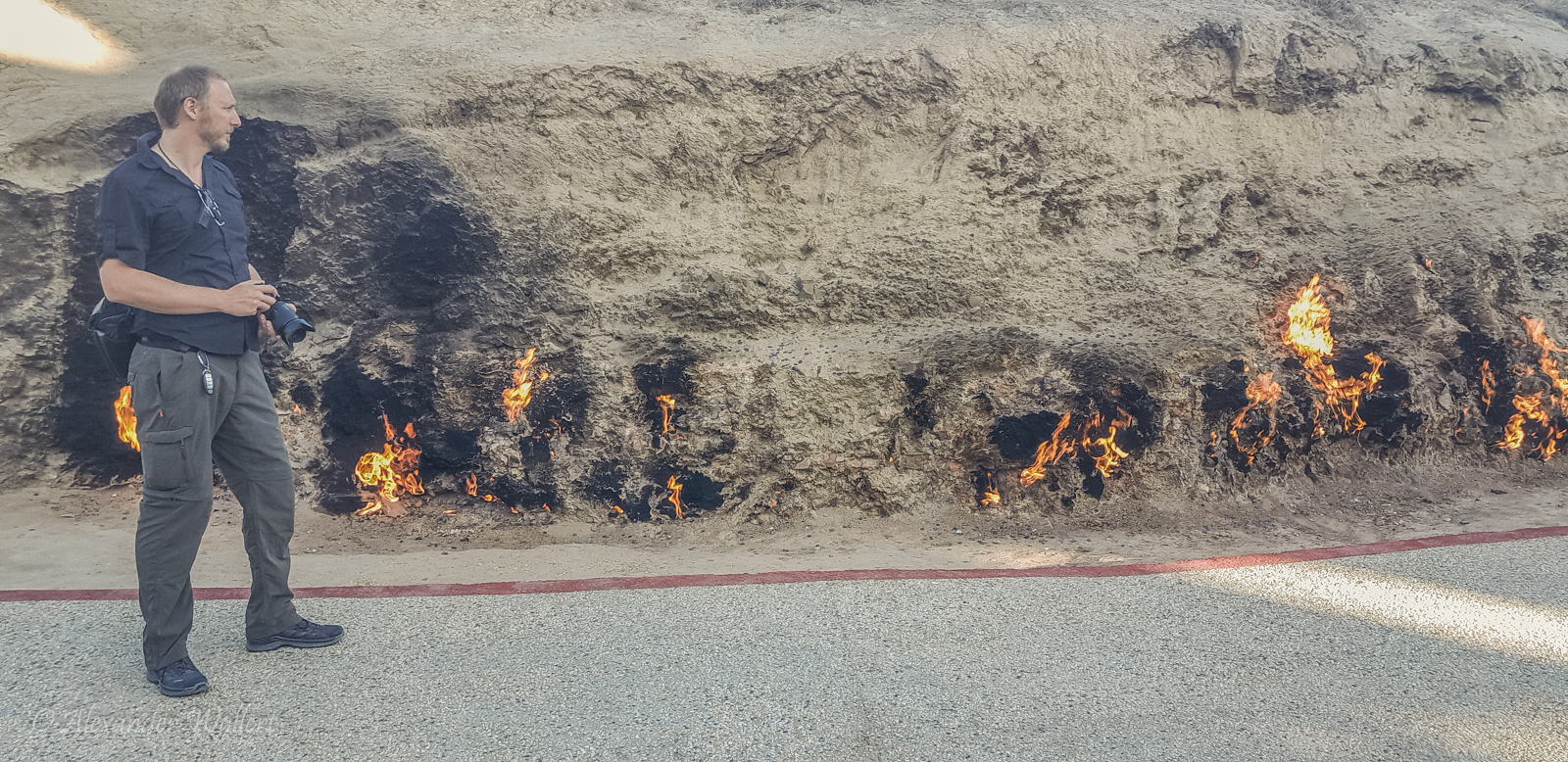
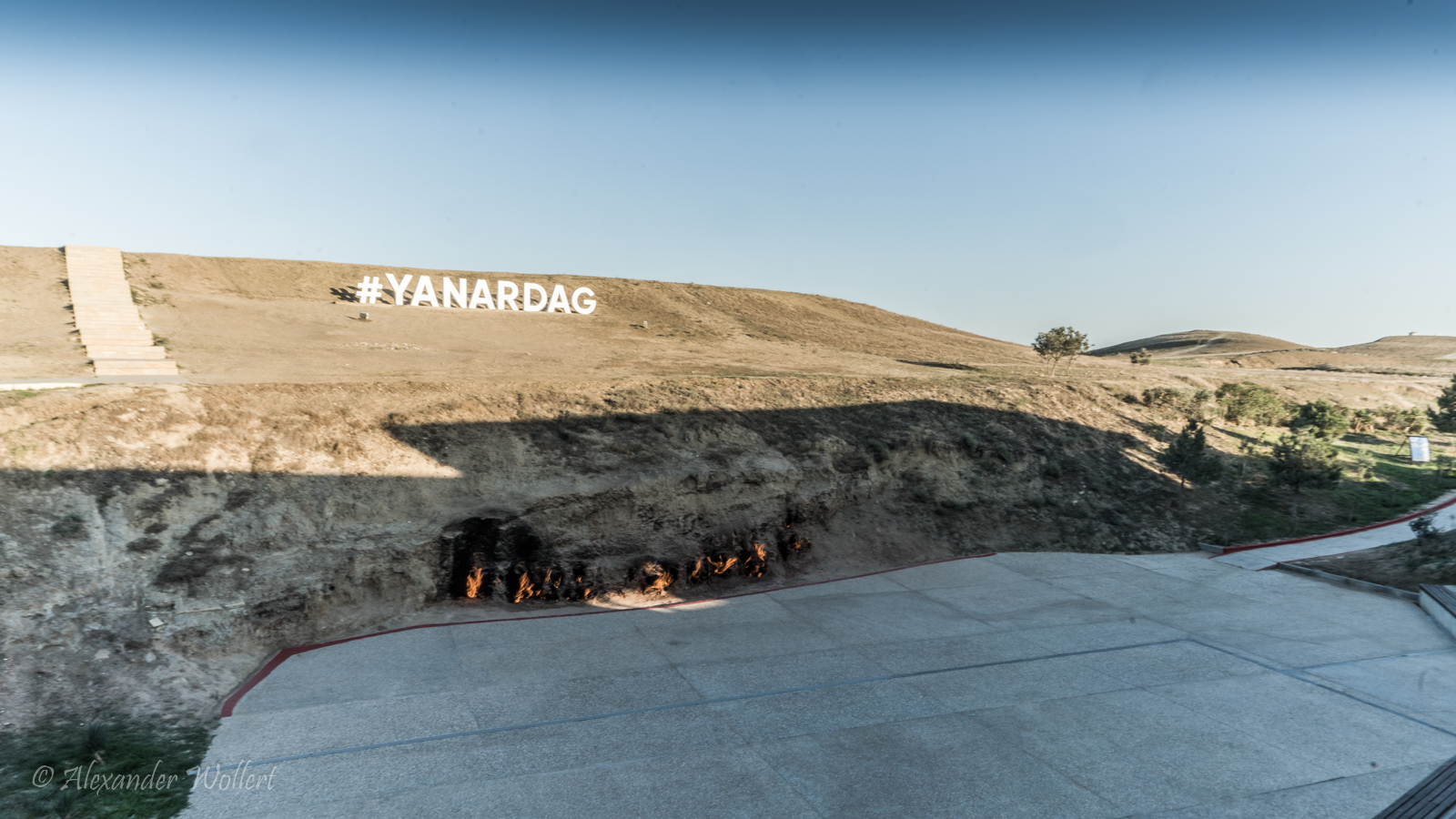
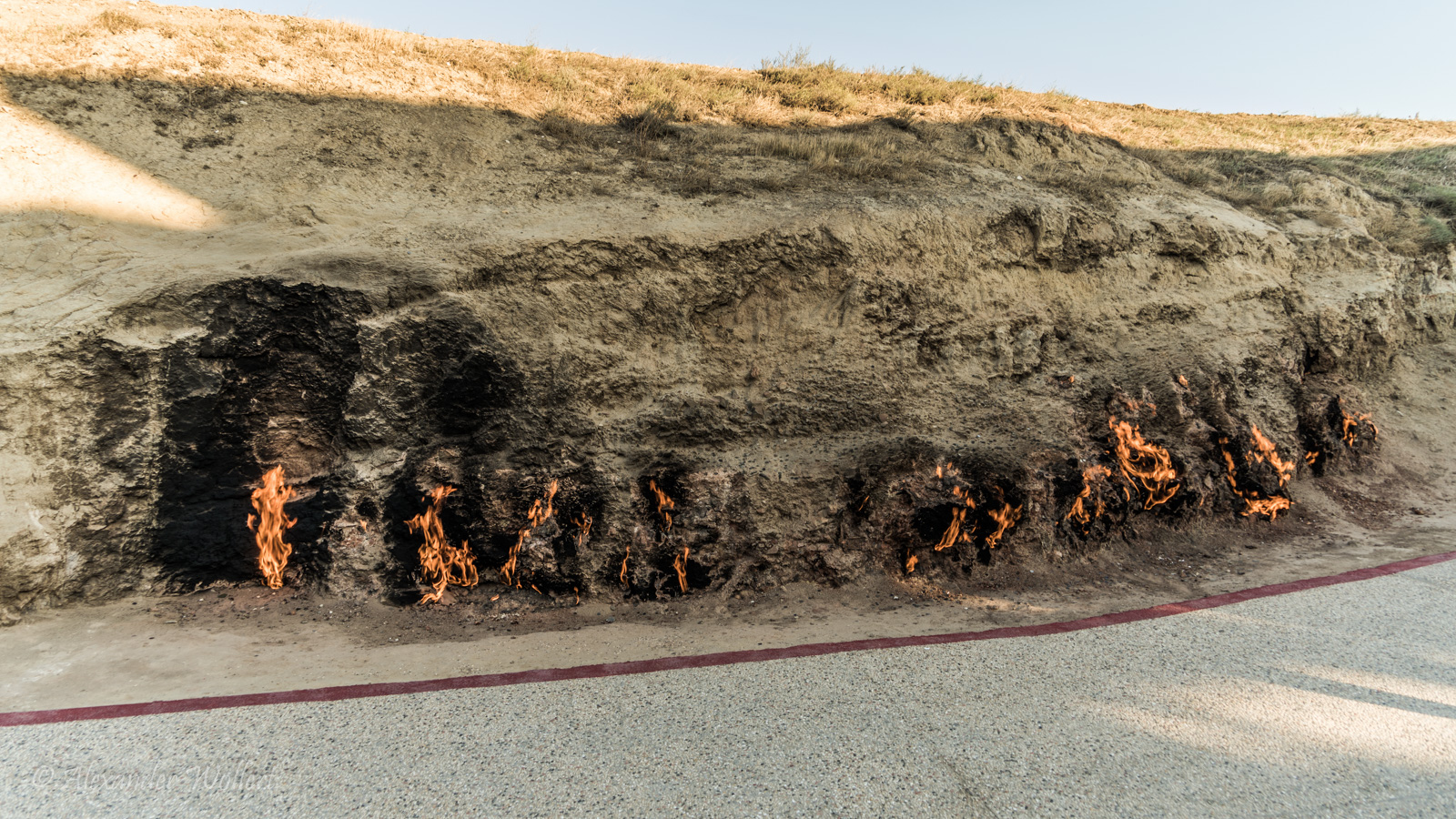
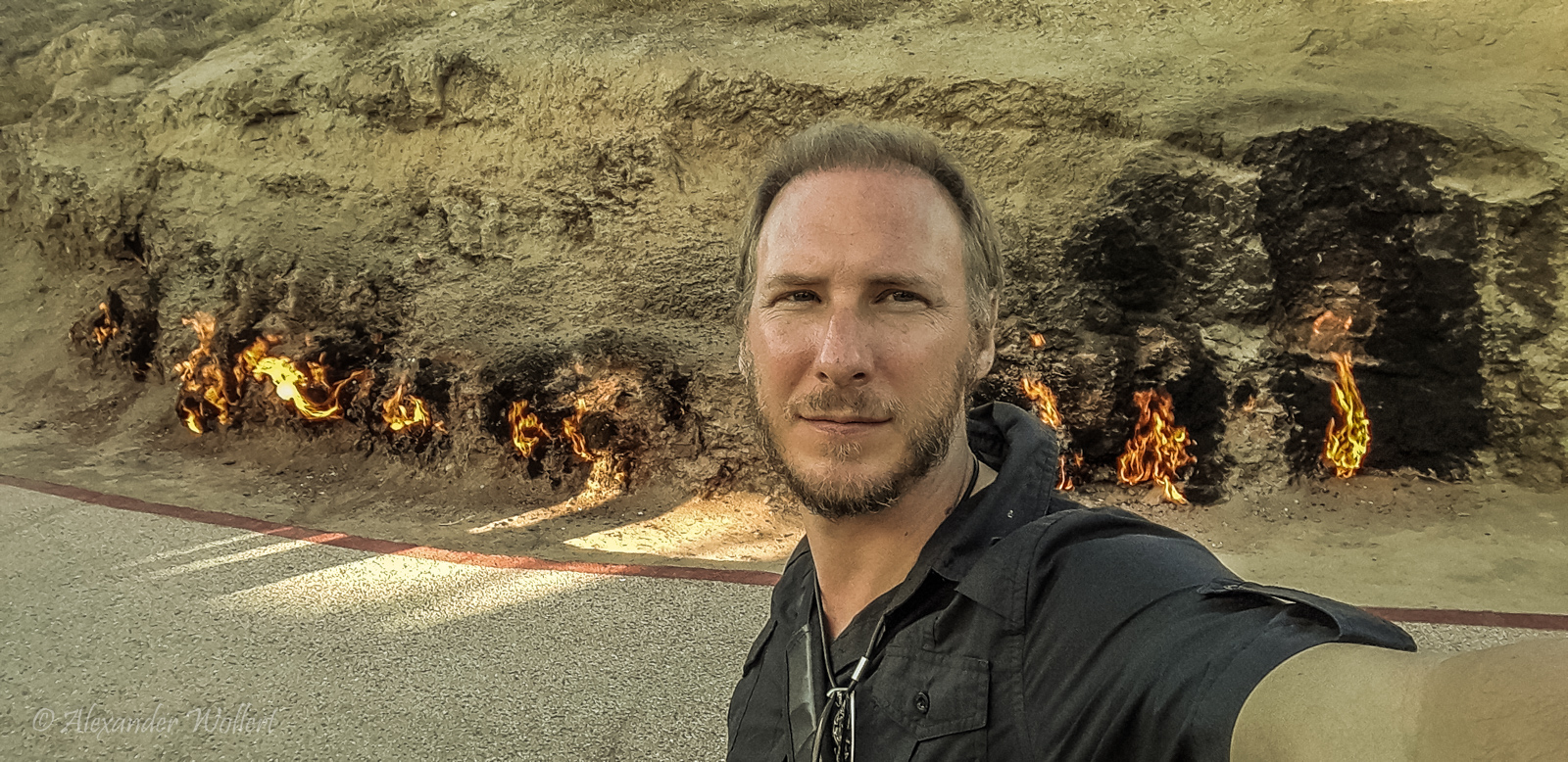
Next, we drive through the heavy traffic to Yanar Dağ. At this spot, flames erupt from the ground and burn seemingly forever. Apparently, a shepherd accidentally lit a fire in a place where gas seeps from the earth. Since then, the side of this small hill has been burning.
That’s reason enough to build a huge tourist temple, complete with an amphitheater, souvenir shops, restrooms, and a quad bike park. The fire is hot, and we’re the last visitors of the day. It’s somewhat impressive, but we find the touristy atmosphere over the top.
It’s getting dark, and we’re looking for accommodation near Qobustan in the south, which we plan to visit tomorrow. However, we’ll be visiting another place along the way, which means we have to go back through the capital.
Unfortunately, we landed right in the middle of Baku’s rush hour.
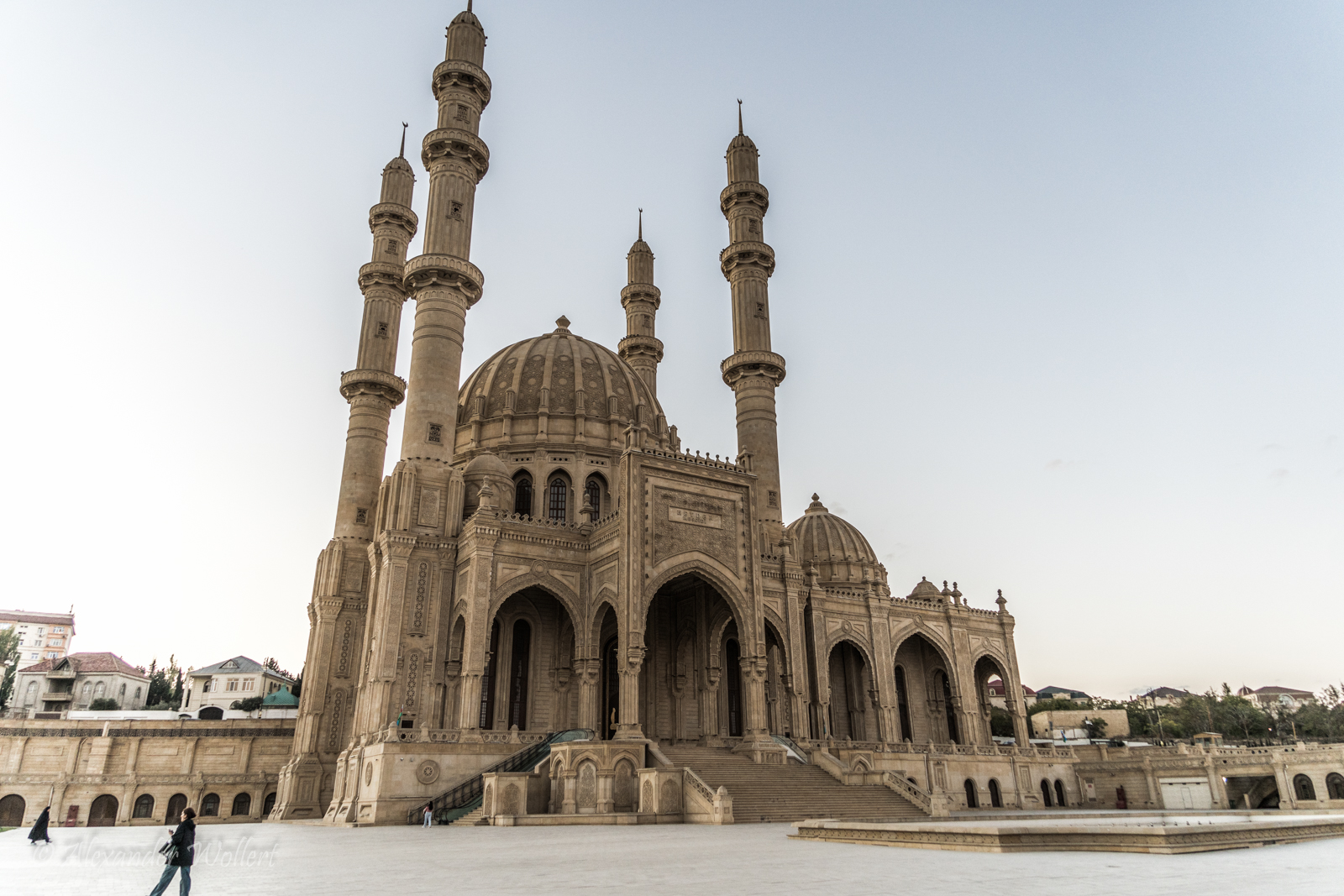
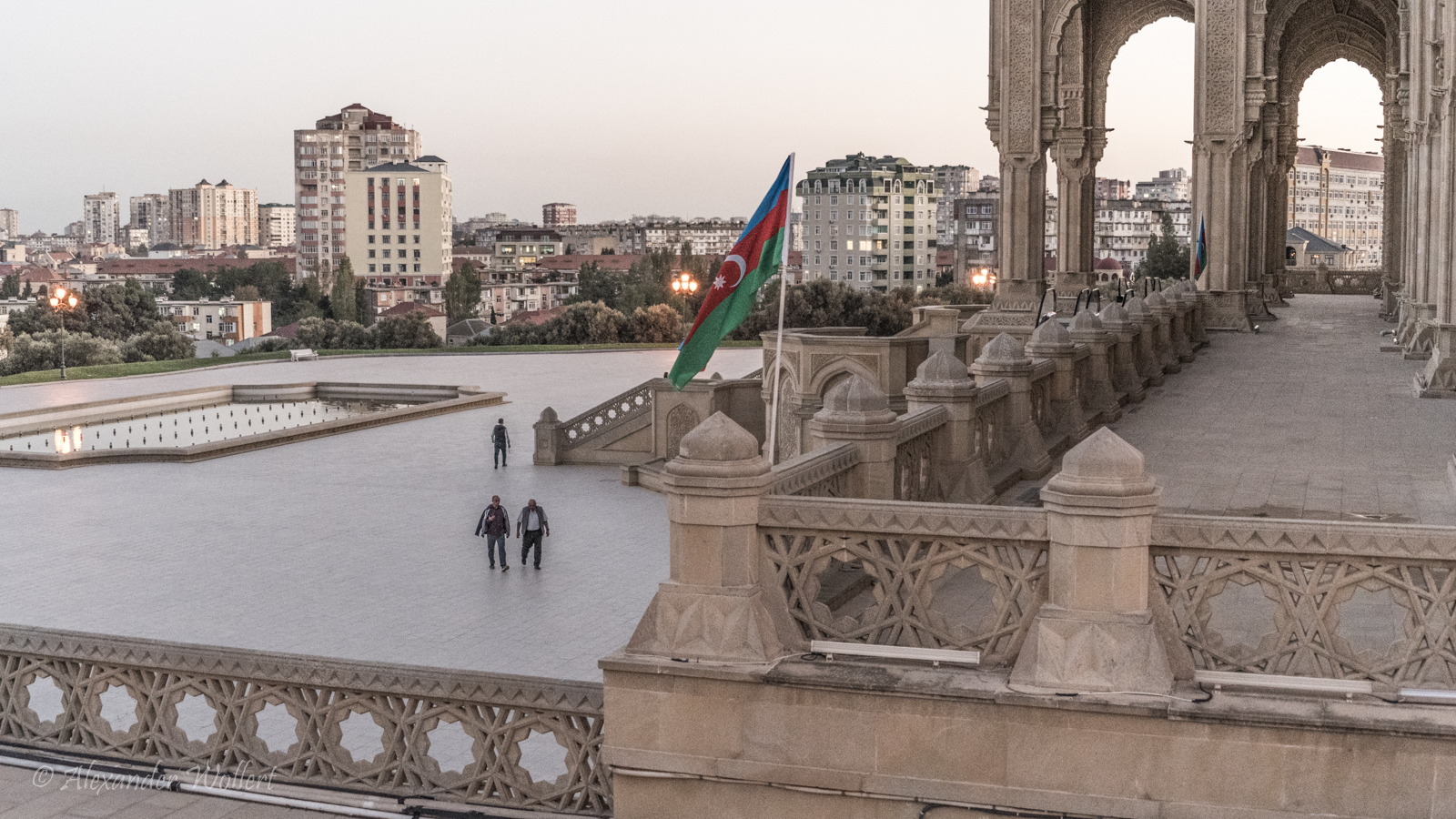
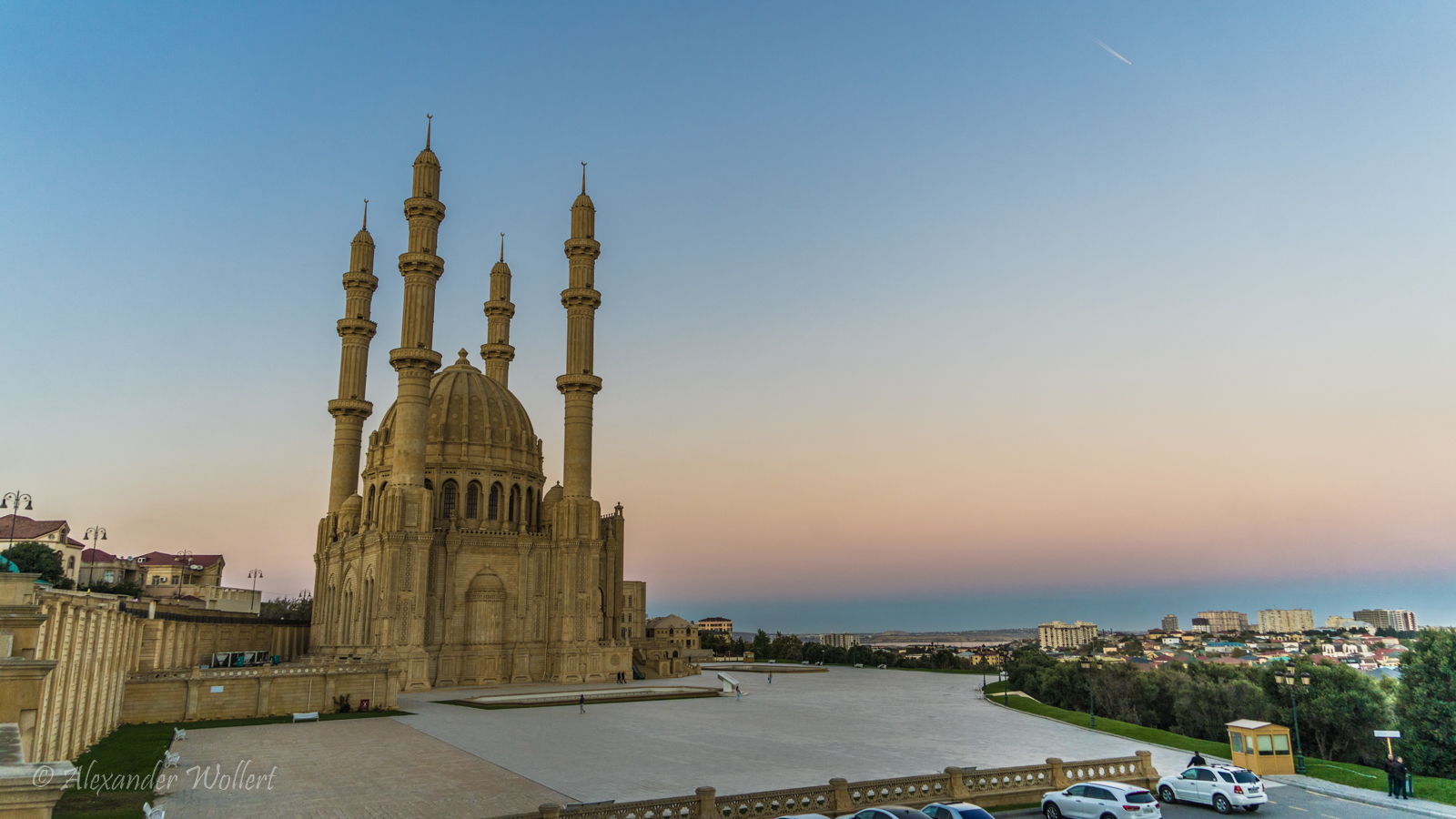
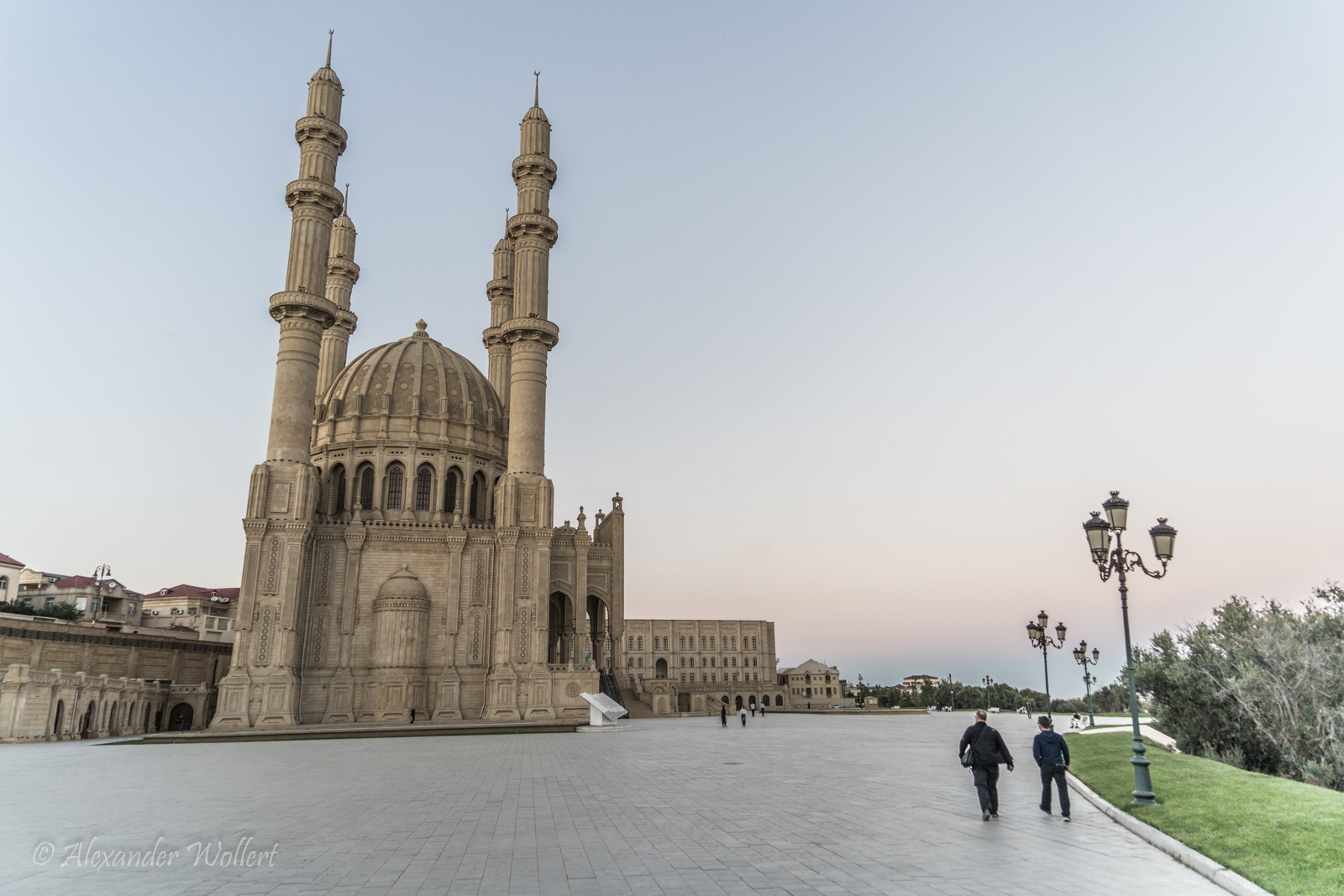
We tried to drive around the city, but still ended up stuck in traffic. We reached the impressive, enormous Heydar Mosque with its four minarets at sunset. We couldn’t go inside, but it was very impressive from the outside.
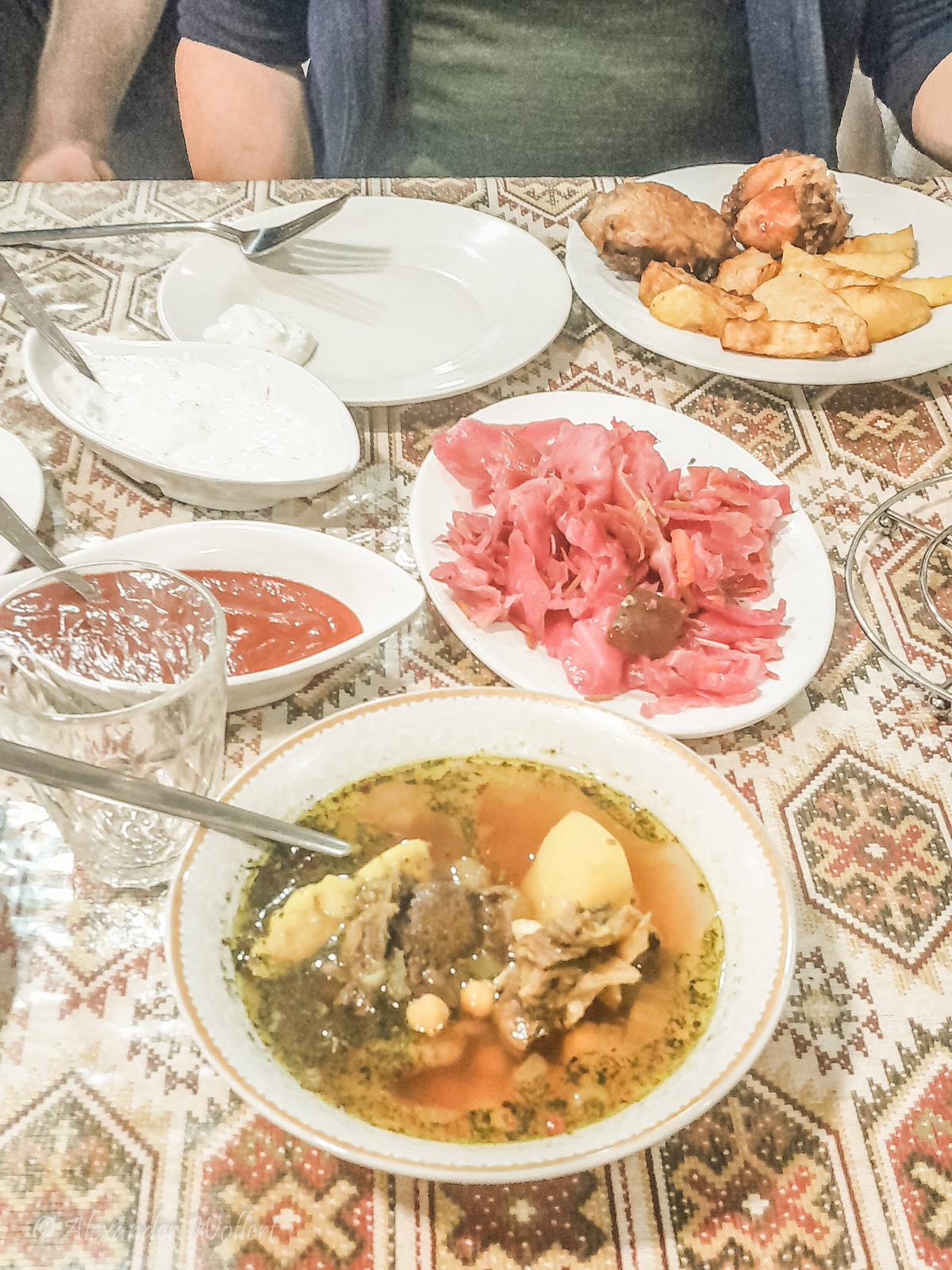
We battled our way through the heavy traffic. We found dinner at a truck stop. Then we drove only as far as Sanqaçal, where we stayed overnight in a simple place. It was reminiscent of an American motel.
Tomorrow we will explore Qobustan. The place is famous for its mud volcanoes, but also for its important petroglyphs – rock paintings made by people 10,000 years ago!